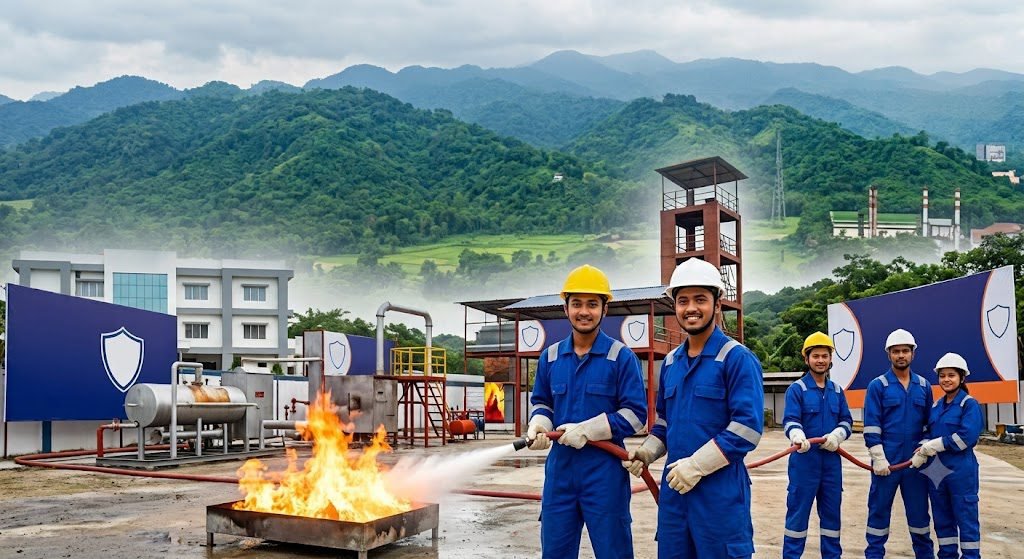
Fire prevention, workplace safety, emergency response, and industrial risk management have become increasingly important across modern industries. From factories and construction sites to oil and gas facilities, power plants, hospitals, airports, warehouses, and large commercial establishments, trained safety professionals play an important role in protecting people, property, and operations.
For students looking for Fire and Industrial Safety Courses in Assam, professional training can provide a pathway to developing practical skills for this growing field. North Eastern Fire Service Academy (NEFSA) in Dibrugarh, Assam, focuses on fire and safety education with an emphasis on practical training, discipline, and career-oriented skill development.
According to NEFSA’s official website, the academy was established in Dibrugarh and states that it is affiliated with the Government of Assam’s Skill, Employment and Entrepreneurship Department. Its stated objective includes providing fire and safety training and supporting skill development among young people in Northeast India.
Why Fire and Industrial Safety Training Matters
Fire and occupational safety are not limited to extinguishing fires. Modern safety professionals need an understanding of hazard identification, risk assessment, fire prevention, emergency planning, occupational safety, fire protection equipment, evacuation procedures, and disaster response.
The importance of structured professional training can also be seen at the national level. The National Fire Service College (NFSC), functioning under India’s Ministry of Home Affairs, provides professional education and training covering fire prevention, fire engineering, rescue operations and modern firefighting techniques.
Similarly, the National Safety Council of India (NSCI) identifies occupational safety and health training as one of its core activities and conducts national, in-plant, e-learning and virtual safety training programmes.
These initiatives demonstrate why professionally trained personnel are valuable for organisations where workplace hazards, machinery, electrical installations, combustible materials or emergency situations need to be managed effectively.
Fire and Industrial Safety Courses at NEFSA
Students searching for a fire safety course in Assam or industrial safety training in Northeast India should consider both theoretical knowledge and practical exposure.
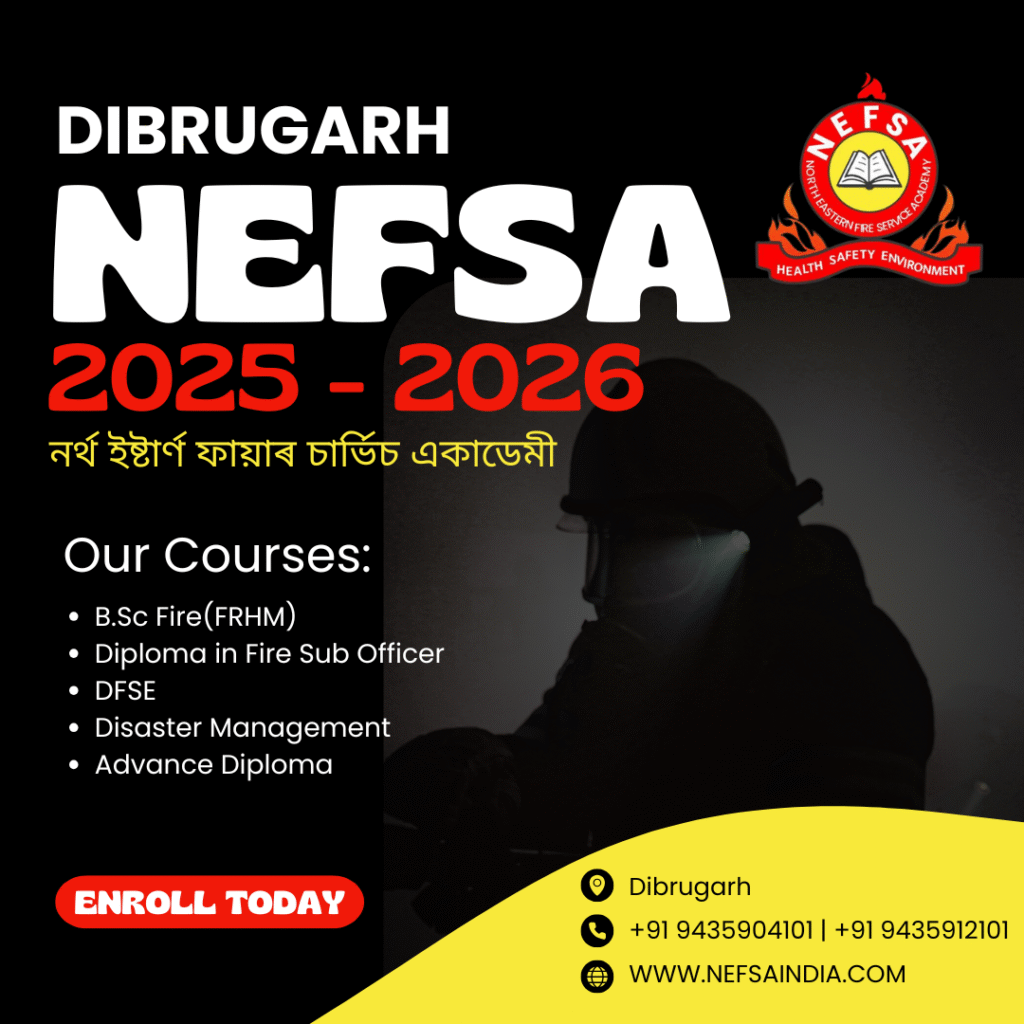
NEFSA lists Fire Technology & Industrial Safety Management among its programmes. According to the academy’s published course information, the programme covers subjects such as:
- Fire Science & Combustion
- Industrial Safety Management
- Fire Protection Systems & Equipment
- Occupational Health & Safety
- Risk Assessment & Hazard Control
- Disaster Management & Emergency Planning
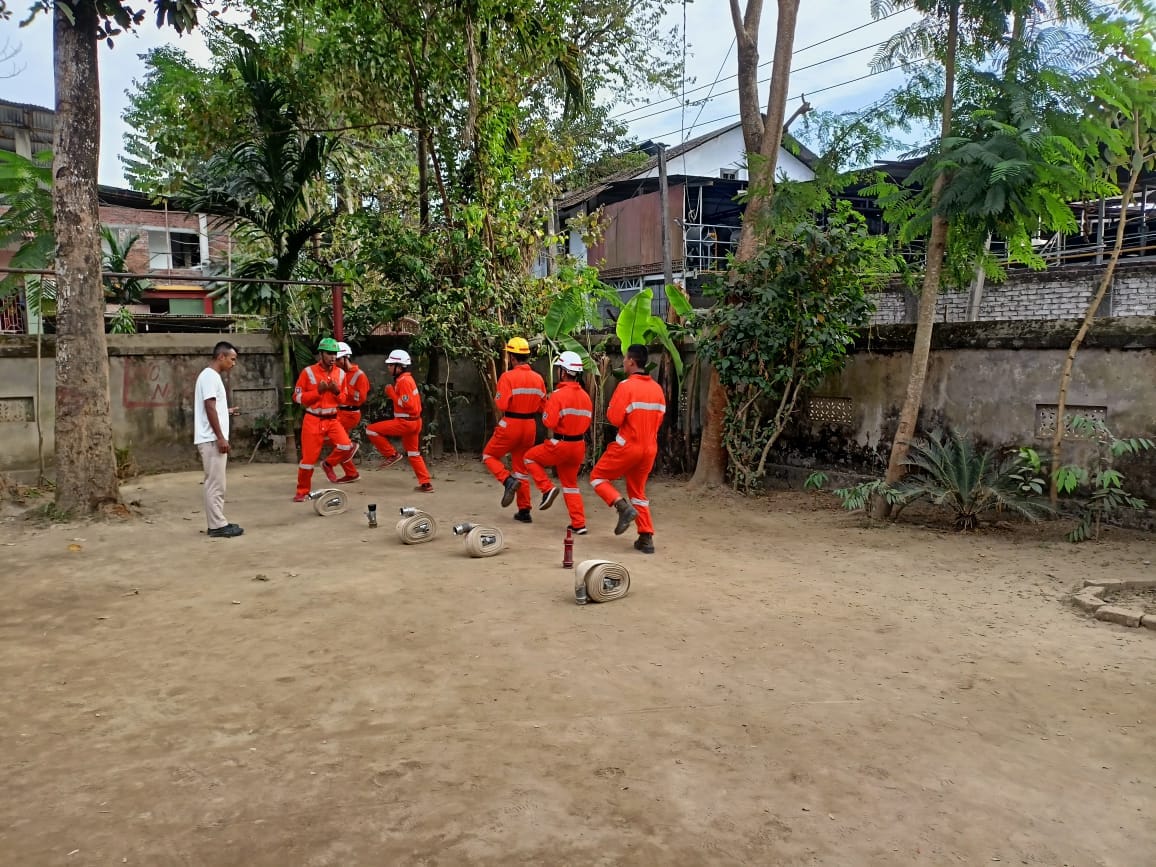
NEFSA describes the programme as combining structured theory with hands-on drills and industry-oriented training.
These subjects provide students with a broader understanding of how accidents and fire hazards can be prevented, identified and managed in different workplace environments.
Practical Training is Essential in Fire & Safety Education
Fire and industrial safety is a practical profession. Reading about firefighting equipment or emergency response is very different from understanding how to react correctly during a real incident.
Practical exercises can help students understand equipment handling, emergency procedures, teamwork, communication and disciplined response.
This approach is consistent with professional fire-service education at the national level. NFSC explains that its training combines academic knowledge with physical training, practical experiments, demonstrations, exercises and drills.
Therefore, when comparing fire safety institutes in Assam, students should look beyond the name of a course and examine the actual training environment, practical facilities, curriculum and opportunities for hands-on learning.
Why Choose NEFSA Fire Academy in Assam?
1. Dedicated Focus on Fire and Safety Education
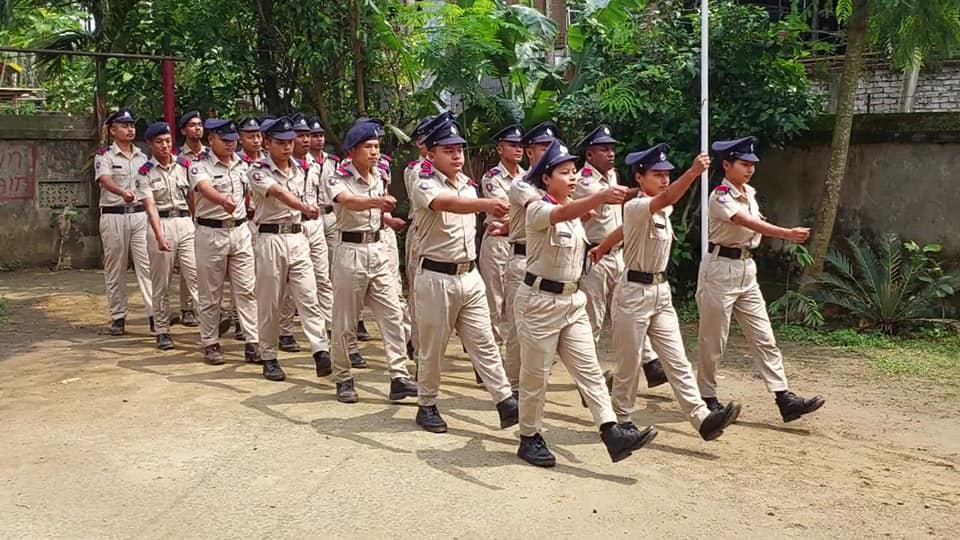
NEFSA specialises in the fire and safety field. This focused environment can help students develop technical knowledge alongside the discipline and practical mindset required for safety-related careers.
2. Fire Technology and Industrial Safety Training
NEFSA’s Fire Technology & Industrial Safety Management programme covers areas extending beyond basic firefighting, including occupational health and safety, industrial safety management, hazard control and emergency planning.
This makes the curriculum relevant to students interested in both fire safety and industrial safety careers.
3. Practical Skill Development
Practical knowledge is particularly valuable in safety-related professions. Hands-on drills and structured training can help learners understand how safety principles are applied during actual workplace and emergency situations.
4. Convenient Option for Students in Northeast India
For students from Assam and neighbouring Northeast states, studying within the region can make professional fire and safety education more accessible.
NEFSA is based in Dibrugarh, Assam, giving students an opportunity to pursue specialised training without necessarily relocating to distant parts of India.
5. Career-Oriented Curriculum
NEFSA lists potential career pathways associated with its Fire Technology & Industrial Safety Management programme, including roles such as:
- Fire Safety Officer
- Industrial Safety Supervisor
- Safety Inspector
- Emergency Response Officer
Actual eligibility for individual jobs will depend on the employer, qualification requirements, experience, certifications and applicable regulations, so students should always verify requirements for the particular career they intend to pursue.
Career Scope After Fire and Industrial Safety Courses
Fire and safety skills can be relevant across many sectors where organisations need to control hazards and prepare for emergencies.
Depending on qualifications and employer requirements, opportunities may exist in areas such as manufacturing, construction, infrastructure, oil and gas, energy, warehouses, hospitals, hotels, airports, commercial facilities and emergency services.
Students should therefore view fire and industrial safety education as more than learning firefighting techniques. The broader objective is developing an understanding of prevention, preparedness, risk control and emergency response.
Fire Safety and Industrial Development
Industrial development creates opportunities, but it also creates new workplace risks. Machinery, electrical systems, chemicals, combustible materials, high-rise structures and complex industrial processes can all introduce hazards that require systematic safety management.
Government institutions also recognise the importance of occupational safety. The Directorate General Factory Advice Service & Labour Institutes (DGFASLI), under India’s Ministry of Labour & Employment, acts as a technical organisation supporting occupational safety and health in factories and docks.
This broader national focus on occupational safety highlights the importance of building competent and properly trained safety professionals.
Who Can Consider Fire and Safety Training?
A fire and industrial safety course can be worth exploring for students who are interested in:
- Fire prevention and firefighting
- Industrial and workplace safety
- Emergency response
- Occupational health and safety
- Disaster preparedness
- Risk and hazard management
- Safety supervision
- Fire protection systems
Before enrolling, students should check the current eligibility criteria, course duration, curriculum, certification, fees and admission requirements directly with NEFSA because these details may change.
Build a Career with Professional Fire & Safety Training
A successful career in fire and industrial safety requires more than a certificate. It requires technical knowledge, practical ability, alertness, discipline, teamwork and a strong understanding of workplace hazards.
For students searching for Fire and Industrial Safety Courses in Assam, NEFSA Fire Academy provides a specialised option in Dibrugarh with programmes focused on fire technology, industrial safety, occupational safety, risk control and emergency preparedness.
With the right training and continued professional development, students can build skills that may prepare them for opportunities across a variety of safety-conscious industries.
Start Your Fire & Safety Journey with NEFSA
If you want to pursue a career where safety, responsibility and practical skills matter, explore the current programmes, eligibility requirements and admission information available from NEFSA.
Learn the skills. Build the discipline. Prepare for a career in Fire & Industrial Safety.
Recommended Resources
- National Fire Service College (NFSC), Ministry of Home Affairs — authoritative information about professional fire-service and fire-engineering education in India.
- National Safety Council of India – Safety Training — useful reference for occupational health and safety training in India.
- DGFASLI – Government of India — government resource related to occupational safety and health in factories.
- NEFSA Fire Academy – Official Website — official information about NEFSA, its programmes and admissions.