
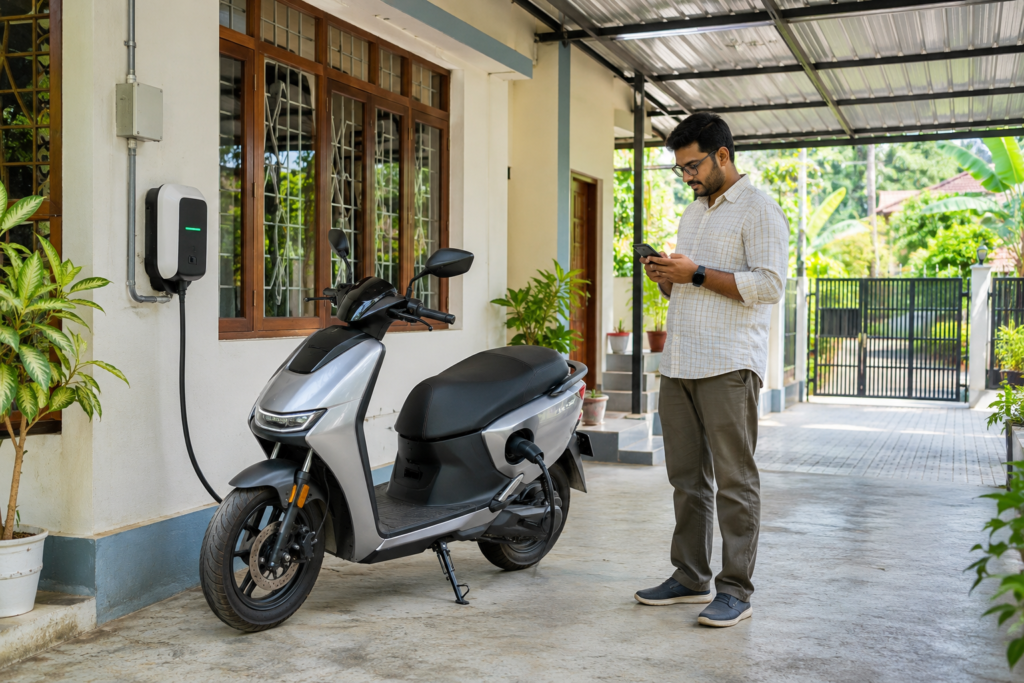
EV charging fire safety starts with the right charger, a suitable electrical supply and a charging area that leaves your escape route clear. For households in Guwahati, Dibrugarh and across Assam, these checks belong alongside everyday home fire prevention.
Electric scooters, phones and power banks use different equipment, but all deserve careful handling. This guide focuses on prevention and recognising warning signs. It does not provide instructions for tackling a burning battery.
Why battery fire safety matters in 2026
The U.S. Fire Administration highlighted lithium-ion battery risks in its October 2026 battery safety article. Its guidance addresses ordinary devices as well as electric mobility products. The practical lesson is to build safe charging into your routine rather than wait for an incident.
A household can begin with a simple inventory: which devices charge every day, where are they placed and who notices when charging is complete? A shared routine is especially useful in rented homes where several residents use the same sockets.
Before charging an electric scooter at home
- Read the vehicle manual. Follow the manufacturer’s instructions for the battery, charger, environment and charging duration.
- Use approved equipment. Choose the supplied charger or a replacement specifically approved for that model. A connector fitting physically does not establish compatibility.
- Get the installation checked. Ask a qualified electrician to assess the outlet, circuit and protective arrangements for the manufacturer’s requirements. Do not improvise a charging connection.
- Choose the location carefully. Keep the charging space dry, ventilated and away from combustible storage. Leave doors, stairs and shared passages unobstructed.
For small devices, use a firm surface rather than a bed or sofa. Avoid makeshift extension-board arrangements. USFA’s fire prevention resources advise direct outlet connections and professional electrical checks when circuit suitability is uncertain.
Warning signs: when to stop using a battery
Unexpected swelling, unusual heat, leakage, strange odours, hissing or popping are warning signs. Stop using the device and seek advice from its authorised service provider. Do not open, puncture or attempt to repair a battery pack yourself.
The USFA battery fire safety checklist also advises keeping batteries away from direct sunlight and combustible materials. Follow the product’s storage limits; a hot vehicle is not a suitable place for a spare power bank.
If a battery starts smoking or burning
Move away, warn others and leave by a safe route. Do not pick up a smoking device or try to carry a burning scooter outside. Call the fire service from a safe place and explain that a lithium-ion battery or electric vehicle is involved. Keep people away and follow responders’ instructions.
A battery incident can develop rapidly. Apparent extinguishment does not necessarily mean it is safe to approach: the USFA response guidance identifies a risk of reignition. Do not reconnect, reuse or arrange ordinary transport for a damaged battery without specialist direction.
A five-question household charging check
- Is this the correct charger for this exact device?
- Is the equipment visibly undamaged?
- Is the charging area clear and suitable?
- Can everyone still reach an exit?
- Does the household know whom to call and where to meet outside?
Use these questions as a conversation starter, not an electrical inspection certificate. For a broader approach to preparation, read NEFSA’s guide to emergency response training in Assam.
Frequently asked questions
Can any charger be used for an electric scooter?
No. Use equipment specified or approved by the vehicle manufacturer. Check the manual or authorised service centre before replacing a charger.
Can I put an old lithium-ion battery in household rubbish?
No. Ask the manufacturer, authorised collection centre or local authority about suitable collection arrangements. Do not place it in mixed household rubbish.
Does a normal extinguisher make a battery fire safe?
Do not assume that it does. Battery fires present specialist challenges. Prioritise evacuation and professional response.
Build awareness before an emergency
Families, landlords and student accommodation managers can include charging locations in routine safety discussions. Explore NEFSA’s fire safety awareness work or contact NEFSA to ask about current training options.
Reviewed: 17 November 2026. General awareness guidance; follow your product manual and local fire service advice. Featured image is AI-generated and does not depict a real incident.