Workplace safety is no longer limited to following a checklist or responding after an accident occurs. Modern industries need trained professionals who can identify hazards, reduce risks, support emergency preparedness and promote a strong safety culture.
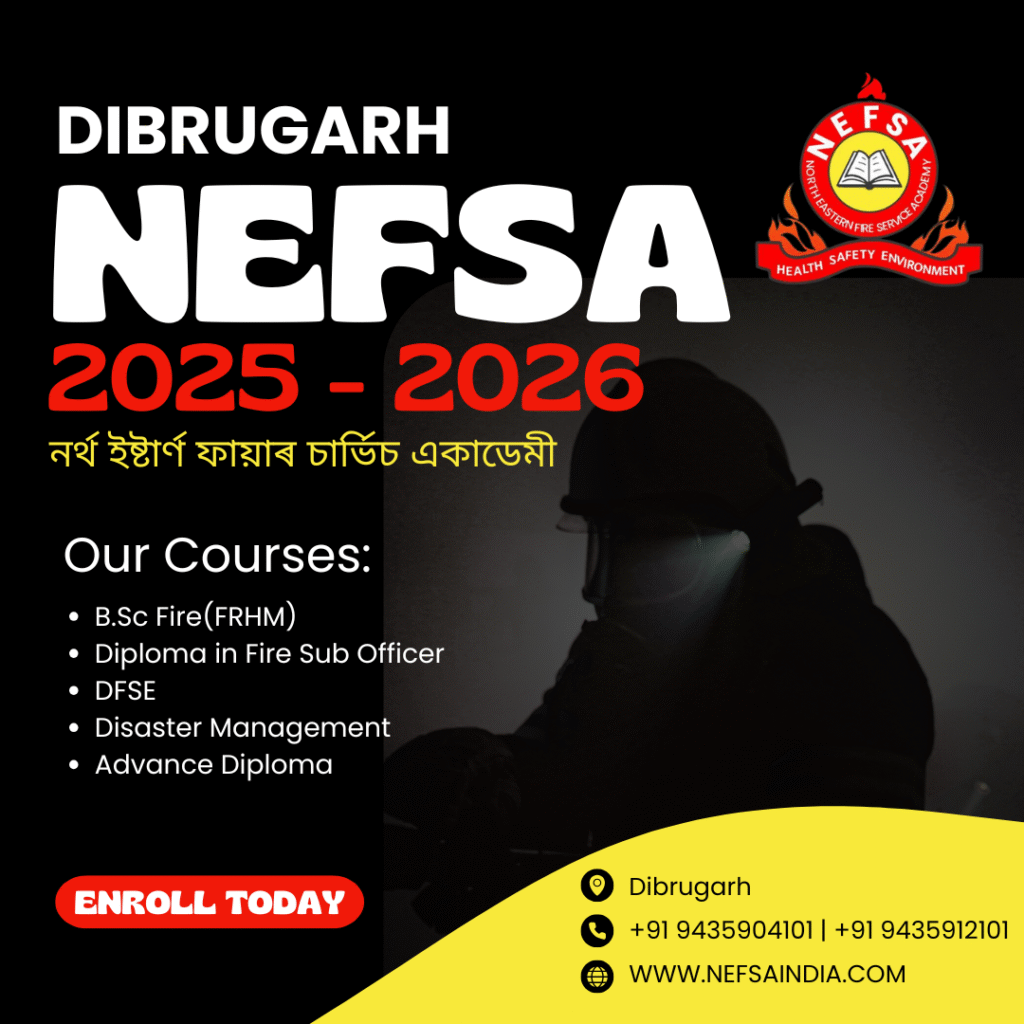
For students looking to build a future in fire and industrial safety, choosing the right educational institution is an important first step. NEFSA Academy focuses on career-oriented safety education designed to help learners develop practical knowledge, professional discipline and industry-relevant skills.
Whether you are a recent school graduate, a working professional or someone planning to enter the safety sector, NEFSA Academy can help you begin your journey toward a responsible and rewarding career.
Why Is Safety Education Important Today?
Industries such as construction, manufacturing, oil and gas, logistics, mining, power, healthcare and infrastructure operate in environments where hazards must be properly controlled. Fires, electrical incidents, chemical exposure, equipment failures and unsafe work practices can lead to serious consequences.
India’s Occupational Safety, Health and Working Conditions Code, 2020 brings occupational safety, health and working-condition requirements within a consolidated legal framework. This reflects the importance of organised workplace-safety practices across different sectors.
The Directorate General Factory Advice Service and Labour Institutes, or DGFASLI, also conducts programmes covering subjects such as hazard identification, industrial hygiene, safety auditing, emergency preparedness, first aid and accident investigation.
These developments highlight why employers need people who understand safety procedures and can apply them in real working environments.
Career-Oriented Learning at NEFSA Academy
Career-oriented education connects classroom learning with workplace responsibilities. Instead of studying concepts only for examinations, students should understand how safety principles are applied on construction sites, industrial premises and other high-risk workplaces.
At NEFSA Academy, students can develop knowledge across important areas of fire and industrial safety, which may include:
- Fire prevention and protection principles
- Workplace hazard identification
- Risk assessment fundamentals
- Emergency preparedness and response
- Safe use of personal protective equipment
- Industrial accident prevention
- Evacuation planning and fire drills
- Basic first aid awareness
- Workplace health and safety practices
- Safety documentation and reporting
The exact subjects and practical components depend on the course selected. Prospective students should review the current syllabus, eligibility criteria, duration, certification and assessment structure before taking admission.
Practical Knowledge for Real Workplace Situations
Safety professionals are expected to remain calm, observant and responsible. They may need to recognise an unsafe condition, report a hazard, inspect equipment, participate in an emergency drill or guide workers during an evacuation.
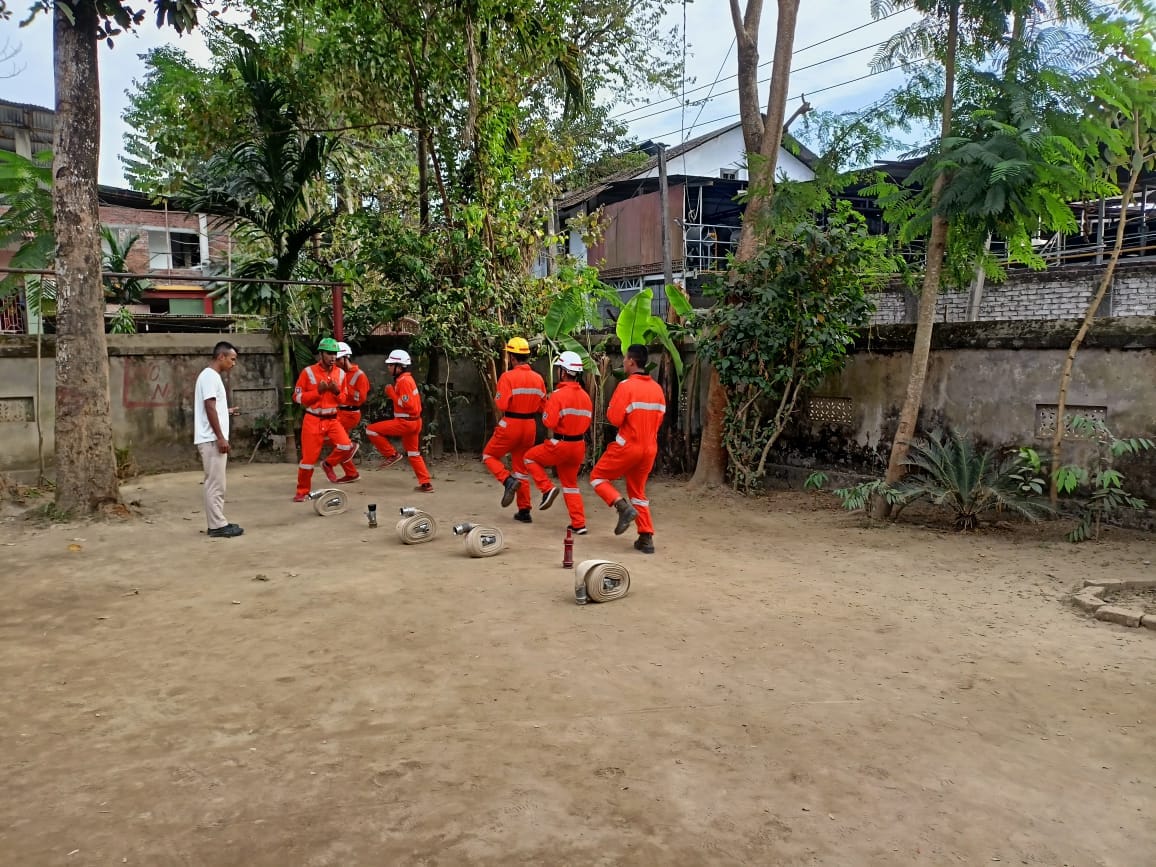
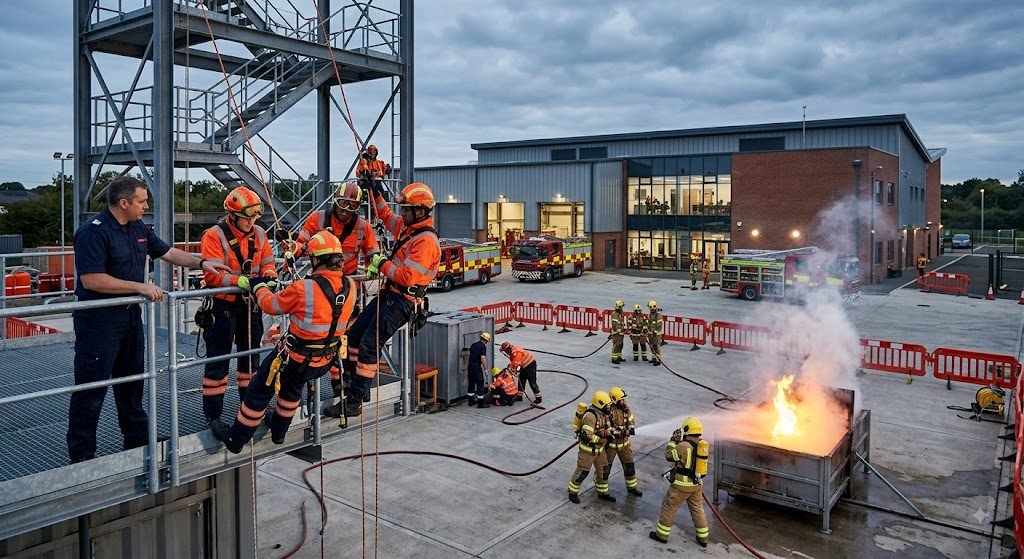
For this reason, effective fire and safety education should combine theory with practical learning. Demonstrations, case-based discussions, equipment familiarisation and emergency exercises can help students understand how safety procedures work beyond the classroom.
The National Disaster Management Authority’s fire-safety guidance emphasises measures such as keeping fire extinguishers at strategic locations, maintaining their functionality and ensuring that people know how to use them. It shows that fire safety depends not only on the availability of equipment but also on awareness, preparation and correct action.
NEFSA Academy’s career-oriented approach can help students build this practical mindset and understand the importance of prevention, preparedness and timely response.
Develop Skills That Employers Value
Technical knowledge is essential, but safety professionals also require strong workplace skills. Employers may look for candidates who can communicate clearly, follow procedures, maintain records and work responsibly with different teams.
A professionally prepared safety student should gradually develop:
- Careful observation and attention to detail
- Clear verbal and written communication
- Teamwork and leadership qualities
- Emergency-response awareness
- Problem-solving ability
- Professional discipline and punctuality
- Confidence in reporting unsafe conditions
- Basic safety inspection and documentation skills
These abilities can help candidates perform more effectively in entry-level safety roles and continue learning as they gain industry experience.
Understanding Hazard Identification and Risk Control
Hazard identification is one of the foundations of occupational safety. A hazard may arise from electricity, machinery, chemicals, fire, poor housekeeping, work at height, confined spaces or the incorrect use of tools and equipment.
Students studying fire and industrial safety should understand how to:
- Identify a potential hazard.
- Determine who may be affected.
- Understand the possible consequences.
- Evaluate the level of risk.
- Recommend suitable control measures.
- Monitor whether those controls are effective.
This structured approach helps organisations move from reactive accident management to proactive accident prevention. It also prepares students to understand common safety processes such as workplace inspections, toolbox talks, permit-to-work systems and incident reporting.
Preparation for Opportunities Across Multiple Industries
Fire and safety education can support career exploration across a wide range of sectors. Depending on qualifications, experience, employer requirements and applicable regulations, learners may explore opportunities in:
- Construction and infrastructure projects
- Manufacturing units and factories
- Oil, gas and energy operations
- Warehouses and logistics facilities
- Hospitals, hotels and commercial properties
- Airports, transport facilities and large institutions
- Fire-prevention and emergency-support services
- Safety-equipment and facility-management companies
Possible entry-level designations may include Safety Assistant, Fire Safety Assistant, Safety Supervisor, EHS Assistant, HSE Trainee or Emergency Response Team Member.
Job titles and eligibility requirements vary significantly between employers. Completing a course does not automatically guarantee appointment, so students should verify whether a chosen qualification meets the requirements of their intended employer, industry or government recruitment notification.
Importance of Emergency Preparedness
An emergency can develop rapidly, particularly in an industrial or commercial environment. A trained person should understand how to raise an alarm, communicate important information, follow an evacuation procedure and support a coordinated response without creating additional risk.
Emergency-preparedness education may introduce students to:
- Fire alarm and reporting procedures
- Emergency exits and assembly points
- Evacuation planning
- Fire extinguisher selection and basic operation
- Roles of emergency-response teams
- Rescue and first-response precautions
- Incident communication and documentation
- Post-incident review and corrective action
The NDMA’s guidelines on fire services also recognise the importance of appropriate equipment and training in strengthening fire-service capabilities. This reinforces the value of structured education for anyone planning to work in fire prevention or emergency response.
Career Guidance and Placement Support
Students often need help understanding what to do after completing their course. Career guidance can help them identify suitable roles, prepare a professional résumé, improve interview confidence and understand employer expectations.
NEFSA Academy’s emphasis on career guidance and placement support can assist learners in preparing for opportunities relevant to their qualifications. Students should participate actively in career sessions, practical training and interview preparation rather than depending only on the final certificate.
Placement support should be understood as assistance in career preparation and connecting students with suitable opportunities. Selection ultimately depends on factors such as vacancies, employer criteria, interviews, practical ability, medical fitness and individual performance.
A Relevant Choice for Students in Northeast India
Students from Assam and other parts of Northeast India may prefer an academy that allows them to pursue professional safety education closer to home. This can make career-focused learning more accessible while preparing them for employment opportunities within the region and elsewhere in India.
With continuous growth in infrastructure, construction, logistics, manufacturing and commercial development, awareness of workplace safety is becoming increasingly important. A locally accessible institution such as NEFSA Academy can help aspiring students begin building the knowledge and confidence needed to participate in this professional field.
How to Choose the Right Safety Course
Before applying for a fire and safety programme, students should compare their options carefully. Important questions include:
- What are the minimum eligibility requirements?
- What subjects are included in the syllabus?
- Does the programme offer practical training?
- What is the total course duration and fee?
- Which organisation issues the certificate?
- Is the qualification accepted by the intended employer?
- What career guidance or placement assistance is available?
- Are there physical or medical standards for the desired job?
Students can also explore national skill-development resources through the Skill India Digital Hub to understand the broader importance of vocational and job-oriented education.
Why Choose NEFSA Academy?
NEFSA Academy can be considered by students seeking focused education in fire prevention, industrial safety, hazard awareness and emergency preparedness. Its career-oriented approach aims to help learners move beyond theoretical study and develop a professional safety mindset.
Key reasons to consider NEFSA Academy include:
- Career-focused fire and safety education
- Exposure to practical safety concepts
- Development of industry-relevant knowledge
- Emphasis on discipline and professional responsibility
- Career guidance and placement support
- An accessible option for students from Assam and Northeast India
- Preparation for opportunities across multiple industrial sectors
Students should contact the academy directly for the latest information about available courses, fees, admission requirements, certification, training facilities and placement-support terms.
Build a Safer and More Responsible Career
A career in fire and industrial safety carries significant responsibility. Safety personnel help protect workers, property, equipment and the surrounding environment. Their work can contribute to accident prevention, emergency preparedness and safer business operations.
Choosing NEFSA Academy for career-oriented safety education can be the beginning of a meaningful professional journey. With the right training, consistent practice and a willingness to keep learning, students can prepare themselves for opportunities in India’s growing safety and emergency-management sector.
If you are serious about developing practical knowledge and building a future in fire and industrial safety, explore the programmes available at NEFSA Academy and take your first step toward becoming a trained safety professional.