Fire and industrial safety professionals play an important role in protecting people, property and workplaces from accidents, fires and other emergencies. With industries increasingly focusing on workplace safety, emergency planning and hazard control, professionally trained candidates can explore opportunities across several sectors.
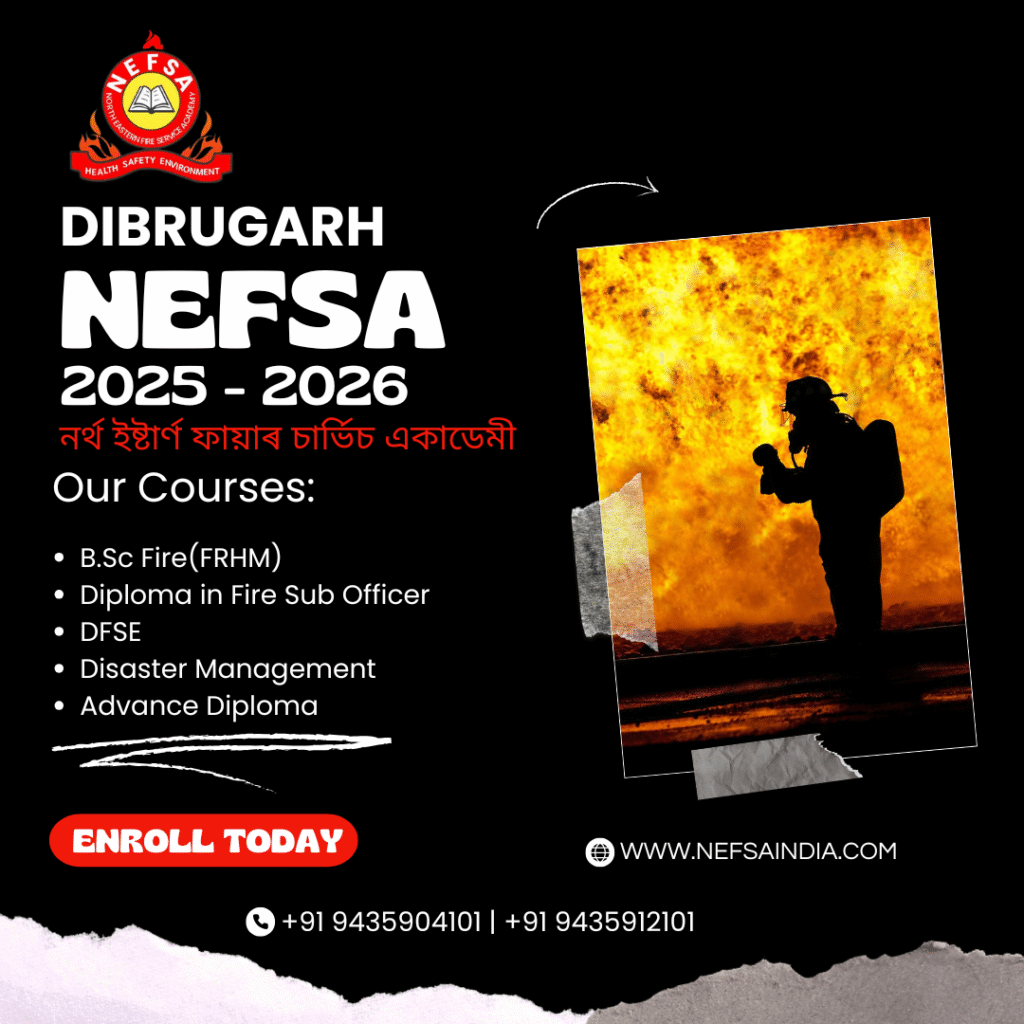
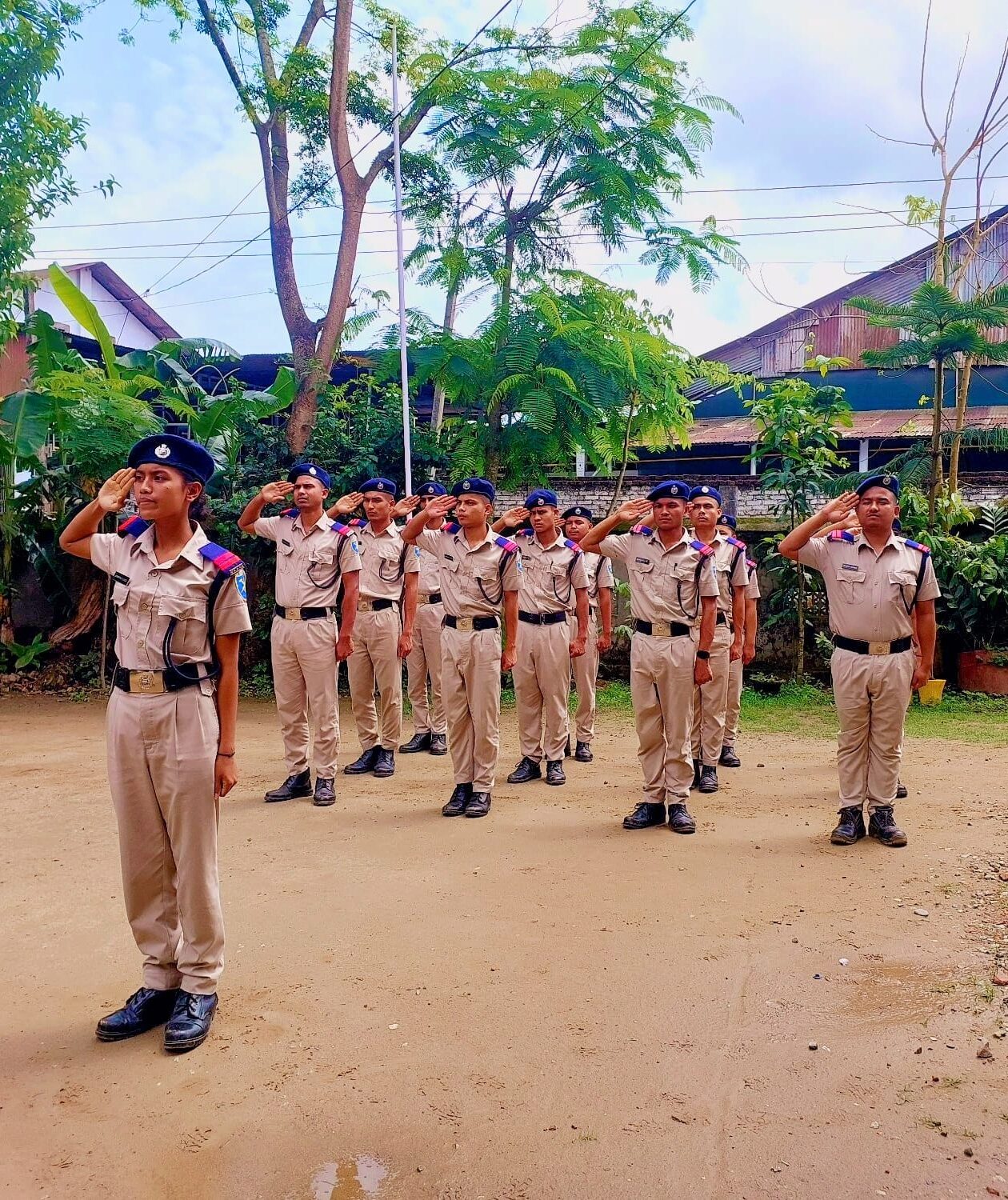
Admissions are currently open at the North Eastern Fire Service Academy (NEFSA) in Dibrugarh, Assam. Students interested in building a career in firefighting, industrial safety, rescue operations or emergency response can apply for NEFSA’s career-oriented training programmes.
Build a Career That Protects Lives and Workplaces
Fire and safety work involves much more than extinguishing fires. Professionals working in this field may be responsible for identifying hazards, inspecting safety equipment, planning evacuations, controlling workplace risks and helping organisations respond effectively during emergencies.
India’s Occupational Safety, Health and Working Conditions Code consolidates laws related to workplace health, safety and working conditions. It states that employers have a responsibility to maintain workplaces free from hazards likely to cause injuries or occupational diseases.
This regulatory focus highlights the importance of trained professionals who understand fire prevention, occupational safety, risk assessment and emergency preparedness.
About North Eastern Fire Service Academy
The North Eastern Fire Service Academy is located at Barbaruah, near Bypass Chariali, Dibrugarh, Assam. According to its official website, the academy provides structured fire and safety education with classroom learning, practical drills and career-focused training.
NEFSA aims to empower young people from Assam and other parts of Northeast India with skills that can help them pursue fire, industrial safety and emergency-response careers.
The academy states that it is affiliated with the Government of Assam’s Skill, Employment and Entrepreneurship Department. Before applying, candidates should independently confirm the approval, affiliation and employment eligibility of their selected course directly with NEFSA and the relevant authority.
Fire and Industrial Safety Courses Available at NEFSA
NEFSA offers different programmes for candidates with varying educational qualifications and career objectives. The academy’s official course page lists programmes that include the following:
Fire Technology and Industrial Safety Management
This programme introduces students to fire prevention, industrial hazards and workplace safety management. According to NEFSA, applicants who have passed Class 10 may be eligible.
Subjects and training areas may include:
- Fire science and combustion
- Industrial safety management
- Fire protection systems
- Occupational health and safety
- Risk assessment and hazard control
- Disaster management
- Emergency planning
The programme may support entry-level career pathways such as fire safety officer, industrial safety supervisor, safety inspector and emergency-response team member. Actual eligibility for any position will depend on the employer, applicable regulations and the candidate’s complete qualifications.
Diploma in Fire Sub-Officer
The Diploma in Fire Sub-Officer programme focuses on operational firefighting, rescue work and team supervision. NEFSA lists Class 10 as the minimum educational eligibility for this programme.
Training areas may include:
- Firefighting methods
- Firefighting equipment handling
- Hose and ladder drills
- Rescue operations
- First aid and CPR
- Evacuation procedures
- Fire-station operations
- Emergency communication
This course may be suitable for candidates interested in operational and supervisory roles in fire and emergency services.
Diploma in Fire Safety Engineering
This programme is designed to develop an understanding of fire-protection systems, safety engineering and accident-prevention practices. Students may learn how fire risks are assessed and how preventive systems are planned for industrial and commercial properties.
Candidates should contact NEFSA for the latest information about eligibility, duration, syllabus, certification and admission requirements.
Industrial Safety and Occupational Safety Programmes
Industrial safety education commonly covers workplace hazard identification, accident prevention, safe operating procedures, personal protective equipment and emergency-response planning.
The Directorate General Factory Advice Service and Labour Institutes, under India’s Ministry of Labour and Employment, conducts professional programmes and publishes resources related to occupational safety and health. Its work demonstrates the importance of structured safety education, practical exercises, case studies and industrial exposure in preparing safety professionals.
Candidates should note that different safety posts may require specific qualifications recognised under state rules or industry regulations. Completing a general course does not automatically guarantee eligibility for every statutory safety-officer position.
Why Practical Training Matters in Fire and Safety Education?
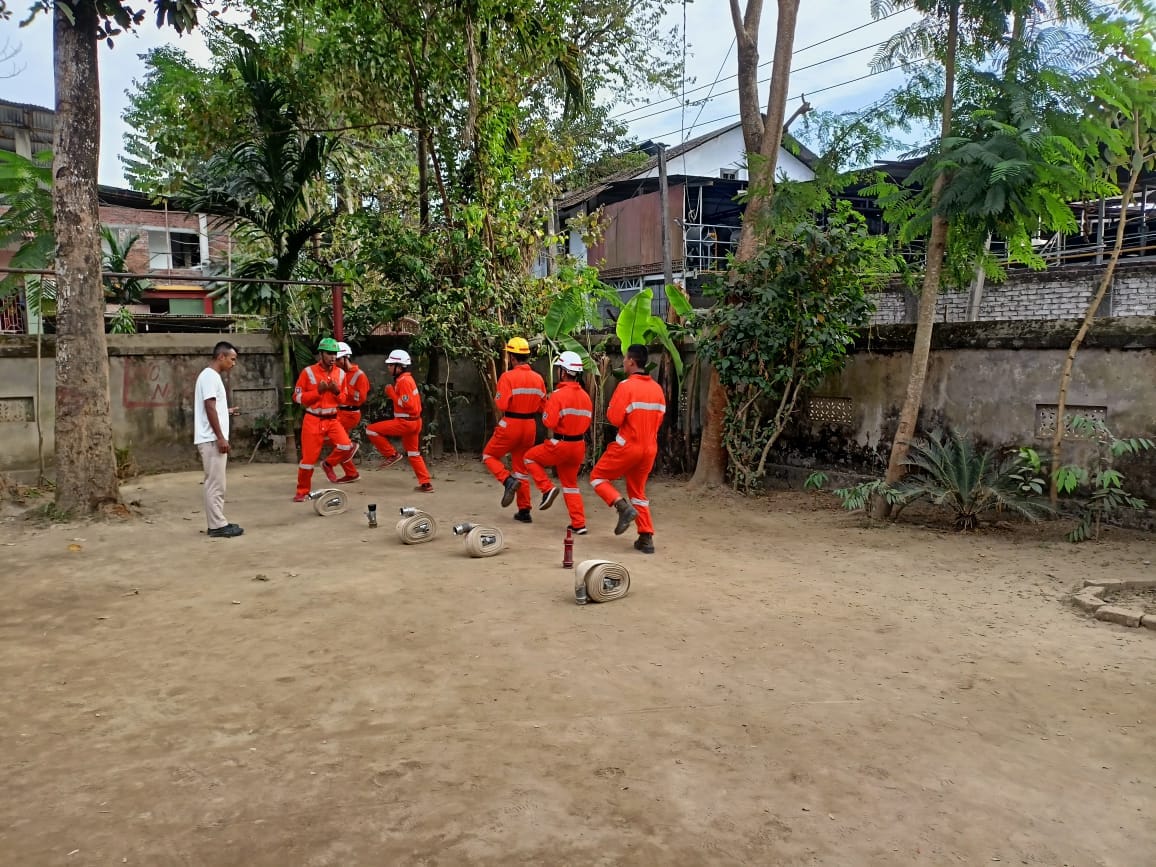
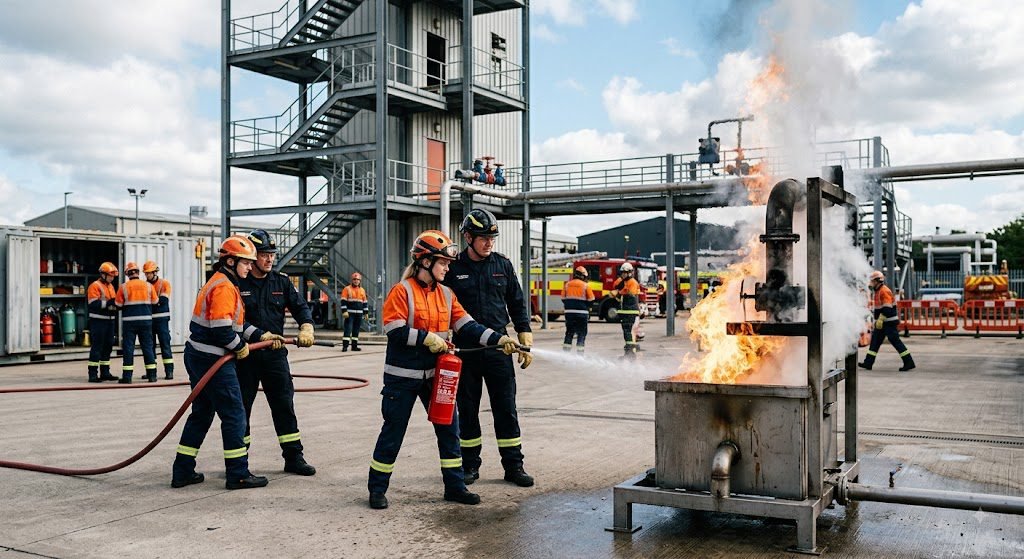
Firefighting and emergency response cannot be learned through theory alone. Candidates need opportunities to understand equipment, practise coordinated responses and make decisions under controlled emergency conditions.
Practical fire and industrial safety training may include:
- Fire-extinguisher identification and operation
- Hose handling and water-delivery techniques
- Ladder and rescue drills
- Evacuation exercises
- First-aid and CPR practice
- Hazard identification
- Use of personal protective equipment
- Emergency communication
- Mock fire and disaster-response exercises
NEFSA states that its courses combine structured theory with hands-on drills. Applicants should visit the academy, inspect the training facilities and ask how frequently practical sessions are conducted before confirming admission.
Skills Students Can Develop at NEFSA
Technical knowledge is important, but fire and safety professionals also require discipline, physical readiness and the ability to work as part of a coordinated team.
Students may develop skills such as:
- Fire-hazard identification
- Emergency decision-making
- Equipment handling
- Risk assessment
- First response and basic rescue
- Safety inspection
- Incident reporting
- Teamwork and leadership
- Clear communication under pressure
- Workplace safety awareness
These transferable skills may be useful across emergency services, industrial sites, construction projects and safety departments.
Career Opportunities After Fire and Safety Training
Qualified candidates may explore opportunities in industries where fire prevention, workplace safety and emergency preparedness are operational priorities.
Potential employment sectors include:
- Oil and gas
- Manufacturing
- Construction and infrastructure
- Power plants
- Warehouses and logistics facilities
- Airports
- Hospitals
- Hotels and shopping centres
- Educational institutions
- Corporate buildings
- Public-sector undertakings
- Private fire and safety service providers
Possible job titles may include:
- Firefighter
- Fire and Safety Technician
- Safety Supervisor
- Fire Safety Officer
- Emergency Response Assistant
- Safety Inspector
- Fire Control Room Operator
- Industrial Safety Assistant
- Disaster Response Team Member
- EHS Assistant
Job titles, statutory eligibility, salaries and recruitment conditions vary between employers. Applicants should carefully review individual job notifications rather than assuming that one qualification is accepted everywhere.
Who Can Apply for NEFSA Admission?
NEFSA lists Class 10 eligibility for some of its programmes, including Fire Technology and Industrial Safety Management and Diploma in Fire Sub-Officer. Other courses may require Class 12, graduation or a relevant technical qualification.
The exact requirements can differ depending on the programme. Applicants should confirm:
- Minimum educational qualification
- Age requirements
- Medical and physical-fitness standards
- Course duration
- Attendance requirements
- Examination structure
- Certificate or diploma-awarding authority
- Total course fees
- Hostel availability
- Placement-assistance terms
Candidates should never rely only on advertisements or social-media posts while making an admission decision. Written confirmation from the academy is advisable.
How to Apply for Fire and Industrial Safety Courses at NEFSA
Students can begin the admission process by following these steps:
- Visit the official NEFSA website.
- Review the available fire and industrial safety courses.
- Select a programme based on educational qualifications and career goals.
- Contact the admission office to confirm eligibility and seat availability.
- Ask for the current prospectus, fee structure and course-recognition details.
- Prepare the required educational and identity documents.
- Complete the admission form accurately.
- Retain copies of the submitted form, receipts and official correspondence.
Admission information may change between academic sessions, so candidates should obtain the latest details directly from the academy.
Questions to Ask Before Taking Admission
A well-researched admission decision can prevent confusion later. Students and parents should ask NEFSA the following questions:
- Which authority awards or recognises the qualification?
- Is the selected programme currently affiliated or approved?
- Is the qualification accepted for the intended job or state?
- How many practical training hours are included?
- Are live drills, industrial visits or internships provided?
- What safety equipment is available for student training?
- What is included in the total fee?
- Does the academy provide placement assistance or guaranteed employment?
- Which employers recruited students in the previous academic year?
- Are hostel, uniform and examination charges separate?
Any placement claim should be verified in writing. Placement assistance can support job searching, but it should not be treated as a guarantee of employment unless the institution provides explicit contractual terms.
Why Consider NEFSA in Dibrugarh?
NEFSA offers students from Assam and the wider Northeast an opportunity to pursue specialised fire and safety education within the region. Its Dibrugarh location may be convenient for candidates from Upper Assam, Arunachal Pradesh, Nagaland and neighbouring areas.
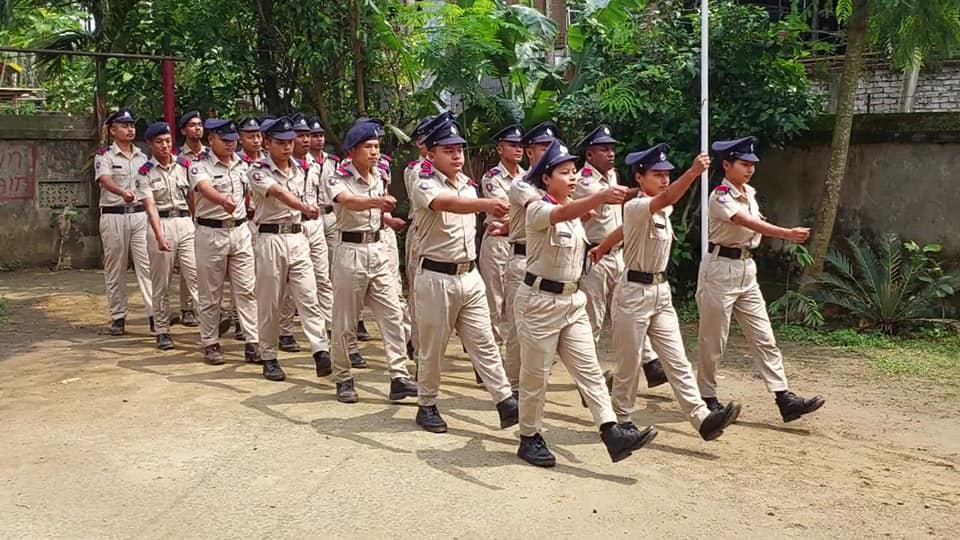
The academy’s emphasis on discipline, equipment-based learning, fire drills and emergency simulations can help candidates become more familiar with the realities of safety-related work. However, applicants should compare the syllabus, recognition, facilities, fees and outcomes with other institutes before enrolling.
Start Your Fire and Safety Journey Today
A career in fire and industrial safety is suitable for people who value discipline, responsibility, teamwork and public service. Proper training can provide the technical foundation required to understand hazards, prevent accidents and respond during emergencies.
If you want to enter this field, explore the available programmes and apply for fire and industrial safety courses at NEFSA. Visit the campus, speak with the admission team and verify every academic and employment-related detail before paying the admission fee.
Admissions are open, and interested candidates can contact NEFSA for updated information about courses, eligibility, fees and seat availability.
NEFSA contact details
- Address: Barbaruah, NH-37, near Bypass Chariali (Zero Point), Dibrugarh, Assam – 786007
- Email: info@nefsaindia.com
- Phone: 9126485101, 9435904101, 9435912101, 9127090101
- Website: www.nefsaindia.com
Authoritative External Resources
- Occupational Safety, Health and Working Conditions Code – India Code
- Directorate General Factory Advice Service and Labour Institutes
- DGFASLI Occupational Safety and Health Training Programmes
Course details, eligibility, affiliation and admission availability can change. Candidates should verify the latest information directly with NEFSA and the relevant regulatory or awarding authority before enrolling.