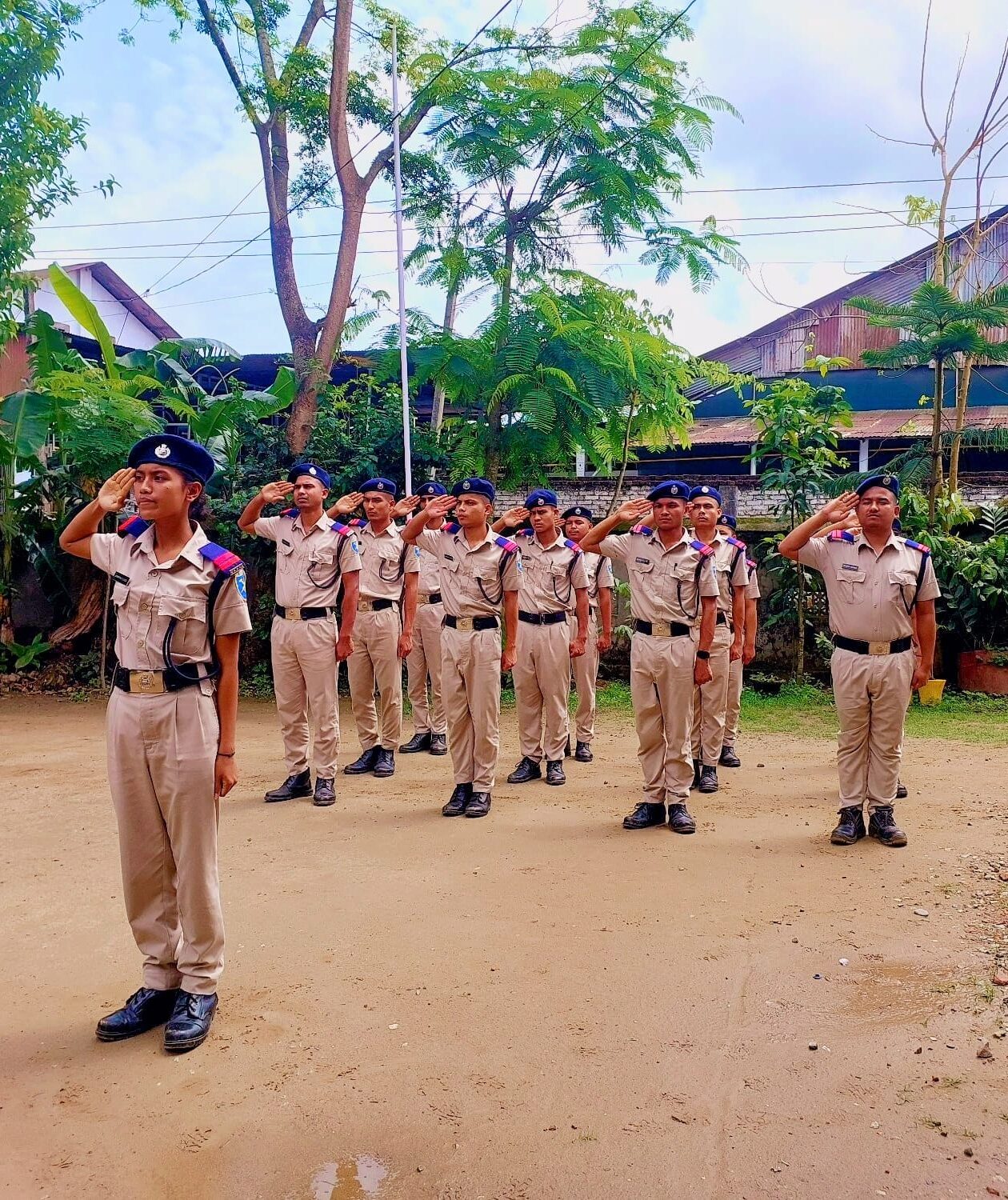
Choosing the right career after Class 10 or 12 is an important decision for every student. If you are interested in firefighting, industrial safety, emergency rescue, disaster management or workplace safety, enrolling in a fire and safety course in Assam can help you develop valuable professional skills.
Fire and safety professionals play an important role in protecting lives, preventing workplace accidents and maintaining safety standards across industries. From oil refineries and manufacturing plants to airports, construction sites, hospitals and commercial buildings, trained safety personnel support safer operations.
For students searching for fire and safety courses after 10th or 12th in Assam, several vocational and professional training pathways are available.
One institution offering fire and industrial safety education in Northeast India is North Eastern Fire Service Academy (NEFSA), located in Dibrugarh, Assam.
In this comprehensive 2026 career guide, we will explore the top fire and safety courses available in Assam, eligibility requirements, career prospects, employment sectors, admission procedures and important considerations before choosing a training institute.
1. Why Choose Fire and Safety Courses After 10th or 12th?
Fire and industrial safety is a specialised field focused on preventing accidents, controlling hazards, protecting people and responding effectively during emergencies.
As industries expand and safety requirements become increasingly important, organisations require personnel with appropriate training in fire prevention, risk assessment, occupational safety and emergency preparedness.
Professional fire and safety courses help students gain technical knowledge and practical experience.
Major benefits of fire and safety training
-
Career opportunities across industries: Explore roles in oil and gas, construction, manufacturing, healthcare, hospitality and other sectors.
-
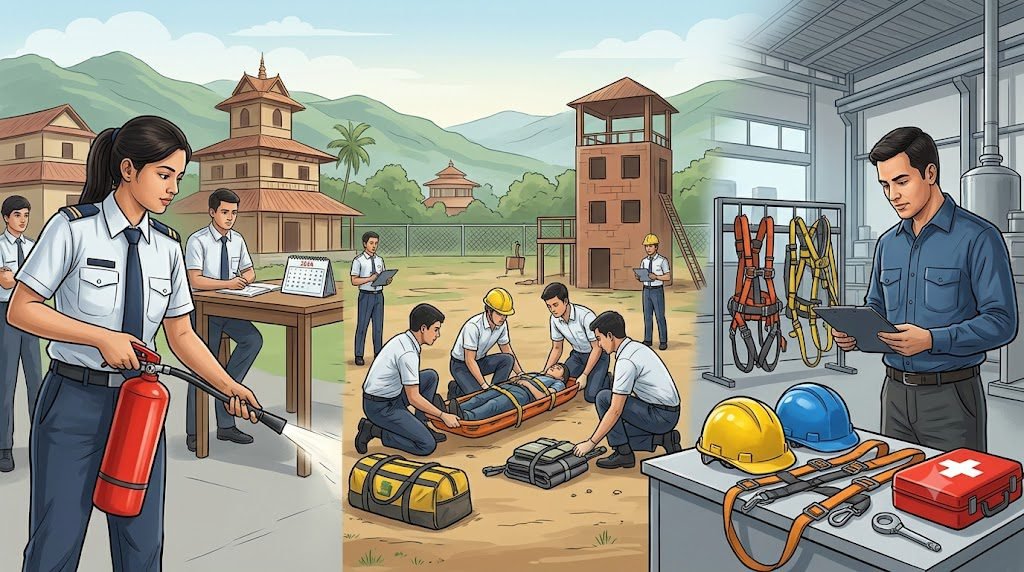
Practical skill development: Learn firefighting techniques, emergency rescue procedures, first aid and hazard identification.
-
Professional development: Build foundational knowledge for further education and specialised safety certifications.
-
Employment opportunities in India and abroad: Relevant qualifications and experience may support applications to domestic and international employers.
-
Contribution to public safety: Help protect employees, communities, property and infrastructure.
Students should understand that completing a course does not guarantee employment. Recruitment depends on recognised qualifications, practical competencies, experience and employer-specific eligibility criteria.
2. Top Fire and Safety Courses in Assam After 10th and 12th
Students can choose from vocational certificates, diplomas and degree programmes based on their educational background and career interests.
The following are some important fire and safety training pathways to explore.
| Fire and safety course | Educational eligibility | Career direction |
|---|---|---|
| Fire Technology and Industrial Safety Management | Class 10 pass for certain programmes | Industrial safety and fire prevention |
| Diploma in Fire Sub-Officer | Class 10 pass under NEFSA’s published criteria | Fire service and emergency operations |
| Diploma in Fire Safety Engineering | Class 10 pass under NEFSA’s published criteria | Fire protection and technical safety |
| B.Sc. in Fire Safety and Hazard Management | Class 12 Science under NEFSA’s published criteria | Safety management and hazard control |
| DGT Fireman Trade | Class 10 pass | Firefighting and emergency response |
| DGT Fire Technology and Industrial Safety Management Trade | Class 10 pass | Industrial fire prevention and safety |
Eligibility, duration, awarding authority and recognition can vary between institutes. Students should verify these details directly before admission.
3. Fire Technology and Industrial Safety Management Course
The Fire Technology and Industrial Safety Management course is an option for students who want to understand industrial fire prevention, workplace safety and emergency response operations.
This field combines scientific knowledge of fire with practical industrial safety procedures.
What students can learn
The curriculum may include:
-
Fire science and combustion principles
-
Fire prevention and protection methods
-
Industrial safety rules and procedures
-
Workplace hazard identification
-
Occupational health and safety
-
Fire extinguishers and firefighting equipment
-
Emergency evacuation procedures
-
Accident prevention and investigation
-
Basic rescue and first aid
-
Industrial risk assessment
Career opportunities
With suitable qualifications and experience, students may explore careers as:
-
Fire safety technician
-
Industrial safety assistant
-
Fire prevention technician
-
Emergency response team member
-
Safety supervisor trainee
-
Workplace safety assistant
The Directorate General of Training (DGT), Government of India, also specifies a vocational trade in Fire Technology and Industrial Safety Management.
Students can explore its training information through the official Directorate General of Training website.
4. Diploma in Fire Sub-Officer
A Diploma in Fire Sub-Officer is designed to introduce students to firefighting operations, emergency preparedness, rescue techniques and fire service procedures.
The programme may be suitable for students interested in operational roles involving teamwork, discipline and emergency management.
Important subjects
-
Fundamentals of firefighting
-
Fire service organisation
-
Handling of firefighting equipment
-
Rescue operations and emergency response
-
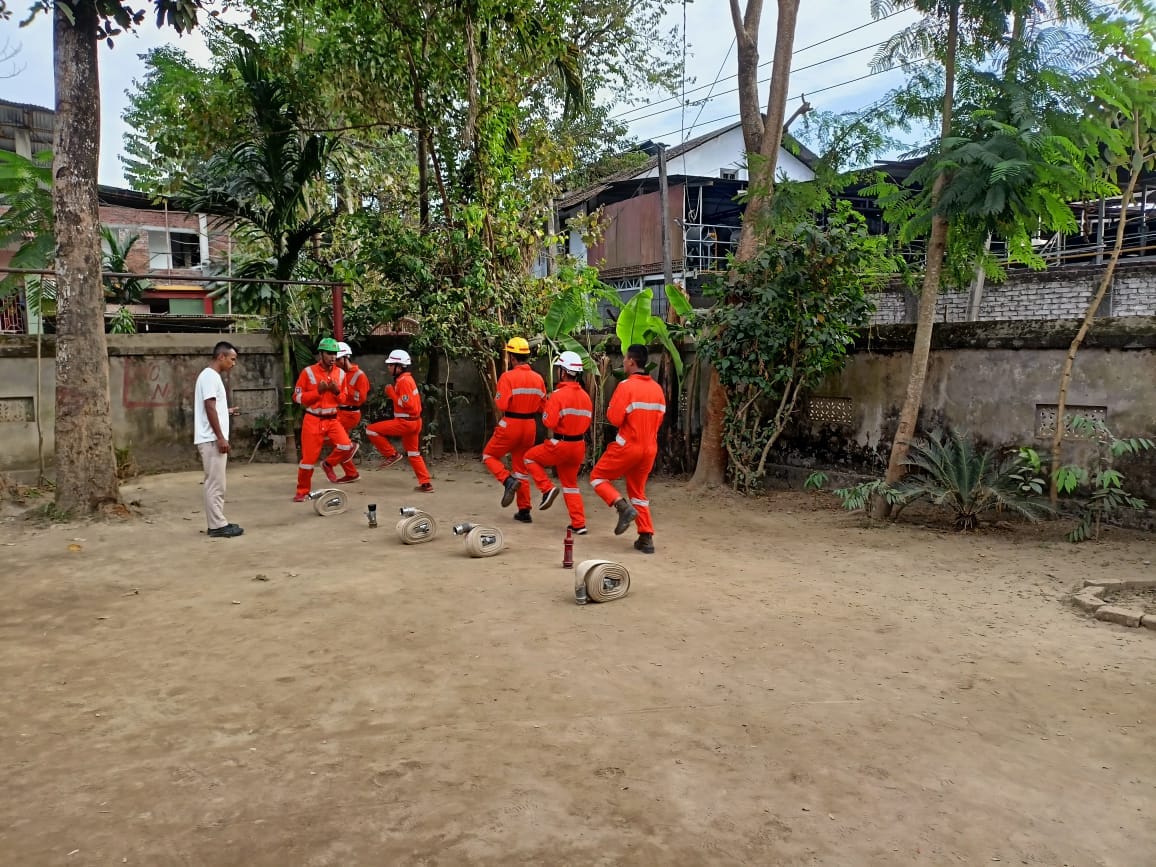
Fire hose and ladder drills
-
Fire prevention techniques
-
First aid and casualty handling
-
Fire safety inspections
-
Emergency communication and coordination
Career scope
Students can explore opportunities in private industrial fire teams, emergency response services, fire protection operations and related support positions, depending on their qualifications.
Important: Completing a Diploma in Fire Sub-Officer does not automatically make someone eligible for a government Sub-Officer position. Government recruitment involves separate educational, physical, medical and examination requirements.
Students interested in government employment should regularly visit the Assam Fire & Emergency Services Department for official information.
5. Diploma in Fire Safety Engineering
A Diploma in Fire Safety Engineering focuses on fire protection principles, hazard control and technical safety management.
This field is particularly relevant to industries and buildings that use fire detection, suppression and emergency protection systems.
Major topics covered
-
Fire detection and alarm systems
-
Fire protection equipment
-
Industrial hazard assessment
-
Electrical fire safety
-
Chemical and industrial fire hazards
-
Building fire safety
-
Fire evacuation planning
-
Safety inspections and preventive maintenance
-
Risk assessment and accident prevention
Possible career opportunities
Students may explore roles such as fire safety technician, fire alarm system assistant, safety inspection assistant or industrial safety support personnel.
Certain professional engineering positions require higher or specifically recognised qualifications. Students should verify the academic level and recognition of any diploma before enrolling.
6. B.Sc. in Fire Safety and Hazard Management After 12th
For students who have completed Class 12 in the Science stream, a B.Sc. in Fire Safety and Hazard Management may provide a broader academic route into the fire safety profession.
This programme focuses on understanding industrial hazards, fire prevention, occupational health, emergency planning and safety management systems.
Subjects commonly associated with this field
-
Principles of fire engineering
-
Industrial and occupational safety
-
Hazard identification and risk assessment
-
Environmental safety
-
Disaster management
-
Emergency response planning
-
Construction safety
-
Industrial accident prevention
-
Safety management systems
-
Fire protection methods
Career opportunities
Graduates may pursue further training or seek relevant entry-level opportunities in occupational safety, industrial safety, compliance support, risk management and emergency preparedness.
Before admission, students should confirm the name of the degree-awarding university, its recognition, the programme’s academic structure and whether the qualification is accepted for their intended career.
7. Government Vocational Fire and Safety Courses After Class 10
Students interested in structured vocational education can also explore trades specified by the Government of India’s Directorate General of Training.
Fireman Trade
The DGT Fireman trade is a vocational training pathway for eligible Class 10 pass students.
The nationally specified course has a duration of six months and includes introductory firefighting and emergency response training.
Important areas include fire prevention, equipment handling, rescue practices and emergency procedures.
Fire Technology and Industrial Safety Management Trade
The DGT also specifies a one-year vocational trade in Fire Technology and Industrial Safety Management for eligible Class 10 pass candidates.
It includes fire prevention, workplace hazard identification, industrial safety and practical emergency preparedness.
Students should check whether these trades are offered at appropriately affiliated training institutes and verify current admission requirements.
For information about government vocational training, visit Directorate General of Training, Government of India.
8. Fire and Safety Career Opportunities in Assam and Northeast India
Assam and the wider Northeast have industries and infrastructure where fire prevention and workplace safety are important operational requirements.
Students with relevant training can research career opportunities across several sectors.
Oil and gas industry
Assam has a long-established oil and gas industry, with industrial activity in regions including Dibrugarh, Tinsukia, Sivasagar and other locations.
Fire prevention, hazardous material management and emergency planning are important considerations in petroleum operations.
Relevant employers and contractors may require safety personnel with additional technical qualifications and experience.
Construction and infrastructure
Construction activities involve hazards such as working at heights, electrical installations, heavy machinery and combustible materials.
Qualified safety professionals help organisations implement preventive measures and emergency arrangements.
Manufacturing and industrial facilities
Factories and industrial plants need suitable safety procedures, fire prevention systems and emergency preparedness.
Hospitals, hotels and commercial properties
Public-facing buildings require fire safety planning, evacuation procedures, inspections and emergency response readiness.
Power and energy sector
Power generation and energy infrastructure involve technical risks that require specialised safety practices.
Government fire and emergency services
Students may also prepare for recruitment opportunities in government fire and emergency services, subject to official selection requirements.
Government vacancies should always be verified through the relevant recruitment authority rather than relying on unofficial job advertisements.
9. How to Become a Fire Safety Officer in Assam
Many students who complete fire and safety training aspire to become Fire Safety Officers, Safety Supervisors or Emergency Response Professionals.
The qualifications required depend on the employer, industry and responsibilities of the position.
Step-by-step career pathway
Step 1: Complete Class 10 or 12
Choose the appropriate educational pathway based on the minimum entry requirements of your preferred course.
Step 2: Enrol in a suitable fire and safety course
Select a training programme that covers fire protection, emergency preparedness, occupational safety and practical firefighting skills.
Step 3: Develop practical skills
Gain supervised experience in fire drills, safety inspections, equipment handling, first aid and emergency procedures.
Step 4: Pursue relevant experience
Look for entry-level positions, apprenticeships or supervised industrial training opportunities appropriate to your qualifications.
Step 5: Upgrade your professional qualifications
Additional certifications, recognised diplomas or degrees may help candidates meet the requirements for specialised occupational safety roles.
Step 6: Apply for suitable vacancies
Read employer job descriptions carefully and verify educational, technical and experience requirements before applying.
10. Fire and Safety Courses After 10th vs After 12th: Which Is Better?
The right course depends on your educational background and long-term career goals.
| After Class 10 | After Class 12 |
|---|---|
| Eligible for selected vocational courses | Eligible for vocational courses and certain higher-level programmes |
| Can develop basic firefighting skills | May pursue degree-level safety education where eligible |
| Suitable for early vocational training | Offers additional academic pathways |
| May pursue further education later | May explore advanced safety qualifications |
| Entry requirements depend on the course | Subject requirements may apply |
Students who have completed Class 10 can begin with an appropriate vocational programme.
Students who have completed Class 12 Science may also explore degree-level education in fire safety and hazard management.
Neither pathway automatically guarantees a particular designation or salary.
11. Why Choose NEFSA Fire Academy in Dibrugarh, Assam?
For students exploring fire and industrial safety education in Northeast India, North Eastern Fire Service Academy (NEFSA) provides several programmes at its Dibrugarh campus.
According to its official course information, NEFSA offers:
-
Fire Technology and Industrial Safety Management
-
Diploma in Fire Sub-Officer
-
Diploma in Fire Safety Engineering
-
B.Sc. in Fire Safety and Hazard Management
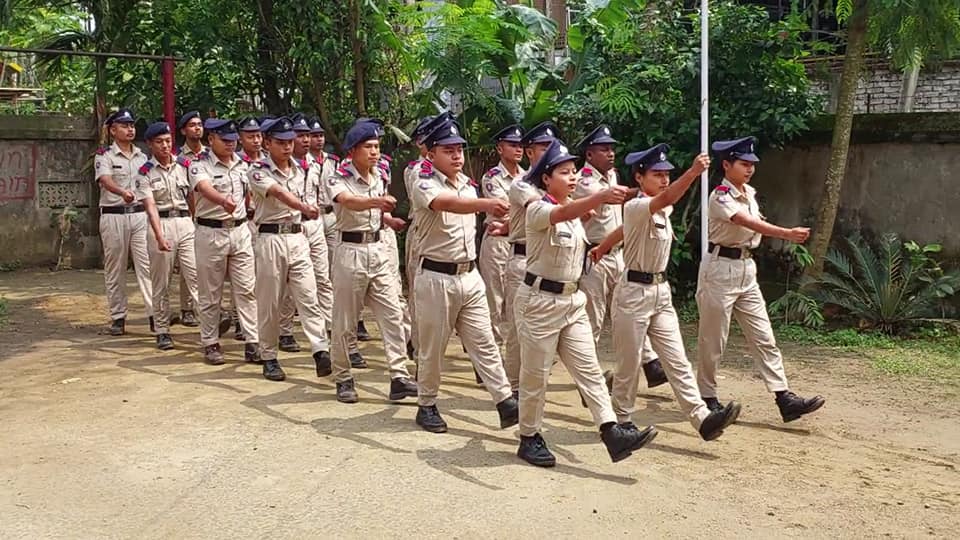
The academy describes a training approach that combines theoretical instruction, practical fire drills and emergency simulations. Its published admission information also states that physical and medical tests are mandatory before admission.
Practical fire safety training
Fire safety education requires more than theoretical knowledge. NEFSA highlights practical exercises involving firefighting equipment, rescue procedures and emergency preparedness.
Multiple educational pathways
The academy publishes programmes for eligible Class 10 and Class 12 Science students, providing different options depending on educational qualifications.
Regional accessibility
Located in Dibrugarh, NEFSA may be convenient for students travelling from different parts of Assam and neighbouring Northeast Indian states.
Industry-oriented subjects
NEFSA’s published curricula cover areas such as fire science, industrial safety, emergency response, occupational health and hazard management.
Students should confirm programme duration, course fees, awarding authority, recognition and current admission availability directly with the academy.
Explore the programmes on the official NEFSA Fire Academy courses page.
12. Fire and Safety Course Admission Process in Assam – 2026
Students planning to join a fire and safety course in Assam should understand the admission process before submitting an application.
Check course eligibility
Confirm whether your preferred programme requires Class 10, Class 12 Science or another specific qualification.
Review course recognition
Ask the institution about the qualification-awarding body, relevant recognition and whether the course meets your intended career requirements.
Prepare necessary documents
Institutions may request documents such as:
-
Class 10 or Class 12 mark sheets
-
Educational certificates
-
Government-issued identification
-
Recent passport-size photographs
-
Other documents specified by the institute
Complete admission assessments
Some training programmes may require physical fitness assessments, medical examinations or additional selection procedures.
Confirm fees and duration
Before making any payment, request written details covering course duration, tuition fees, examination fees, accommodation if applicable, and refund conditions.
Submit your application
Complete the applicable admission form and follow the institution’s instructions.
Students interested in NEFSA can explore the NEFSA admission portal.
13. Can Fire and Safety Students Get Jobs Abroad?
International industries also require occupational health, industrial safety and fire protection professionals.
Potential sectors include oil and gas, construction, manufacturing, energy and industrial operations.
However, international employment depends on employer requirements, relevant experience, recognised qualifications and applicable visa or work-permit rules.
Students planning international careers can research additional qualifications such as the NEBOSH International General Certificate in Occupational Health and Safety.
NEBOSH is an independent qualification-awarding organisation specialising in health, safety and environmental management education.
Official information is available on the NEBOSH International General Certificate website.
Students should avoid assuming that an Indian institutional diploma is automatically equivalent to an international safety certification.
14. How to Select the Best Fire and Safety Training Academy in Assam
Choosing the right institute is an important part of preparing for a professional safety career.
Before admission, students should evaluate the following factors.
Recognition and qualification validity: Verify the programme’s awarding organisation and applicable recognition.
Practical training facilities: Look for supervised firefighting, equipment handling, evacuation and emergency response training.
Qualified instructors: Ask about the teaching team’s education, certifications and practical industry experience.
Relevant curriculum: Review whether the course covers essential fire and industrial safety subjects.
Career guidance: Find out whether the academy provides placement assistance, interview preparation or career counselling. Request verifiable placement information.
Transparent admission policies: Confirm fees, eligibility, course duration and certification details.
Student safety: Check whether practical training is conducted with appropriate supervision and protective equipment.
A suitable academy should help students develop knowledge, practical ability and realistic expectations about employment.
15. Frequently Asked Questions About Fire and Safety Courses in Assam
Q1. Can I join a fire and safety course after Class 10?
Yes. Certain vocational courses and institute-specific programmes accept students who have passed Class 10. Eligibility should be confirmed for each course.
Q2. Which fire and safety courses are available after Class 12?
Students can explore vocational programmes, diplomas and eligible degree programmes such as B.Sc. in Fire Safety and Hazard Management.
Q3. What is the duration of a fire and safety course?
Duration depends on the programme. The DGT Fireman trade lasts six months, while the DGT Fire Technology and Industrial Safety Management trade lasts one year.
Q4. Is fire and safety training suitable for students from Assam?
Yes. Students in Assam can explore fire prevention, industrial safety and emergency response education, subject to course eligibility and personal career interests.
Q5. Can I become a government firefighter after completing a fire safety course?
You may apply for government vacancies if you meet the official eligibility and selection requirements. A course certificate does not guarantee government employment.
The Assam Fire & Emergency Services Department provides official recruitment criteria for different posts.
Q6. Is physical fitness important for fire safety training?
Physical fitness can be especially important for operational firefighting and rescue work. Specific physical or medical requirements vary according to the course and job role.
Q7. Are fire and safety professionals required in oil and gas industries?
Oil and gas operations involve significant industrial hazards. Employers may recruit appropriately qualified safety and emergency response personnel based on operational needs.
Q8. Can students from Meghalaya, Nagaland or Arunachal Pradesh study at NEFSA?
Students from other states can enquire about admission at NEFSA, subject to eligibility and applicable admission requirements.
Q9. Is a fire safety diploma equivalent to an engineering degree?
No. A diploma and an engineering degree are different qualifications. Their recognition and suitability for particular jobs must be evaluated separately.
Q10. How can I apply for NEFSA Fire Academy admission in 2026?
Students can review the academy’s official website, choose a suitable programme and contact its admission department for current application requirements.
16. Conclusion: Start Your Fire and Safety Career in Assam in 2026
A career in fire and industrial safety can offer opportunities to develop practical skills while contributing to the protection of people, workplaces and communities.
Whether you have completed Class 10 or Class 12, choosing the right training programme is an important first step towards entering this specialised profession.
Students should focus on obtaining suitable qualifications, participating in practical training, developing professional competencies and understanding industry recruitment requirements.
For students exploring fire and safety courses in Assam after 10th and 12th, North Eastern Fire Service Academy (NEFSA) in Dibrugarh offers programmes worth considering.
With educational pathways covering fire technology, industrial safety, firefighting operations and hazard management, NEFSA provides options for students interested in fire and safety careers.
Before applying, verify the latest admission requirements, programme recognition, duration and fees.
Explore Fire and Safety Courses at NEFSA Fire Academy Today.
North Eastern Fire Service Academy (NEFSA)
Address: Barbaruah, NH-37, Near Bypass Charali (Zero Point), Dibrugarh, Assam – 786007
Website: www.nefsaindia.com
Courses: Explore Fire and Safety Courses
Admissions: Apply for Admission
Recommended external links for the blog
These reputable websites can be linked naturally within your WordPress article.
| External website | SEO anchor text |
|---|---|
| Directorate General of Training | Government fire and safety vocational courses |
| Assam Fire & Emergency Services | Fire service recruitment requirements in Assam |
| National Fire Service College | National Fire Service College India |
| NEBOSH | International occupational health and safety qualifications |
| National Qualifications Register | Verify recognised vocational qualifications in India |