Choosing the right career after Class 10 or Class 12 is an important decision. While many students follow conventional academic paths, others prefer practical, skill-based education that can prepare them for responsible careers. A fire and safety course is one such option for students interested in firefighting, industrial safety, emergency response, disaster management and workplace protection.
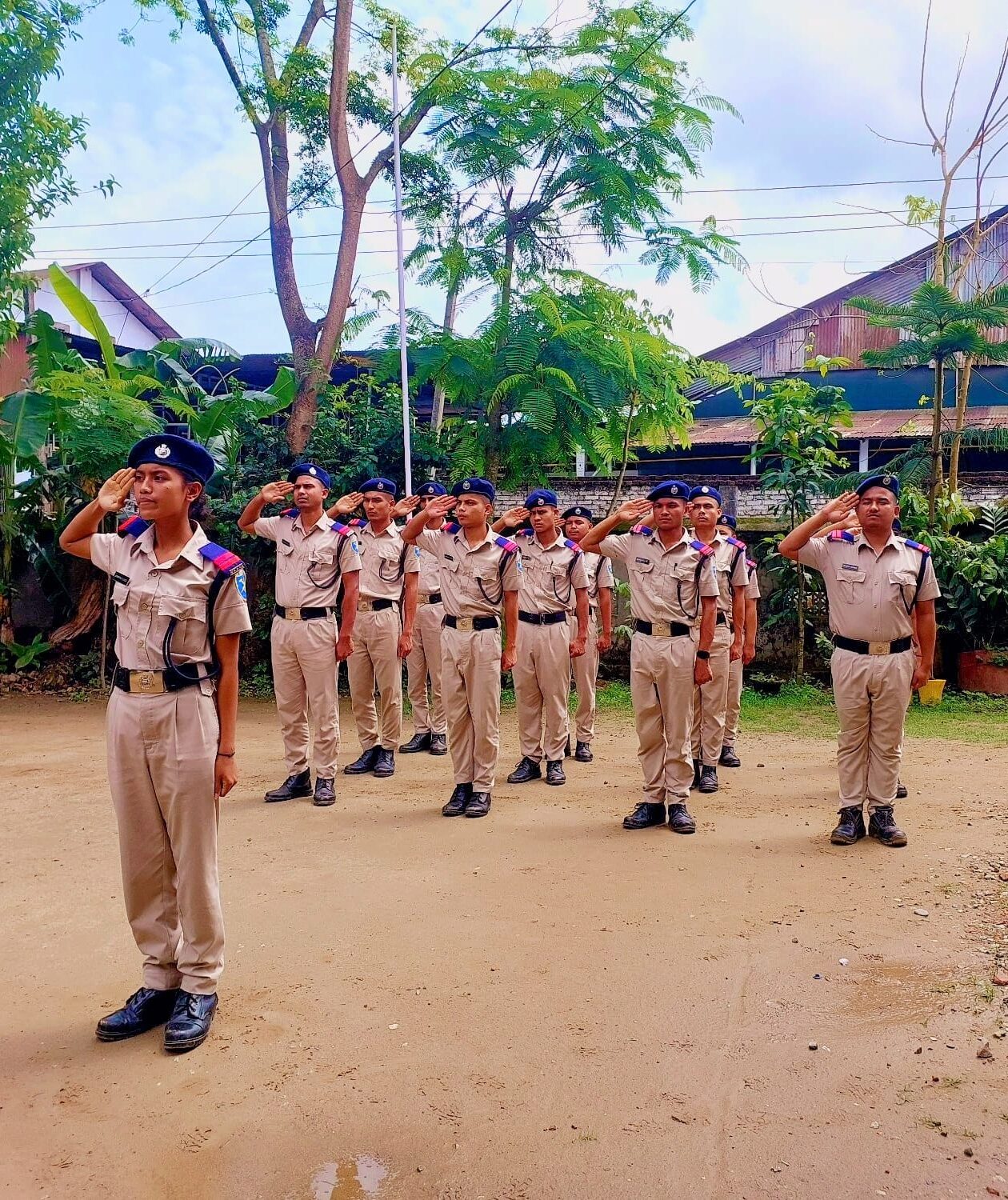
NEFSA Fire Academy offers aspiring students from Assam and other parts of Northeast India an opportunity to develop job-oriented fire and safety skills. Through classroom instruction, practical exercises, physical training and emergency-response preparation, students can build the discipline and technical understanding required in safety-related professions.
Course availability, eligibility, duration, certification, medical standards and admission requirements may differ between programmes. Students should verify the details of their selected course directly with the NEFSA admission office before enrolling.
Can You Study Fire and Safety After Class 10?
Yes, students who have completed Class 10 may find certificate-level or entry-level fire and industrial safety programmes, depending on the eligibility rules of the institution and course.
This is supported by the broader vocational-training landscape in India. For example, the National Institute of Open Schooling lists a Fire Prevention and Industrial Safety vocational programme with an entry qualification below Class 10. Its published structure includes both theory and practical contact hours, demonstrating the practical nature of this field. Students can review the official NIOS Fire Prevention and Industrial Safety programme for general educational reference.
A fire and safety course after the 10th may introduce students to subjects such as:
- Fundamentals and chemistry of fire
- Classes and causes of fire
- Fire prevention methods
- Fire-extinguishing equipment
- Personal protective equipment
- Basic rescue operations
- Emergency evacuation
- First aid and casualty handling
- Industrial and workplace safety
- Physical fitness and discipline
Students should remember that completing a course does not automatically guarantee recruitment. Government departments, defence-related organisations and private employers may prescribe separate educational, physical, medical, age and examination requirements.
Fire and Safety Courses After Class 12
Students who have completed Class 12 may be eligible for a wider selection of certificate, diploma or advanced safety programmes, subject to the institute’s admission rules.
Training after higher secondary education can help students build deeper knowledge of fire protection, emergency planning, occupational safety and industrial risk management. Depending on the programme, the curriculum may cover:
- Fire science and combustion
- Fire prevention and protection systems
- Industrial hazard identification
- Workplace risk assessment
- Emergency response planning
- Building evacuation procedures
- Fire alarms, hydrants and sprinkler systems
- Breathing apparatus and protective clothing
- Rescue techniques and first aid
- Occupational health and safety
- Safety inspection and incident reporting
- Disaster preparedness and team coordination
The Directorate General Fire Services, Civil Defence and Home Guards has published a recommended syllabus for the ab-initio training of firefighters. The official document includes areas such as the chemistry of fire, combustion, fire causes and extinguishing methods. Students can examine the official fire-service training infrastructure and syllabus document to understand the breadth of professional firefighter preparation in India.
Why Fire and Safety Training Is Important
Fire safety is not limited to extinguishing flames. It involves identifying hazards, preventing incidents, protecting people, organising evacuation and responding effectively during emergencies.
Modern buildings and workplaces contain electrical installations, fuel sources, machinery, chemicals and materials that can create different safety risks. A trained safety professional must understand how these hazards develop and which preventive or emergency measures are appropriate.
India’s building-safety framework reflects this importance. The Bureau of Indian Standards states that fire and life-safety provisions form a significant part of the National Building Code. These provisions address the protection of life from fire, smoke, fumes and panic. Students can learn more from the Bureau of Indian Standards’ National Building Code resource.
Occupational safety is also a major national concern. The Ministry of Labour and Employment provides information about India’s Occupational Safety, Health and Working Conditions Code, highlighting the formal importance of health and safety across establishments.
These official frameworks show why trained fire and safety personnel are relevant to institutions, industrial facilities, construction projects, offices and other workplaces.
Why Choose NEFSA Fire Academy?
For students in Northeast India, receiving training closer to home can make professional education more accessible. NEFSA Fire Academy aims to support students who want to develop practical knowledge, discipline and confidence in fire and emergency-related work.
A suitable fire and safety academy should offer a balanced learning environment that combines theoretical understanding with practical exposure. Depending on the chosen NEFSA programme, students may receive guidance in areas such as:
- Fire-prevention principles
- Operation of firefighting equipment
- Emergency drills and evacuation
- Rescue and casualty-handling practices
- First-aid awareness
- Industrial safety procedures
- Physical conditioning
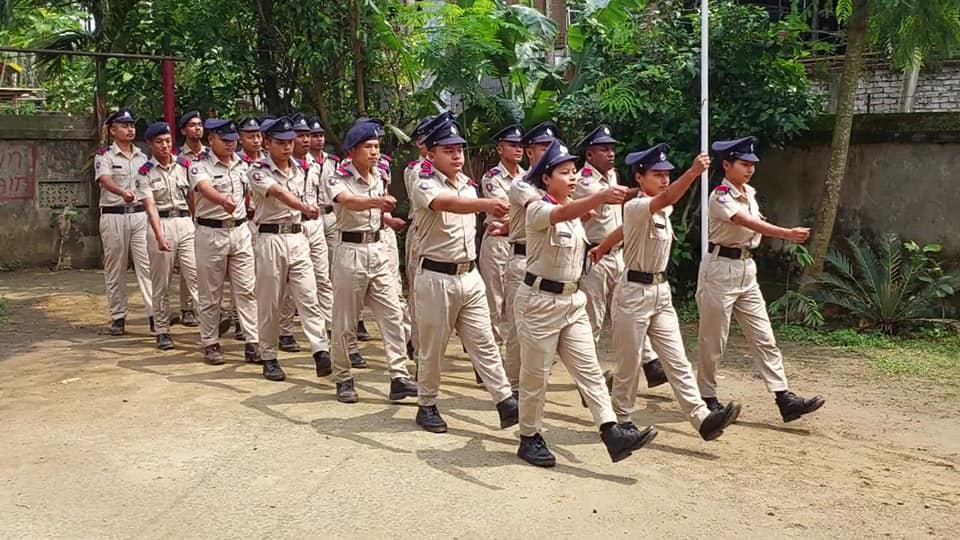
- Teamwork, communication and discipline
- Interview and career preparation
Prospective students should ask the academy for a written curriculum, course duration, fee structure, certificate details, practical-training schedule, instructor credentials and admission conditions. This helps students and parents make an informed decision.
Practical Training Makes a Difference
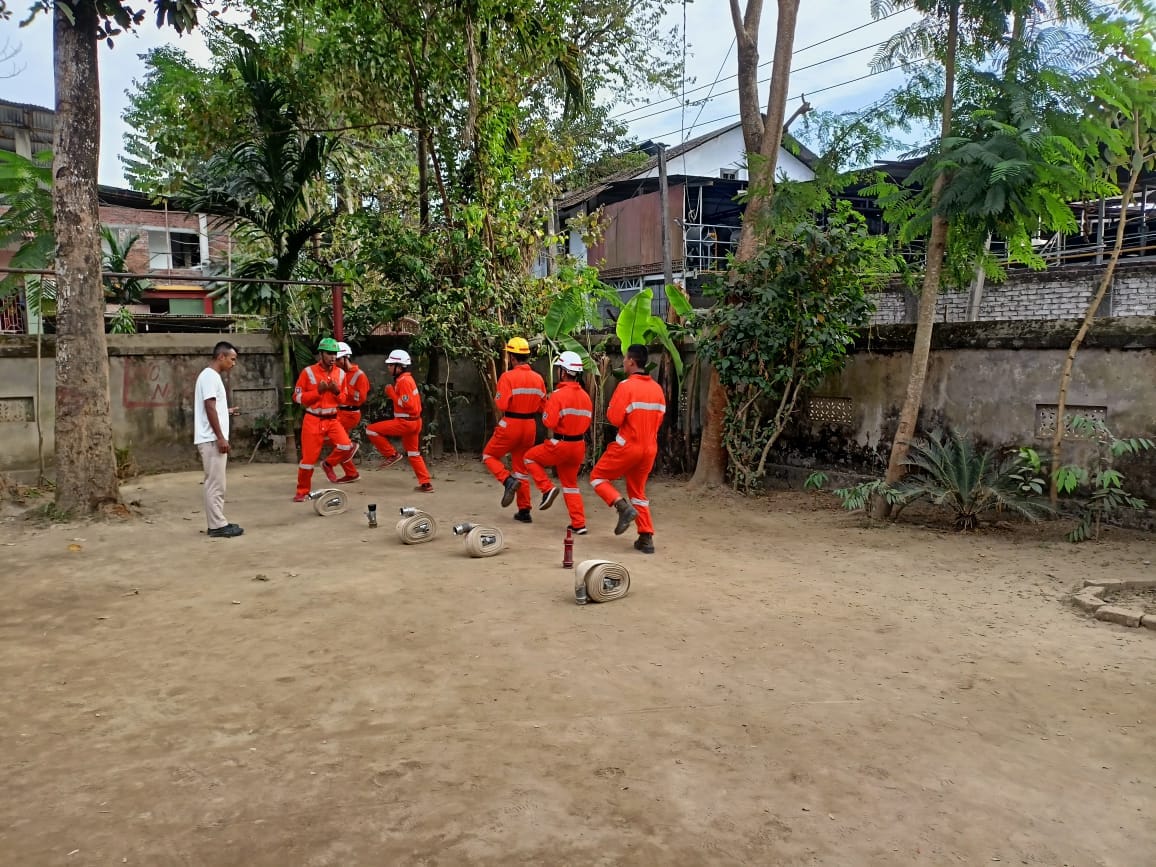
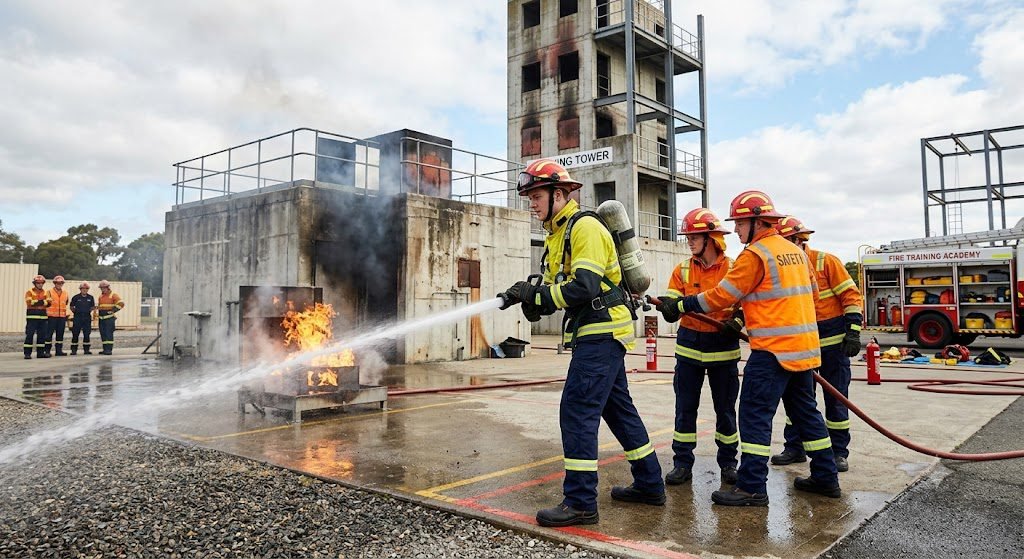
Firefighting and emergency response cannot be understood through textbooks alone. Practical exercises help students learn how to remain alert, follow instructions and work safely under pressure.
Meaningful practical training may include demonstrations or supervised exercises involving:
- Portable fire extinguishers
- Fire hoses and hydrant systems
- Protective clothing and safety equipment
- Search-and-rescue techniques
- Emergency evacuation drills
- Casualty lifting and transportation
- Basic first-aid response
- Team commands and communication
The published NIOS programme structure allocates more practical contact time than theoretical contact time, reinforcing the importance of hands-on learning in fire and industrial safety education.
Training activities must always be conducted under qualified supervision with suitable protective equipment, controlled conditions and established safety procedures.
Career Areas After Fire and Safety Training
Students who successfully complete an appropriate fire and safety course may explore entry-level opportunities in different sectors, depending on their qualification, experience and the employer’s recruitment criteria.
Potential work environments can include:
- Manufacturing units
- Construction projects
- Hotels and shopping centres
- Hospitals and educational institutions
- Warehouses and logistics facilities
- Airports and transport facilities
- Oil, gas and energy projects
- Security and facility-management companies
- Fire-protection equipment companies
- Emergency-response service providers
- Government fire services, subject to official recruitment rules
Possible job titles may include fireman, fire watcher, fire and safety assistant, safety supervisor, emergency-response team member, fire-equipment technician or industrial safety assistant. Titles, responsibilities and qualification requirements vary substantially between employers.
Government fire-service employment generally requires candidates to meet the conditions mentioned in the relevant recruitment notification. Private-sector employment may also require additional technical qualifications, experience, medical fitness or site-specific safety certification.
Opportunities for Students from Northeast India
Northeast India is experiencing continued development in infrastructure, healthcare, hospitality, transport, construction, warehousing and commercial facilities. As these sectors expand, organisations must pay greater attention to fire prevention, evacuation readiness and occupational safety.
Local students who receive structured training can explore opportunities within Assam and across India. Candidates from Arunachal Pradesh, Meghalaya, Nagaland, Manipur, Mizoram, Tripura and Sikkim may also consider professional fire and safety education if it matches their career interests.
The Assam State Disaster Management Authority provides official public guidance on emergency preparedness, including actions to take during a fire. Its advice emphasises evacuation, moving to an open area and avoiding unsafe re-entry. Students and families can consult ASDMA’s official fire-safety guidance.
Skills Needed for a Fire and Safety Career
A certificate is only one part of professional preparation. Successful fire and safety personnel also need the right attitude and behavioural skills.
Important qualities include:
- Physical and mental fitness
- Alertness and situational awareness
- Discipline and punctuality
- Courage supported by proper procedure
- Clear communication
- Ability to work in a team
- Respect for safety protocols
- Willingness to continue learning
- Calm decision-making during emergencies
- Responsibility towards human life and property
Students should work consistently on fitness, communication, technical understanding and professional conduct throughout their training.
How to Choose the Right Course After 10th or 12th
Before applying, students and parents should compare programmes carefully. Ask the following questions:
- What is the minimum educational qualification?
- Is there a minimum or maximum age requirement?
- Are physical and medical standards applicable?
- What is the complete course duration?
- How many hours are dedicated to practical training?
- Which organisation issues the certificate?
- Is the certification relevant to the student’s career objective?
- Who conducts the practical training?
- What equipment and facilities are available?
- Does the academy provide career guidance or placement assistance?
- Are there additional examination or equipment charges?
- What are the refund and attendance policies?
Students should never select a course solely because of a job guarantee. They should evaluate the curriculum, training quality, certification and applicability to their intended career.
Begin Your Fire and Safety Journey with NEFSA Academy
A fire and safety course after Class 10 or Class 12 can be a meaningful choice for students who prefer disciplined, practical and responsibility-driven work. The field requires commitment, physical preparation, technical learning and a genuine interest in protecting people, property and workplaces.
NEFSA Fire Academy can help aspiring students from Assam and Northeast India take their first step towards learning fire prevention, industrial safety and emergency response. Before admission, contact the academy to confirm the current courses, eligibility requirements, duration, fees, certification, practical facilities and career-support services.
If you are ready to develop courage, discipline and professional safety skills, contact NEFSA Fire Academy and enquire about the latest admission session.
Disclaimer: Course completion does not guarantee government or private employment. Eligibility, recognition, recruitment standards and job requirements depend on the particular programme, certificate, recruiting authority and employer.
Sources and External References
- Directorate General Fire Services, Civil Defence & Home Guards
Official Government of India resource for fire-service training, civil defence and emergency services. - Fire and Emergency Services Training Infrastructure and Recommended Fireman Syllabus
Official reference covering firefighter training subjects, training infrastructure and the recommended syllabus. - NIOS Fire Prevention and Industrial Safety Course
Official course information covering eligibility, duration and theory/practical training hours. - NIOS Vocational Education Portal
Official information about vocational courses, admission eligibility and learning programmes. - Bureau of Indian Standards – National Building Code
Official information concerning building standards, including fire and life-safety provisions. - Guide for Using the National Building Code of India
BIS guide explaining building-safety requirements, including protection from fire, smoke, fumes and panic. - Ministry of Labour and Employment – Occupational Safety, Health and Working Conditions Code
Government reference concerning occupational health, safety and working conditions in India. - Assam State Disaster Management Authority
Official Assam government resource for disaster preparedness, safety awareness and emergency management. - ASDMA Fire-Safety Guidance
Public guidance explaining appropriate actions during and after a fire emergency. - Skill India Digital Hub
Official platform for skill-development programmes, vocational learning and certification information in India.