NEFSA Fire Academy admissions are now open for students who want to build practical skills and explore career opportunities in fire protection, industrial safety, emergency response and hazard management. Located in Dibrugarh, Assam, the North Eastern Fire Service Academy offers specialised training for students from Assam and other Northeastern states.
With industrial development, construction activity and infrastructure expansion increasing the need for trained safety personnel, fire and industrial safety education can provide a career-focused pathway for eligible students. Candidates should review the available courses, eligibility requirements and admission process before submitting their applications.
Why Fire and Industrial Safety Training Matters
Fire and industrial accidents can affect employees, infrastructure, business operations and surrounding communities. Professional safety personnel are trained to identify hazards, implement preventive measures, inspect safety systems and coordinate emergency responses.
The Directorate General Factory Advice Service and Labour Institutes (DGFASLI), under the Ministry of Labour and Employment, works to promote occupational safety and health across Indian industries. Its programmes cover important areas such as accident prevention, safety audits, chemical safety, process safety, protective equipment and workplace hazard control.
The growing importance of workplace safety has created a need for people who understand:
- Fire prevention and protection systems
- Industrial hazard identification
- Emergency planning and evacuation
- Occupational health and safety
- Rescue and firefighting procedures
- Accident investigation
- Safety audits and risk assessment
- Disaster preparedness
- First aid and emergency communication
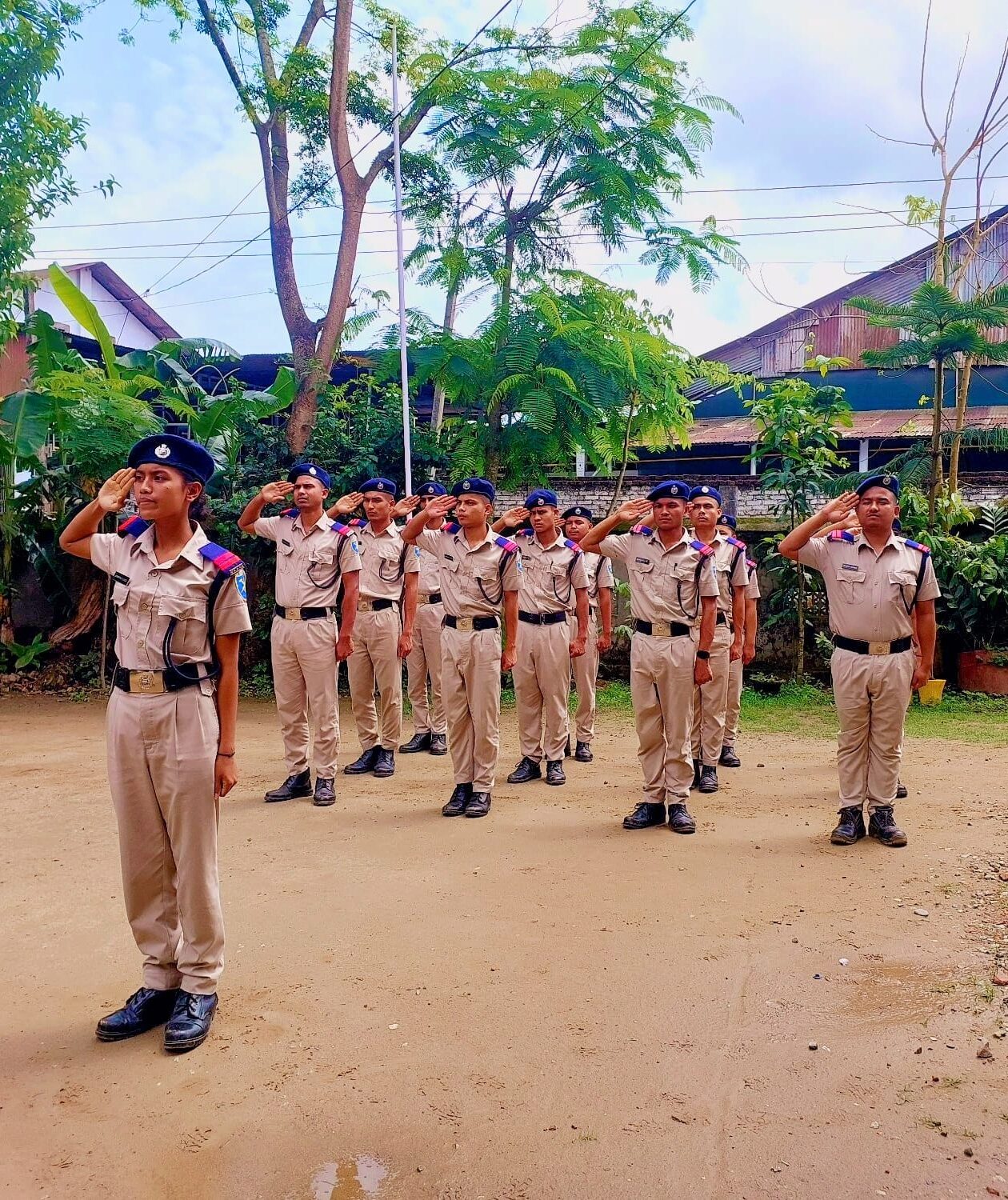
These are not only theoretical subjects. Effective fire and safety education requires practical drills, disciplined training and the ability to respond calmly during emergencies.
NEFSA Fire Academy Admissions Open for 2026
NEFSA’s official website currently confirms that admissions are open. The academy offers fire and industrial safety programmes combining classroom instruction with practical training, fire drills and emergency simulations.
According to the academy, NEFSA is affiliated with the Government of Assam’s Skill, Employment and Entrepreneurship Department. Students should independently verify the current affiliation, recognition, awarding authority, course duration and employment eligibility for their selected programme directly with the academy before paying any admission fee.
The official NEFSA course list currently includes the following programmes.
Fire Technology and Industrial Safety Management
The Fire Technology and Industrial Safety Management programme is listed for candidates who have passed Class 10. It focuses on developing foundational knowledge of fire prevention, workplace safety and emergency management.
Key areas mentioned in the curriculum include:
- Fire science and combustion
- Industrial safety management
- Fire protection equipment and systems
- Occupational health and safety
- Risk assessment and hazard control
- Disaster management
- Emergency planning
This programme may be suitable for students who want to understand how fire and safety procedures are implemented in factories, industrial facilities, construction projects and large commercial establishments.
Diploma in Fire Sub-Officer
The Diploma in Fire Sub-Officer is also listed for candidates who have passed Class 10. The programme is designed around firefighting operations, rescue techniques, team coordination and emergency response.
Training areas include:
- Firefighting techniques
- Fire equipment handling
- Rescue operations
- First aid and CPR
- Hose and ladder drills
- Evacuation procedures
- Fire station operations
- Emergency communication
- Disaster response management
Students interested in operational firefighting and rescue responsibilities can review this course. Candidates should confirm the exact recruitment eligibility prescribed by any government fire service or organisation to which they intend to apply, as completing a course does not automatically guarantee eligibility or appointment.
Diploma in Fire Safety Engineering
The Diploma in Fire Safety Engineering is listed for Class 10-passed candidates. It focuses on the technical and preventive sides of fire safety.
Important subjects include:
- Fire safety engineering and design
- Fire detection and alarm systems
- Electrical safety
- Chemical safety
- Safety laws and regulations
- Accident investigation
- Safety audits
- Risk assessment
This course can help students develop an understanding of fire prevention technology and safety systems used in industrial plants, infrastructure projects and commercial buildings.
B.Sc. in Fire Safety and Hazard Management
NEFSA also lists a B.Sc. in Fire Safety and Hazard Management for candidates who have completed higher secondary education in the science stream.
The programme covers advanced subjects such as:
- Fire engineering
- Environmental health and safety
- Disaster and hazard management
- Safety management systems
- Industrial safety
- Construction safety
- Hazard identification and control
Students considering this degree should confirm its current university affiliation, awarding institution, duration, recognition and higher-education validity directly through official documents before applying.
Practical Fire and Safety Training at NEFSA
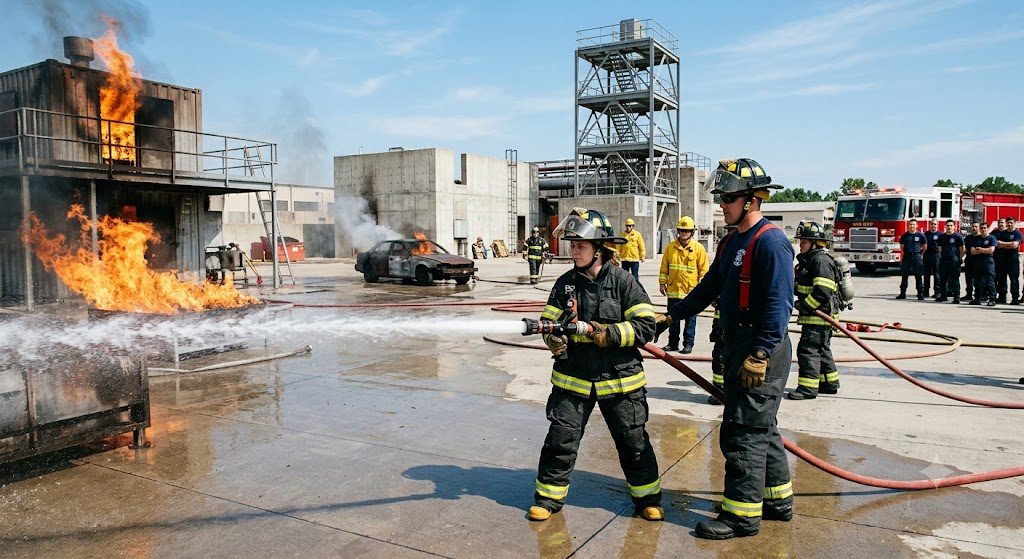
Fire safety cannot be learned effectively through theory alone. Students need practical exposure to equipment, drills, evacuation methods and simulated emergencies.
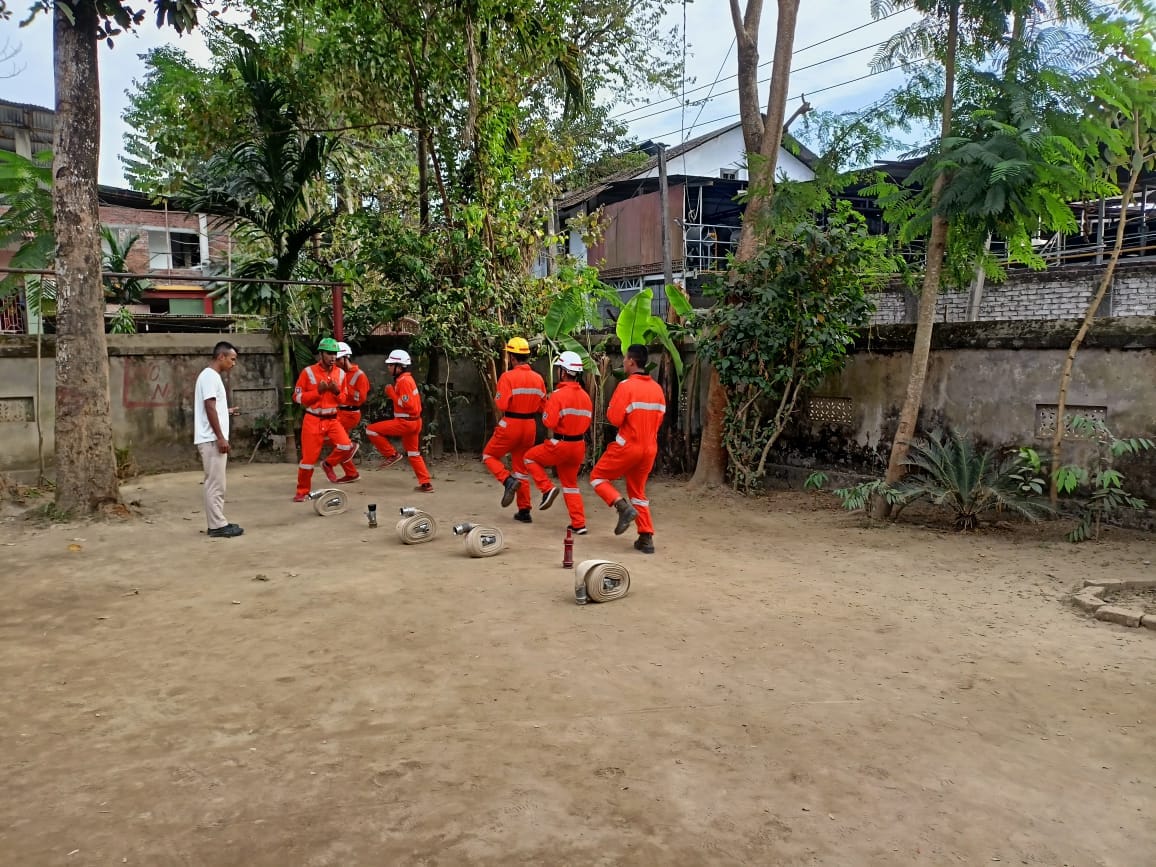
NEFSA states that its courses include practical training, fire drills and real-time simulations. Depending on the selected programme, practical learning may cover equipment handling, hose drills, ladder drills, rescue procedures, first aid, evacuation exercises and emergency teamwork.
This practical approach may help students develop:
- Confidence in handling emergency situations
- Familiarity with firefighting equipment
- Teamwork and communication abilities
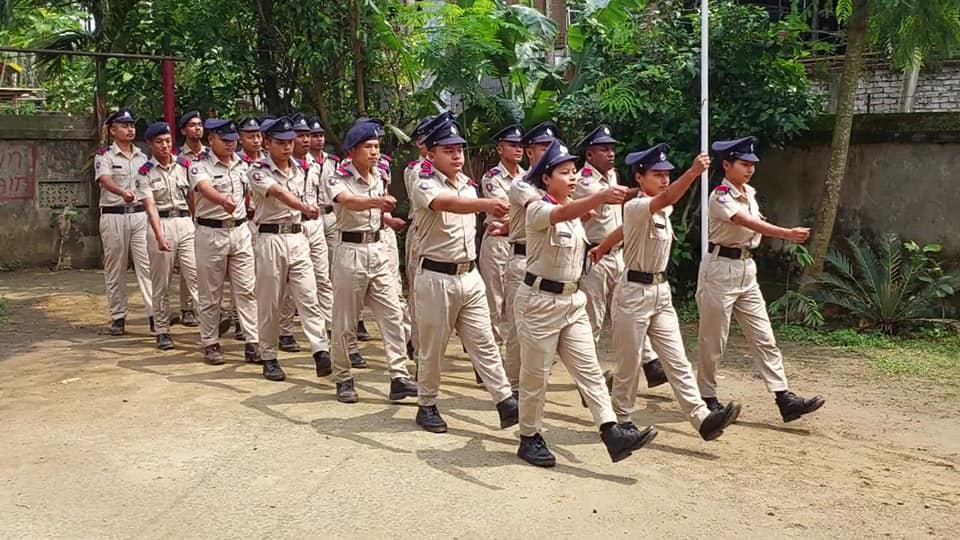
- Physical discipline and alertness
- Hazard-identification skills
- Decision-making under pressure
- Understanding of safety procedures
Applicants should ask the academy about the available training equipment, drill schedule, practical-training hours, instructor qualifications, industrial visits and assessment methods.
Career Scope After Fire and Industrial Safety Courses
India’s National Classification of Occupations recognises several fire-related occupational categories, including Fire Fighter, Fire Officer, Fire Prevention Officer, Fire Inspector and Fire Protection Systems Design Engineer. The official classification can be reviewed through the National Career Service.
Depending on a candidate’s qualification, experience, physical fitness, recruitment rules and employer requirements, career paths may be explored in:
- Manufacturing units
- Construction companies
- Hospitals and healthcare facilities
- Hotels and shopping centres
- Airports and transportation facilities
- Warehouses and logistics centres
- Oil, gas and energy facilities
- Power plants
- Educational institutions
- Corporate facilities
- Emergency-response teams
- Fire-protection service companies
Potential job profiles may include Fire Safety Officer, Firefighter, Safety Supervisor, Emergency Response Assistant, Fire Equipment Technician, EHS Assistant, Safety Inspector or Rescue Team Member.
However, course completion does not guarantee a government position, private employment, salary level or placement. Every organisation may apply different educational, medical, physical and experience requirements.
Why Students from Northeast India Can Consider NEFSA
Students from Assam, Arunachal Pradesh, Meghalaya, Nagaland, Manipur, Mizoram, Tripura and Sikkim may find studying in Dibrugarh more accessible than relocating to a distant city.
NEFSA may be considered by students looking for:
- Specialised fire and industrial safety education in Northeast India
- Programmes available after Class 10 or Class 12
- Practical drills and emergency simulations
- Training related to industrial and occupational safety
- A disciplined learning environment
- Career-focused technical education
- Exposure to firefighting and rescue procedures
Before choosing the academy, students and parents should visit the campus, meet the admission team and verify all academic claims through original documents.
Eligibility and Medical Requirements
NEFSA currently lists Class 10 eligibility for Fire Technology and Industrial Safety Management, Diploma in Fire Sub-Officer and Diploma in Fire Safety Engineering. Higher secondary education in the science stream is listed for the B.Sc. programme.
The academy also states that physical and medical tests are mandatory before admission. Applicants should contact NEFSA for the latest information concerning:
- Age requirements
- Minimum academic marks
- Physical standards
- Medical fitness criteria
- Course duration
- Seat availability
- Admission fees
- Hostel facilities
- Uniform and equipment costs
- Examination process
- Certification or degree-awarding authority
- Refund and cancellation policy
Requirements may change, so candidates should not rely only on promotional materials or older notices.
Documents Required for Online Admission
NEFSA’s online admission portal currently instructs applicants to prepare documents such as:
- Recent photograph
- Signature
- HSLC marksheet
- HSLC admit card
- Higher-secondary marksheet, where applicable
- Higher-secondary pass certificate, where applicable
- Valid photo identity proof
- Caste certificate, if applicable
- Medical certificate
- Police-verification form
- Attendance declaration
Applicants should check the required image format and file-size limits on the portal before uploading their documents.
How to Apply for NEFSA Fire Academy Admission?
Candidates can begin the process through the official NEFSA admission portal.
The application process generally involves:
- Registering with a valid email address.
- Verifying the registered email.
- Entering personal information.
- Uploading a recent photograph and signature.
- Providing educational details.
- Uploading the required documents.
- Reviewing the complete application.
- Making corrections before final submission.
- Submitting the form.
- Downloading the completed application for reference.
Students should use only the academy’s official website or verified contact details for admission communication.
Questions to Ask Before Taking Admission
Before paying any fee, students and parents should request written answers to the following questions:
- What is the exact duration of the selected course?
- Which institution awards the certificate, diploma or degree?
- What is the current affiliation or recognition status?
- Is the qualification valid for the student’s intended job or further study?
- What practical facilities and equipment are available?
- Are industrial visits or internships included?
- What is the complete fee, including additional charges?
- Is hostel accommodation available?
- What are the physical and medical standards?
- What placement assistance is provided?
- What is the refund policy?
- Can the academy provide recent placement records that students may verify?
This verification is particularly important because recruitment criteria for fire and safety positions differ across government departments, PSUs and private organisations.
Apply for Fire and Industrial Safety Courses at NEFSA
NEFSA Fire Academy admissions are open for candidates interested in fire technology, industrial safety, firefighting, rescue operations and hazard management. With multiple programmes listed for Class 10 and science-stream Class 12 students, the academy provides different entry routes into fire and safety education.
Students seeking fire and safety courses in Assam or a fire academy in Northeast India can review NEFSA’s programmes, practical facilities and admission requirements. Candidates should select a course based on their education, physical fitness, career goals and the qualification requirements of their intended employer.
For the latest course details and admission updates, visit the NEFSA official website, review the official course information, or contact the academy directly.
NEFSA contact details
- Address: Barbaruah, NH-37, near Bypass Charali (Zero Point), Dibrugarh, Assam – 786007
- Email: info@nefsaindia.com
- Admission portal: Apply online
- Official website: www.nefsaindia.com
Disclaimer: Course names, intake, eligibility, affiliations, fees and admission procedures may change. Applicants should verify all information through NEFSA’s latest official prospectus, written documentation and relevant awarding or regulatory authority before applying.
Backlinks
- DGFASLI – Occupational Safety and Industrial Health
- Occupational Safety, Health and Working Conditions Code, 2020
- National Career Service
- National Classification of Occupations
- Government of Assam Skill, Employment and Entrepreneurship Department
- Assam Skill Development Initiatives
- National Disaster Management Authority
- Ministry of Labour and Employment
- National Skill Development Corporation