Join NEFSA for Professional Fire and Safety Training in Dibrugarh
Fire and industrial safety have become important responsibilities across factories, construction projects, hospitals, airports, warehouses, oil and gas facilities, educational institutions and public infrastructure. Organisations need trained professionals who understand fire prevention, risk assessment, emergency response, evacuation procedures and workplace safety.
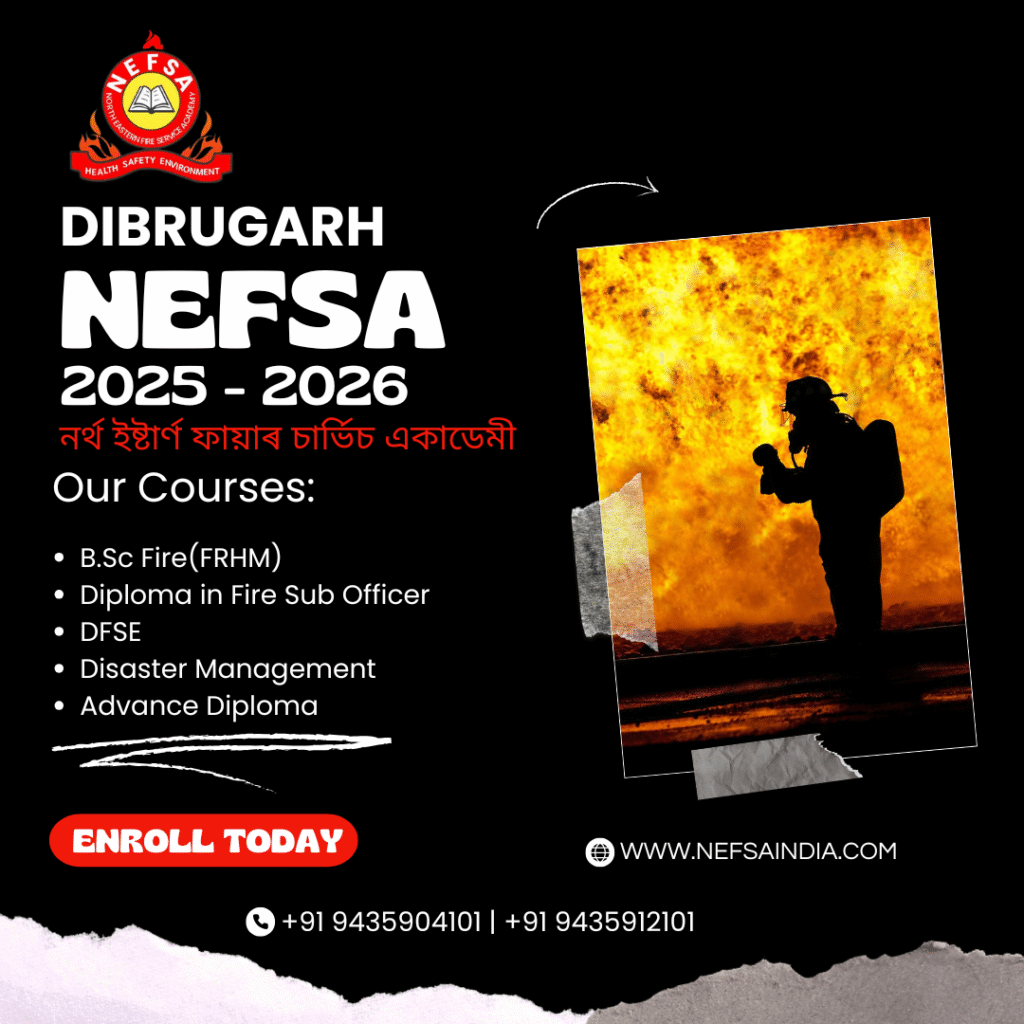
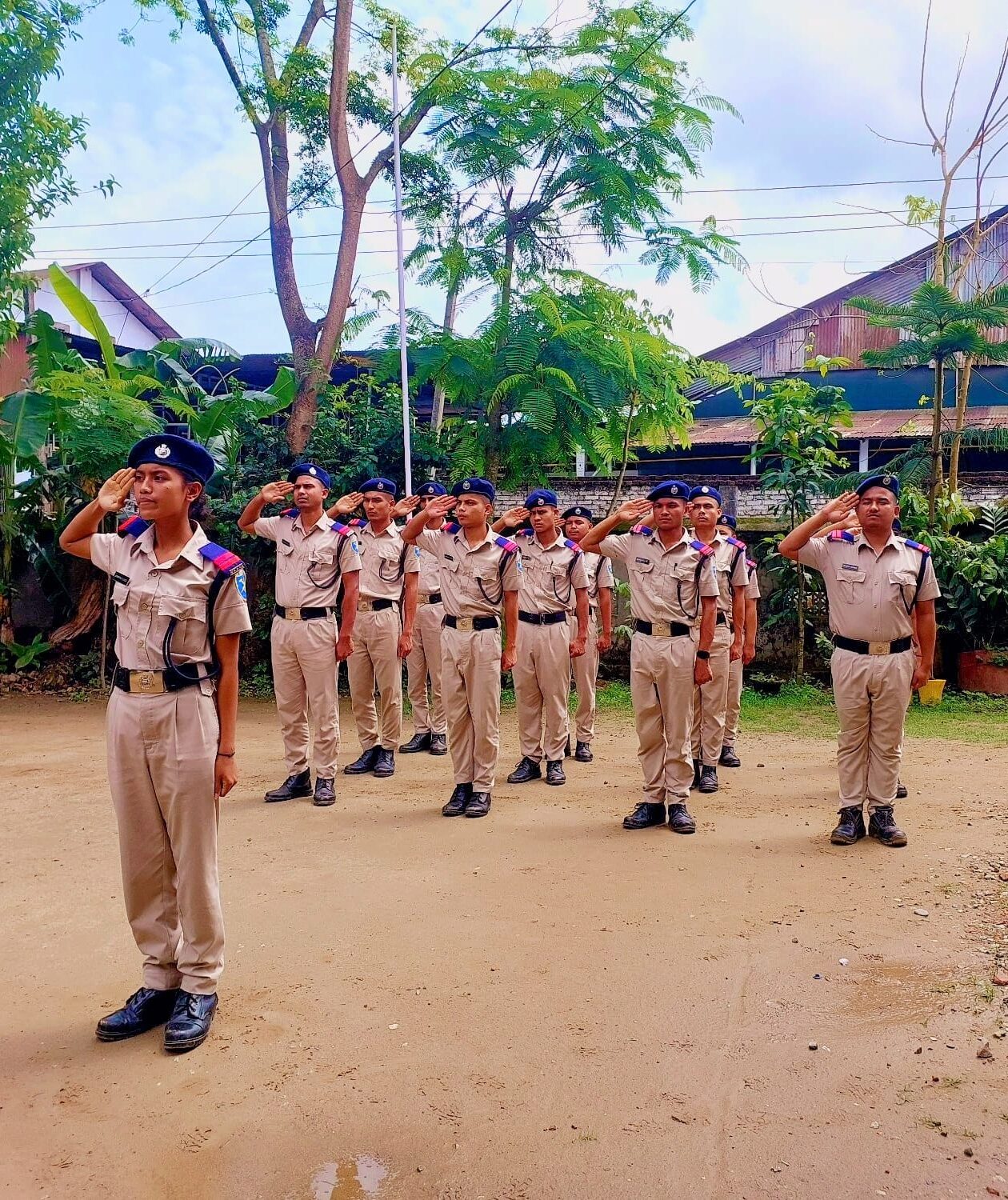
Students seeking practical fire and safety training in Assam can explore career-oriented programmes at the North Eastern Fire Service Academy (NEFSA). Located at Barbaruah, near Bypass Chariali in Dibrugarh, NEFSA provides structured classroom education, practical drills and emergency-response training to prepare students for safety-related responsibilities.
Why Choose Fire and Safety Training in Dibrugarh?
Dibrugarh is one of the most important commercial and industrial centres in Upper Assam. The wider region has activities connected with oil and gas, manufacturing, transportation, healthcare, construction and public infrastructure. These sectors require trained personnel who can help identify hazards, implement preventive measures and respond effectively during emergencies.
Professional fire and safety education can help students develop knowledge relevant to:
- Fire prevention and protection
- Industrial hazard identification
- Workplace risk assessment
- Emergency evacuation
- Rescue operations
- Firefighting equipment
- Occupational health and safety
- Disaster preparedness
- First aid and emergency communication
- Safety audits and compliance
The Government of India’s Directorate General Factory Advice Service and Labour Institutes works to promote occupational safety and health in factories and ports. Its activities demonstrate the importance of trained safety professionals in protecting employees and improving workplace practices.
Professional Fire and Safety Training at NEFSA
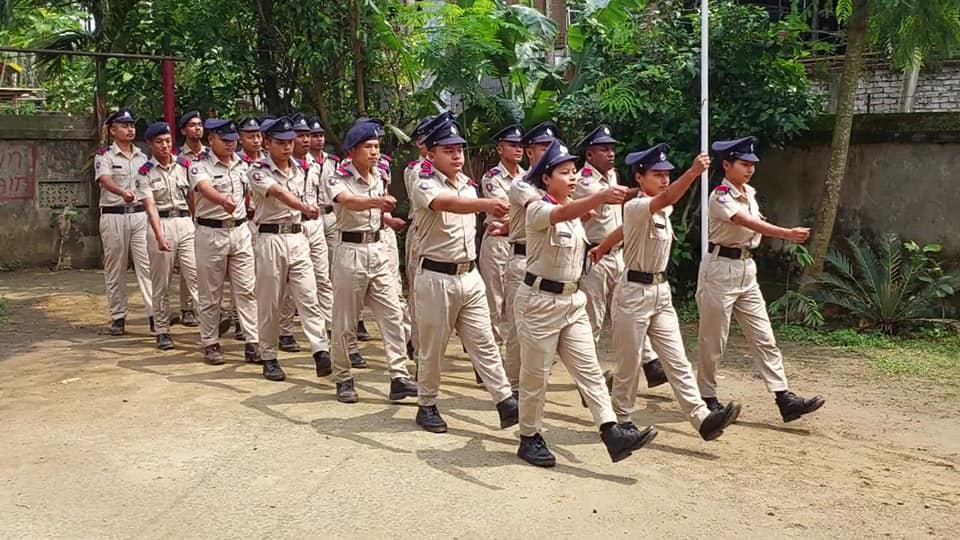
NEFSA focuses on developing technical knowledge, practical ability, discipline, teamwork and confidence. Fire safety cannot be understood through classroom lessons alone. Students must also learn how equipment works, how emergency teams coordinate and how decisions are made in stressful situations.
According to the academy’s published programme information, training may include practical drills, equipment handling, rescue exercises and simulated emergency situations. Students should check the latest curriculum, eligibility requirements, duration, fees and recognition directly with NEFSA before applying.
The academy’s approach may help students understand:
- The science of fire and combustion
- Different classes and causes of fire
- Fire extinguishing methods
- Fire detection and alarm systems
- Personal protective equipment
- Hose, hydrant and ladder operations
- Emergency planning and evacuation
- Industrial accident prevention
- Hazard and risk control
- Safety laws and workplace responsibilities
Explore the available programmes through the official NEFSA course information page.
Fire Technology and Industrial Safety Management
The Fire Technology and Industrial Safety Management programme is designed for students interested in both firefighting and workplace safety. It introduces learners to fire science, industrial hazards, occupational safety, risk assessment and emergency management.
The published NEFSA course details indicate that this programme covers areas such as:
- Fire science and combustion
- Fire protection systems
- Industrial safety management
- Occupational health and safety
- Risk assessment and hazard control
- Disaster management
- Emergency planning
This combination can be helpful for students who want to understand how fires and accidents can be prevented in factories, warehouses, plants, offices and other workplaces.
Diploma in Fire Sub-Officer
The Diploma in Fire Sub-Officer programme focuses on firefighting operations, rescue skills, emergency leadership and fire-service responsibilities. It can be suitable for students interested in operational and supervisory roles.
Training areas published by NEFSA include:
- Firefighting techniques
- Firefighting equipment handling
- Hose and ladder drills
- Rescue operations
- First aid and CPR
- Evacuation procedures
- Fire-station operations
- Emergency communication
- Disaster-response management
A fire sub-officer must understand technical procedures while also being able to guide a team during an emergency. Therefore, leadership, discipline and clear communication are important parts of professional preparation.
Diploma in Fire Safety Engineering
Fire Safety Engineering deals with the technical systems used to prevent, detect and control fires. Students may learn how fire alarms, detection systems, extinguishers, hydrants, sprinklers and emergency arrangements contribute to building and industrial safety.
NEFSA lists subjects such as:
- Fire safety engineering and system design
- Fire detection and alarm systems
- Electrical and chemical safety
- Safety laws and regulations
- Accident investigation
- Risk assessment
- Safety audits
- Industrial fire prevention
This programme may be relevant for students who want to develop technical knowledge for safety inspections, audits, system planning and industrial risk-control responsibilities.
B.Sc. in Fire Safety and Hazard Management
Students seeking degree-level education may consider the B.Sc. in Fire Safety and Hazard Management. According to NEFSA’s published information, the programme is intended to develop advanced knowledge of fire engineering, environmental health and safety, disaster management and industrial hazards.
Subjects may include:
- Advanced fire engineering
- Environmental health and safety
- Disaster and hazard management
- Industrial and construction safety
- Safety management systems
- Emergency preparedness
- Safety auditing and compliance
Prospective students should verify the current affiliation, awarding institution, eligibility conditions and admission rules with the academy before enrolling.
Importance of Practical Fire Drills
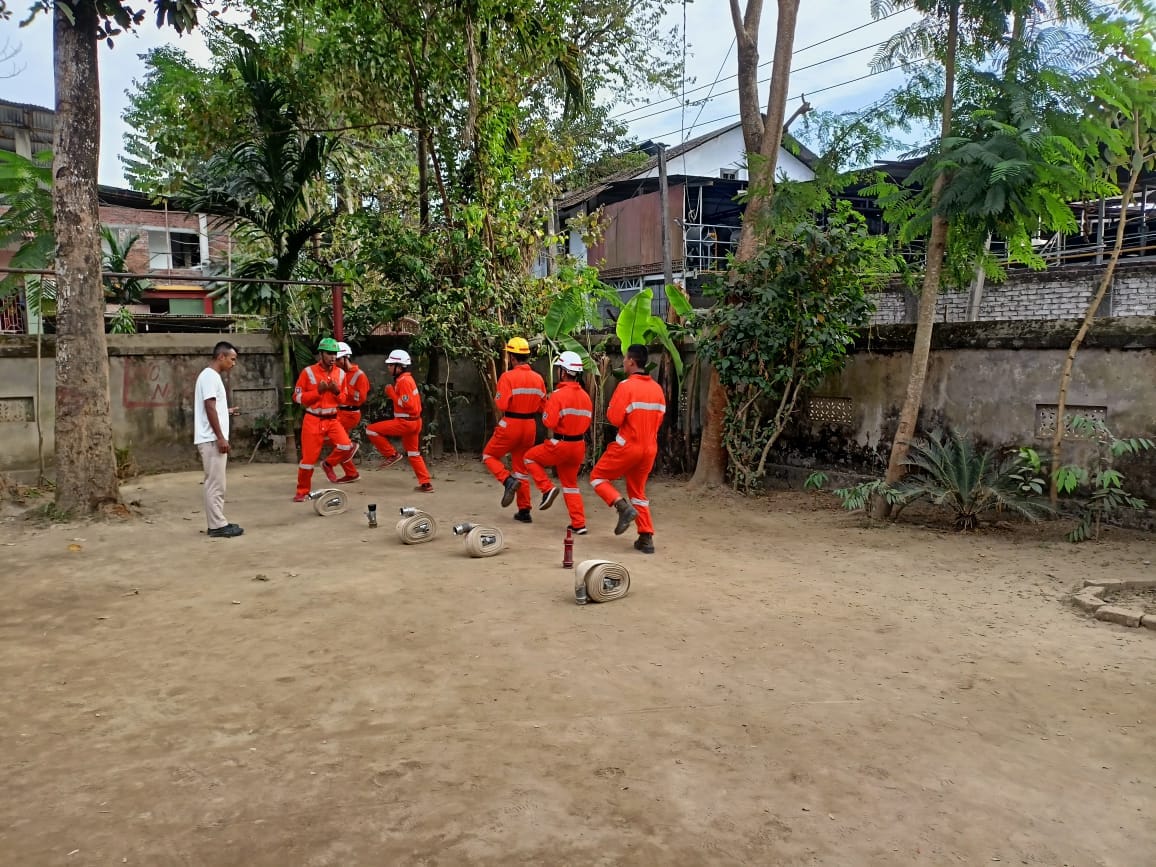
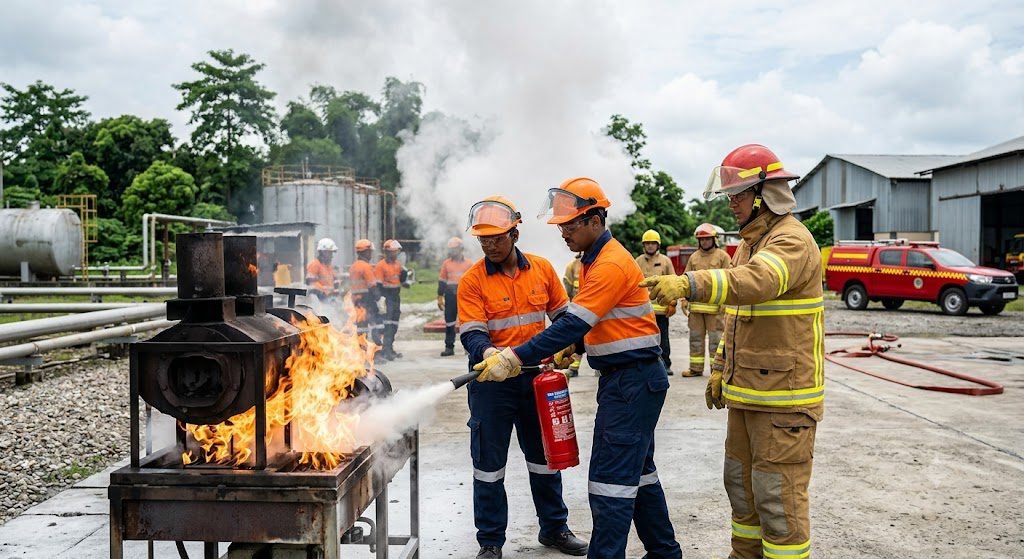
Practical training is one of the most valuable parts of fire and safety education. Reading about an extinguisher is different from learning how to select, carry and operate it safely. Similarly, students need supervised practice to understand evacuation, hose handling, rescue coordination and emergency communication.
Practical exercises may help trainees develop:
- Confidence when handling safety equipment
- Awareness of changing emergency conditions
- Team coordination and communication
- Faster and safer decision-making
- Understanding of command structures
- Respect for standard operating procedures
- Physical and mental preparedness
The National Disaster Management Authority provides national-level information on disaster preparedness and emergency management. Students can also use NDMA’s SACHET platform to access authorised disaster alerts and public safety information.
Skills Students Can Develop at NEFSA
Professional fire and safety training is not limited to extinguishing fires. It develops a combination of technical, physical and behavioural abilities.
Hazard Identification
Students learn to observe workplaces and recognise possible causes of fire, unsafe electrical conditions, combustible materials, blocked exits and improper equipment storage.
Risk Assessment
Risk assessment involves examining the likelihood and possible consequences of an incident. It helps safety teams decide which hazards require immediate attention.
Emergency Response
Trainees learn how to respond in a structured manner, raise an alarm, communicate with emergency teams, support evacuation and use appropriate equipment.
Teamwork and Leadership
Fire and rescue operations require coordination. Training can help students understand discipline, role allocation, reporting procedures and responsible leadership.
Safety Communication
A safety professional may need to conduct toolbox talks, explain evacuation procedures, prepare reports and communicate risks to employees and management.
Physical Preparedness
Operational fire and rescue responsibilities can be physically demanding. NEFSA states that physical and medical tests are mandatory before admission to its listed courses. Applicants should confirm the current fitness standards directly with the academy.
Career Opportunities After Fire and Safety Training
Depending on a student’s qualification, practical competence, employer requirements and applicable recruitment rules, fire and safety education may support applications for roles such as:
- Fire and Safety Officer
- Fireman or Fire Operator
- Industrial Safety Supervisor
- Fire Sub-Officer
- Emergency Response Assistant
- EHS Assistant
- Safety Inspector
- Safety Technician
- Rescue Team Member
- Fire Protection System Technician
- Safety Auditor
- Hazard-Control Assistant
Opportunities may exist in manufacturing units, construction companies, hotels, hospitals, shopping complexes, airports, warehouses, logistics facilities, oil and gas operations, power projects and private emergency-response teams.
However, completing a course does not automatically guarantee government or private employment. Recruitment depends on vacancies, employer criteria, qualifications, physical standards, examinations, interviews and regulatory requirements.
Why NEFSA Can Be Considered for Fire Safety Training in Dibrugarh
Students looking for a fire academy in Dibrugarh may consider NEFSA because of its location, range of programmes and emphasis on practical preparation.
Key reasons include:
- Fire and industrial safety courses at certificate, diploma and degree-oriented levels
- Practical firefighting and rescue exercises
- Emergency-response simulations
- Training in occupational and industrial safety
- Programmes for students after Class 10 or higher secondary, subject to course eligibility
- Exposure to discipline, teamwork and safety communication
- Location accessible to students from Upper Assam and other Northeastern states
- Career-focused training for industrial and emergency-service environments
NEFSA states that its objective is to help young people from Northeast India develop skills for fire, industrial safety and emergency-response responsibilities. Candidates should independently review all official documents and obtain written confirmation regarding affiliation, certification and course recognition before paying admission fees.
Who Can Apply?
Eligibility varies depending on the selected programme. Based on the academy’s published course information:
- Some diploma and fire-technology programmes list Class 10 as the minimum qualification.
- The B.Sc. programme lists higher secondary education in the science stream.
- Physical and medical assessments may be required.
- Additional age, fitness or documentation requirements may apply.
Because admission criteria can change, applicants should contact the academy for the latest prospectus rather than relying only on older online information.
Questions to Ask Before Admission
Before joining any fire and safety academy, students and parents should ask:
- What is the complete course duration?
- Which organisation awards the certificate or degree?
- What is the current affiliation or approval status?
- What are the eligibility and physical requirements?
- How much practical training is included?
- What equipment is available for supervised training?
- Are industrial visits included?
- What is the complete fee structure?
- Are accommodation or hostel facilities available?
- What placement assistance is provided?
- Are there any additional examination or certification fees?
- What documents will be issued after completion?
These questions help students make an informed decision and avoid misunderstandings about recognition, employment or course outcomes.
Join NEFSA for Fire and Safety Training in Dibrugarh
A career in fire and safety requires courage, discipline, technical understanding and a strong sense of responsibility. Proper training can prepare students to help prevent accidents, protect workplaces and respond more effectively during emergencies.
NEFSA offers students in Dibrugarh and Northeast India an opportunity to study fire technology, industrial safety, fire safety engineering, rescue operations and hazard management. With classroom learning, supervised drills and career-focused preparation, students can begin developing the competencies required in modern safety environments.
Interested candidates can visit the official NEFSA website or review the academy’s contact and admission information.
NEFSA address: Barbaruah NH-37, near Bypass Chariali (Zero Point), Dibrugarh, Assam – 786007.
Suggested External Backlinks
- Directorate General Factory Advice Service and Labour Institutes — Occupational safety and health information
- National Disaster Management Authority — Disaster preparedness and management resources
- NDMA SACHET Portal — Authorised disaster alerts and public safety information
- Dibrugarh District Administration — Official district information and emergency resources
- NEFSA Official Website — Academy and admission information
- NEFSA Courses — Current programmes and published eligibility details