
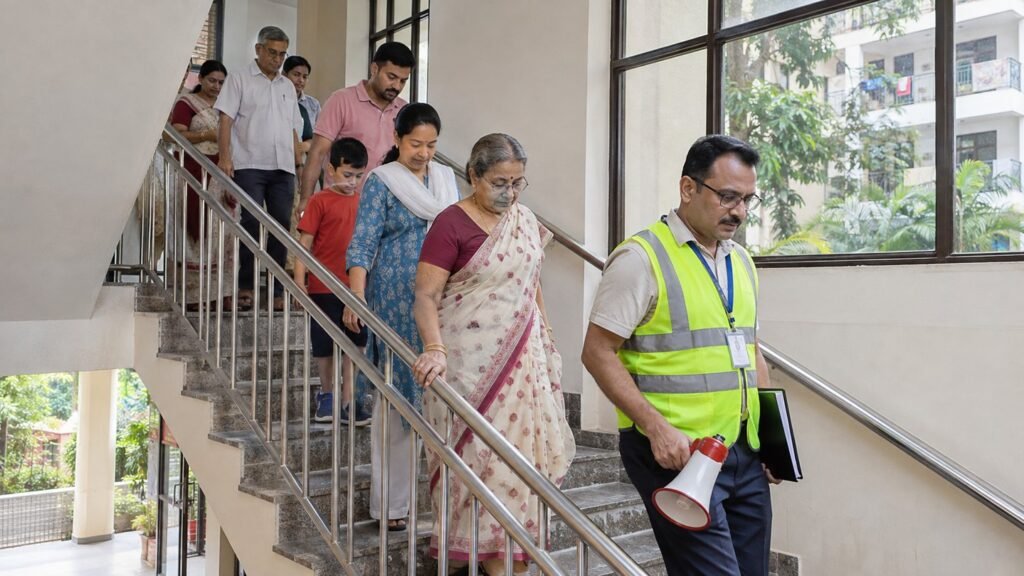
An apartment fire evacuation plan should tell residents how to recognise an alarm, which exit stairs they can use, where to meet outside and who to tell if someone needs help. Use the building’s approved fire plan as the starting point and make sure tenants, staff and visitors can find the instructions.
Walk the exit routes before the drill
Start at a typical flat and walk each designated escape route to the outside. Note where an exit sign is hard to see or a staircase is blocked by storage. Give residents a simple map showing the primary and alternate stairs where available, the outside assembly point and any building-specific instructions. Choose a meeting point that keeps residents clear of emergency vehicle access.
Arrange evacuation assistance in advance with residents who request it. Agree how to contact them, who will assist, and what the building plan says to do if they cannot use the stairs. Use a backup contact so the plan does not depend on one neighbour being home.
What residents should do during a fire
Follow the building’s fire procedure and instructions from emergency responders. If there is a safe escape route, leave promptly, close doors behind you and use the stairs. Use a lift only if directed by firefighters. Go to the meeting point and tell responders if someone may still be inside. Wait for the all-clear before returning.
If smoke or fire blocks your escape, stay behind a closed door where you can avoid smoke, call 112 and report your building address, block, floor and flat number. Tell the operator who is with you and follow their instructions. See the Assam Fire & Emergency Services guidance for high-rise buildings, the U.S. Fire Administration escape planning guide and the Ministry of Home Affairs emergency response guidance.
Run an apartment fire drill and document the results
- Brief the building team. Agree on the drill signal, starting time and assembly point. Tell residents and coordinate notification with security and any alarm monitoring provider.
- Practise safe movement. Keep the escape route clear. Use floor observers to note confusion, missed alarms or delays. Practise alternate-route decisions as a briefing without blocking a real exit.
- Account for participants. Ask floor or block leads to report attendance and anyone who needs help to the coordinator. Make sure the assembly point can accommodate residents without obstructing access.
- Close out issues. Assign an owner and date to each issue. Update the floor map or briefing if residents misunderstood the alarm signal or assembly location.
For planning roles and follow-up, read the NEFSA guide to fire warden duties. The winter fire safety guide for Assam homes also covers prevention steps that residents can handle inside their flats.