Fire and workplace safety have become essential across industries such as construction, manufacturing, oil and gas, aviation, hospitality, healthcare, logistics and infrastructure. As industrial operations become more advanced, employers need trained professionals who understand fire prevention, emergency response, hazard identification and occupational safety.
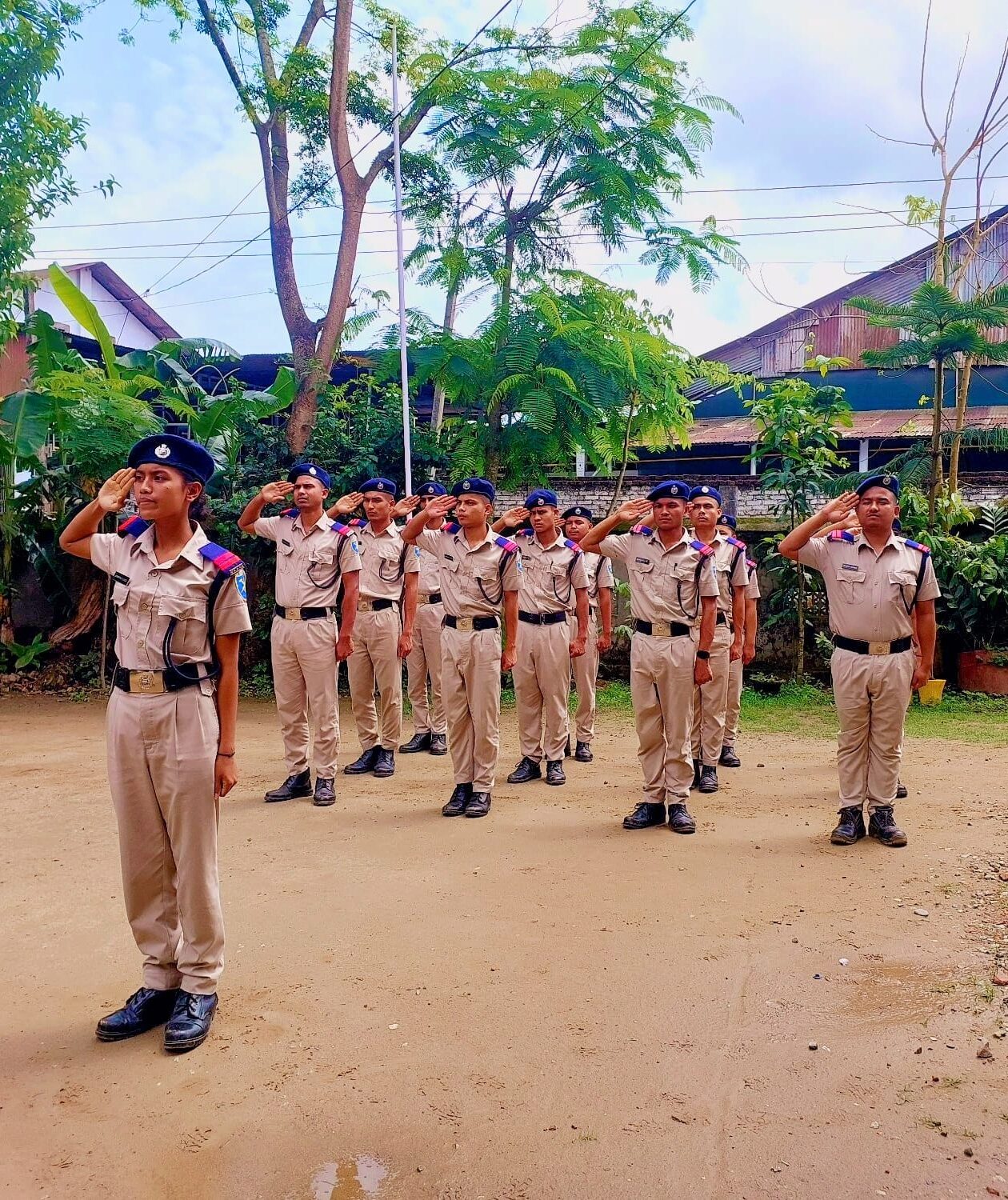
For students seeking practical fire and safety training in Northeast India, the North Eastern Fire Service Academy (NEFSA) offers career-oriented courses designed to build technical knowledge, physical preparedness, discipline and emergency-response skills. Located in Dibrugarh, Assam, the academy focuses on preparing students for the responsibilities and challenges of the modern safety industry.
Admissions are now open at NEFSA, giving eligible students an opportunity to begin professional training in fire technology, industrial safety and hazard management.
Why Industry-Focused Fire and Safety Training Matters
Fire and safety professionals do much more than extinguish fires. Their responsibilities can include inspecting workplaces, identifying hazards, assessing risks, maintaining fire-protection systems, planning evacuations, conducting safety drills and coordinating emergency responses.
India’s Directorate General Factory Advice Service and Labour Institutes highlights the growing need for professionally qualified safety personnel in sectors including construction, petrochemicals, chemicals and engineering. These industries face increasingly complex occupational health and safety challenges because of expanding technology and mechanisation. Learn more through the Directorate General Factory Advice Service and Labour Institutes.
This changing industrial environment makes practical and industry-relevant education especially important. Students need to understand both the scientific principles behind fire and the procedures used during real emergencies.
Practical Fire and Safety Training at NEFSA
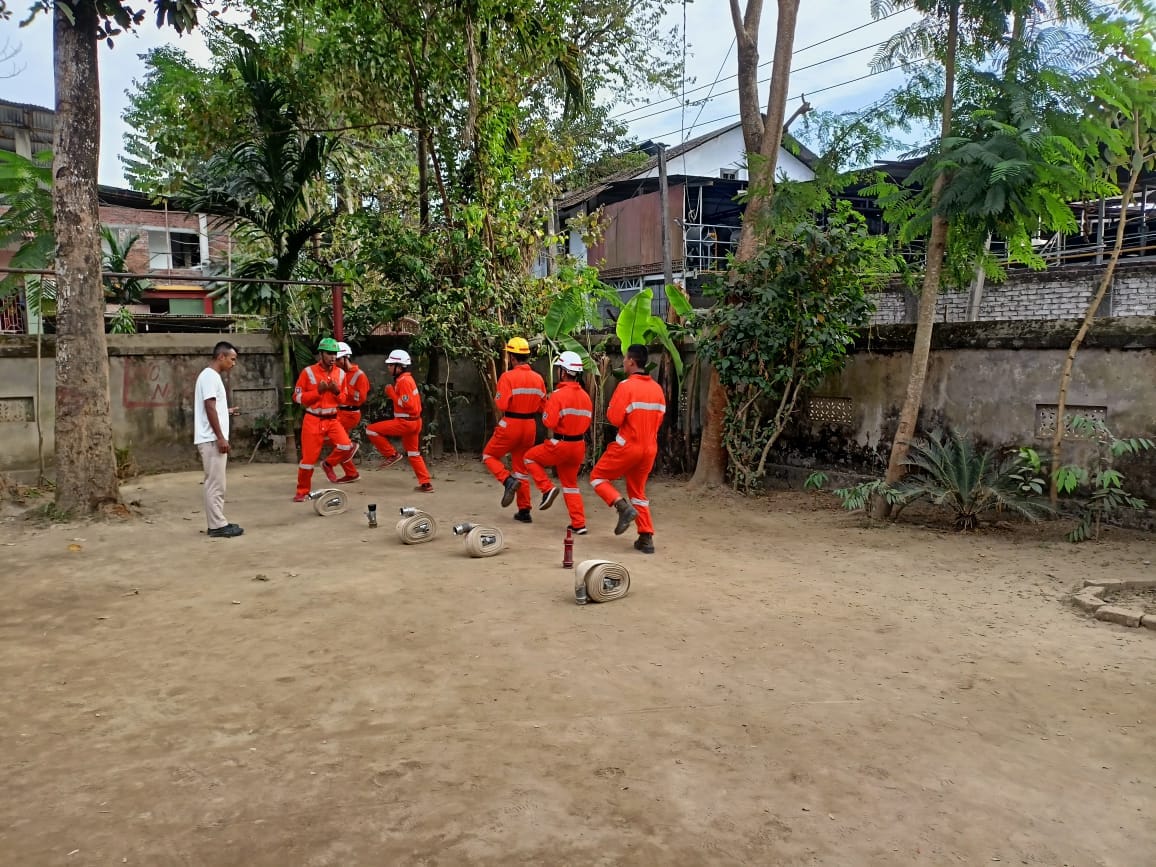
NEFSA combines structured classroom education with hands-on training. According to the academy’s official course information, its programmes cover practical fire drills and simulated emergency situations alongside theoretical subjects.
Depending on the selected programme, students may study:
- Fire science and combustion
- Industrial safety management
- Fire protection systems and equipment
- Occupational health and safety
- Hazard identification and risk assessment
- Disaster management and emergency planning
- Rescue operations and first aid
- Fire detection and alarm systems
- Electrical and chemical safety
- Accident investigation and safety auditing
- Evacuation procedures
- Emergency communication systems
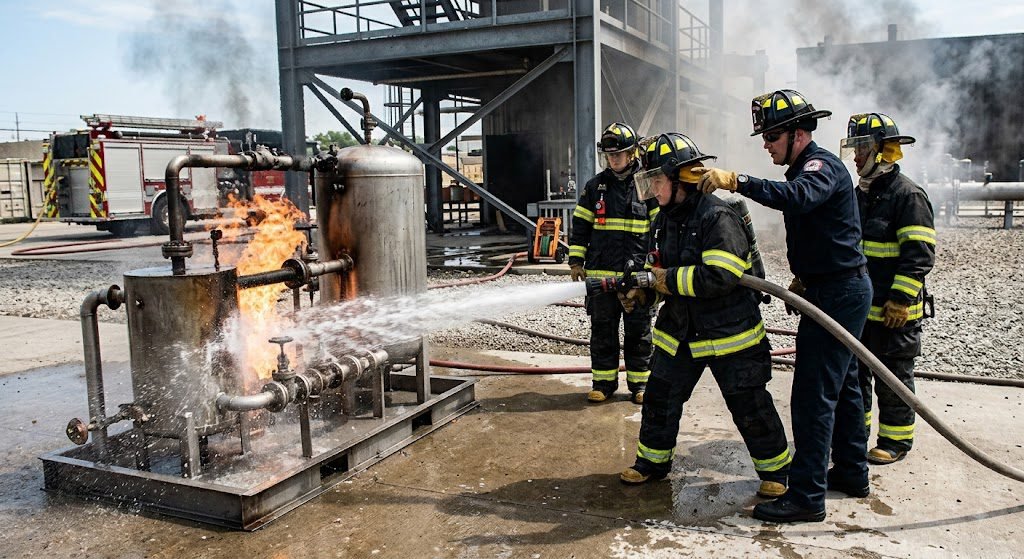
Practical exercises can include hose drills, ladder drills, CPR practice, equipment handling and real-time emergency simulations. This approach helps students learn how to remain calm, follow established procedures and work effectively as part of a safety team.
Candidates can review the latest programme details on the official NEFSA courses page.
Fire and Safety Courses Available at NEFSA
NEFSA lists several programmes for students with different educational backgrounds and career goals.
Fire Technology and Industrial Safety Management
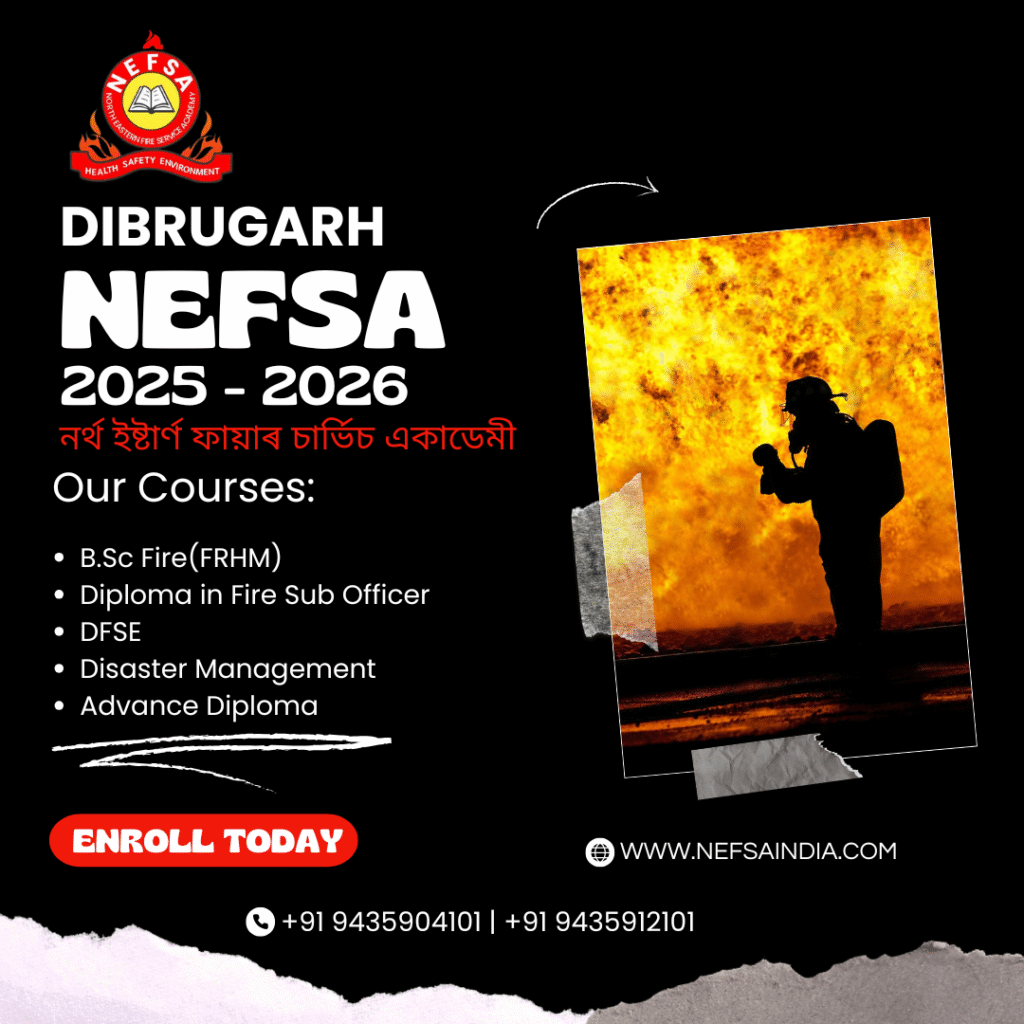
This programme focuses on fire prevention, industrial safety operations, hazard control and emergency-response systems. NEFSA lists a Class 10 pass as the eligibility requirement.
The course may support preparation for roles such as fire safety officer, industrial safety supervisor, safety inspector and emergency-response officer. Actual job eligibility will depend on the employer, position and applicable qualification requirements.
Diploma in Fire Sub-Officer
The Diploma in Fire Sub-Officer programme covers firefighting methods, equipment handling, rescue operations, first aid, station operations and disaster response. It is designed to strengthen operational knowledge as well as communication, teamwork and leadership skills.
NEFSA currently lists Class 10 pass as the entry eligibility for this programme.
Diploma in Fire Safety Engineering
Students interested in the technical side of fire protection can consider the Diploma in Fire Safety Engineering. Its curriculum includes fire-safety design, detection and alarm systems, safety regulations, electrical and chemical safety, accident investigation and safety auditing.
This programme can help students develop foundational knowledge relevant to safety engineering, risk assessment and fire-protection planning. Class 10 pass is listed as the eligibility requirement.
B.Sc. in Fire Safety and Hazard Management
The degree programme offers advanced study in fire engineering, environmental health and safety, disaster management, construction safety and safety-management systems. NEFSA lists Higher Secondary in the Science stream as its eligibility requirement.
This option may be suitable for candidates seeking broader academic preparation for future responsibilities in EHS, hazard control and safety management.
Why Choose NEFSA for Fire and Safety Training?
Career-Focused Curriculum
The programmes are organised around skills used in industrial safety and emergency response. Students are introduced to fire prevention, workplace hazard control, safety inspections, rescue procedures and emergency planning.
Hands-On Learning
Fire and safety cannot be learned through textbooks alone. Practical drills help students understand how equipment is operated, how teams coordinate and how emergency procedures are followed under controlled conditions.
Training in Dibrugarh, Assam
Studying at NEFSA allows students from Assam, Arunachal Pradesh, Meghalaya, Nagaland, Manipur, Mizoram, Tripura and Sikkim to pursue professional fire and safety education within the Northeast region.
NEFSA is located at Barbaruah, NH-37, near Bypass Charali, Zero Point, Dibrugarh, Assam.
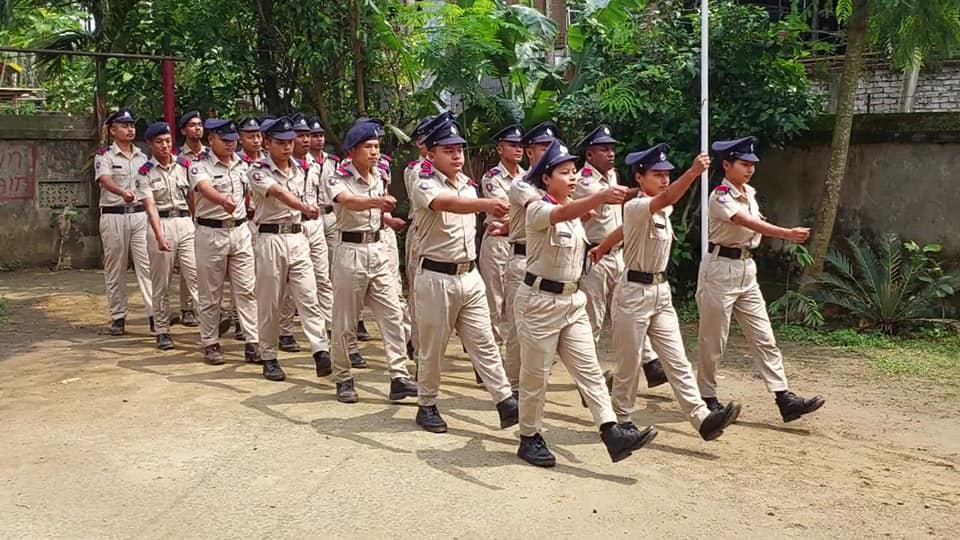
Focus on Discipline and Teamwork
Fire and emergency services require physical readiness, discipline, communication and the ability to work under pressure. A structured academy environment can help students develop these professional qualities alongside technical competence.
Multiple Study Pathways
With certificate, diploma and degree-level options listed by the academy, candidates can select a course based on their education, interests and long-term career plans.
Skills Students Can Develop
Industry-focused fire and safety education can help students build both technical and professional competencies, including:
- Fire-hazard identification
- Workplace risk assessment
- Safe use of firefighting equipment
- Emergency evacuation planning
- Basic rescue and first-aid response
- Occupational health and safety awareness
- Incident reporting and accident investigation
- Team coordination during emergencies
- Safety inspection and documentation
- Communication and leadership under pressure
The International Labour Organization’s occupational safety and health resources provide wider international information about creating safer workplaces and preventing occupational injuries.
Students can also explore official workplace-safety information through the DGFASLI website, an organisation under India’s Ministry of Labour and Employment.
Career Opportunities After Fire and Safety Training
Depending on the course completed, additional certifications, recruitment requirements and practical experience, trained candidates may explore opportunities in:
- Manufacturing plants
- Construction and infrastructure projects
- Oil, gas and petrochemical facilities
- Warehouses and logistics centres
- Airports and aviation-support services
- Hotels, hospitals and commercial complexes
- Power plants and engineering industries
- Emergency-response organisations
- Fire-protection and safety-consulting companies
- Public-sector and government organisations
Possible job titles can include fire and safety technician, fireman, safety supervisor, EHS assistant, emergency-response team member, safety inspector and fire-protection assistant.
Completing a course does not guarantee employment or eligibility for every position. Candidates should always verify the educational, physical, medical, statutory and recruitment requirements of their intended role.
Who Can Apply to NEFSA?
NEFSA lists Class 10 pass eligibility for several fire and safety programmes, while its B.Sc. programme requires Higher Secondary education in the Science stream.
The academy also states that candidates must complete physical and medical tests before admission. Applicants should confirm the latest requirements, course duration, fees, recognition details, available seats and required documents directly with NEFSA before applying.
NEFSA Admission Process
NEFSA currently displays admissions open on its official website. Applicants can start through the academy’s online admission portal.
The online process includes:
- Creating an applicant account
- Verifying the registered email address
- Entering personal and educational details
- Uploading a photograph and signature
- Uploading the required academic documents
- Reviewing the completed application
- Submitting the final application
- Downloading the submitted form
The portal currently asks candidates to prepare documents such as marksheets, admit cards, pass certificates, a photograph, signature and applicable supporting certificates. Students should check the portal for the latest document specifications before submission.
Begin Your Fire and Safety Career with NEFSA
A career in fire and industrial safety requires knowledge, courage, discipline and practical readiness. NEFSA’s industry-oriented courses aim to help students understand workplace hazards, operate safety equipment, participate in rescue operations and respond responsibly during emergencies.
If you are searching for a fire and safety institute in Northeast India, a fire safety course after Class 10, or professional industrial safety training in Assam, NEFSA can be considered as one of your regional training options.
Admissions are currently open. Visit the official NEFSA website to review the courses or submit your application through the NEFSA admission portal.
Admission contact:
North Eastern Fire Service Academy
Barbaruah, NH-37, Near Bypass Charali, Zero Point
Dibrugarh, Assam – 786007
Email: info@nefsaindia.com
Phone: +91 9126485101 / +91 9435904101 / +91 9435912101 / +91 9127090101