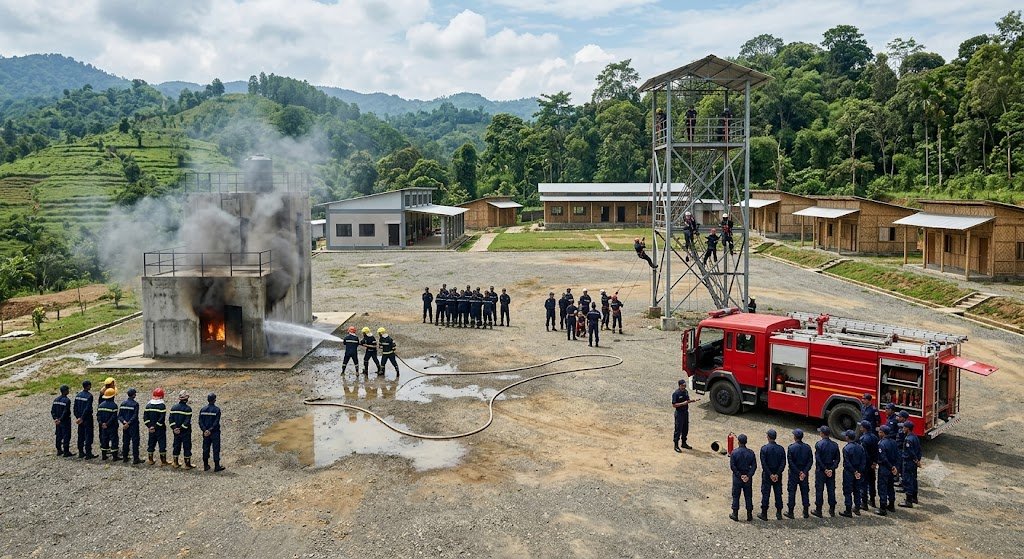
Choosing the right fire and safety academy in Northeast India can be an important first step for students who want to build careers in firefighting, industrial safety, emergency response, oil and gas, infrastructure, manufacturing and other safety-intensive industries.
Among the specialized institutions serving students in the region, North Eastern Fire Service Academy (NEFSA) in Dibrugarh, Assam, focuses specifically on professional fire and safety education, practical training, industrial safety and emergency preparedness.
NEFSA states that it is affiliated with the Government of Assam, Skill, Employment and Entrepreneurship Department and works to provide career-oriented fire and safety training to young people across Northeast India. Its programs combine theory with practical drills and emergency-response training.
For students searching for a Fire & Safety Academy in Assam, fire safety courses in Northeast India, or training that can prepare them for safety-related opportunities in industrial and oil-sector environments, NEFSA is a specialist institution worth exploring.
Why Fire & Safety Training Is Important Today?
Modern industries cannot operate effectively without safety systems.
Fire prevention, emergency preparedness, hazard identification, occupational health and safety, rescue operations and incident response are important across sectors such as:
- Oil and gas
- Refineries
- Petrochemical plants
- Manufacturing
- Construction
- Power plants
- Airports
- Warehousing and logistics
- Hotels and hospitals
- Large commercial establishments
- Infrastructure projects
- Government and emergency services
This is particularly relevant to petroleum operations.
The Oil Industry Safety Directorate (OISD), under India’s Ministry of Petroleum and Natural Gas, maintains numerous standards covering areas such as oil storage and handling, hazardous chemicals, firefighting equipment, refinery fire protection and oil and gas installations.
For students hoping to work around industrial environments, understanding fire prevention and workplace safety is therefore more than an academic requirement—it is part of developing professional competence.
Explore Oil Industry Safety Directorate Standards
About NEFSA Fire Academy
North Eastern Fire Service Academy, commonly known as NEFSA Fire Academy, is located at Barbaruah NH-37 near Bypass Chariali, Dibrugarh, Assam.
According to the academy’s official information, NEFSA was established in Dibrugarh and is affiliated with the Government of Assam’s Skill, Employment and Entrepreneurship Department. Its stated objective is to help develop trained fire-and-safety personnel for industries, Public Sector Undertakings, government departments and emergency services.
The academy emphasizes:
- Fire prevention
- Firefighting techniques
- Industrial safety
- Emergency response
- Rescue operations
- Hazard management
- Accident prevention
- Disaster preparedness
- Occupational safety
- Practical fire drills
This specialist focus makes NEFSA relevant to students searching specifically for professional fire and industrial safety training in Northeast India.
Why Students Consider NEFSA Fire Academy?
1. Specialized Fire & Safety Education
NEFSA is focused primarily on fire and safety rather than offering these subjects only as minor components of a broad academic program.
Its current course portfolio covers subjects including:
- Fire science and combustion
- Industrial safety management
- Fire protection systems
- Occupational health and safety
- Risk assessment
- Hazard control
- Disaster management
- Emergency planning
- Rescue operations
- First aid
- Fire detection and alarm systems
- Electrical and chemical safety
- Accident investigation
- Safety audits
The academy says its courses combine structured classroom education with practical training and simulations.
This combination is particularly important in safety education because students need to understand not only what a fire or industrial hazard is, but also how to react appropriately during an emergency.
2. Practical Firefighting and Emergency Training
Fire and safety cannot be learned entirely from books.
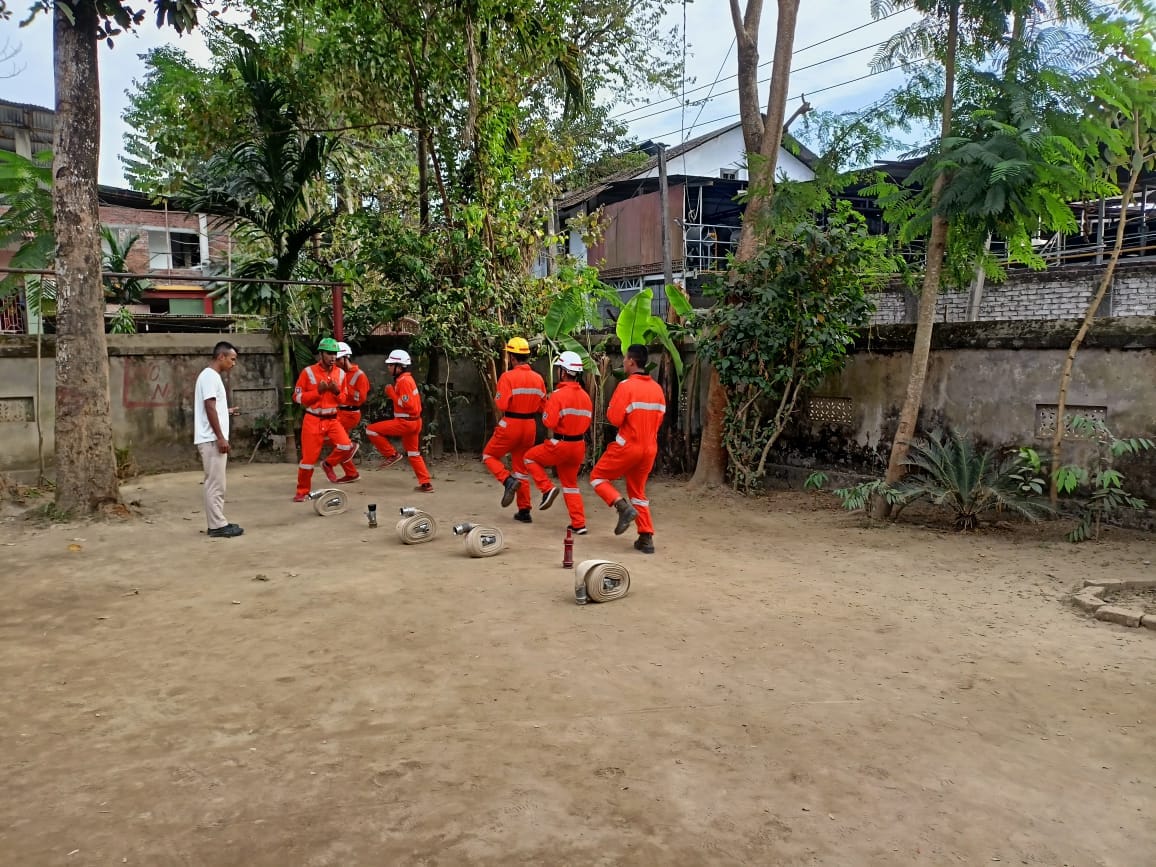
NEFSA states that students receive practical training involving activities such as:
- Fire drills
- Hose drills
- Ladder drills
- CPR
- Equipment handling
- Rescue exercises
- Evacuation procedures
- Emergency response simulations
Its official website also highlights live fire drills and realistic training environments as important parts of its educational approach.
Practical exposure can help students become familiar with the discipline, teamwork and procedural thinking required during emergency situations.
3. Fire & Safety Courses Available at NEFSA
NEFSA currently lists several professional programs for students interested in fire and industrial safety careers.
Fire Technology & Industrial Safety Management
The academy lists this program with eligibility beginning from Class 10.
Topics include:
- Fire science and combustion
- Fire protection systems
- Industrial safety management
- Occupational safety
- Risk assessment
- Hazard control
- Emergency planning
Potential career areas described by the academy include:
- Fire Safety Officer
- Industrial Safety Supervisor
- Safety Inspector
- Emergency Response Officer
Diploma in Fire Sub-Officer
This program focuses more strongly on operational firefighting, rescue, emergency management and leadership.
Training areas include:
- Firefighting techniques
- Fire equipment handling
- Rescue operations
- First aid
- Fire drills
- Evacuation
- Fire station operations
- Emergency communication
The academy lists possible career paths including Fire Sub-Officer, Fire Station Officer and Emergency Rescue Supervisor.
Diploma in Fire Safety Engineering
Students interested in technical and industrial safety applications can also explore NEFSA’s Diploma in Fire Safety Engineering.
Published subjects include:
- Fire safety engineering
- Fire protection design
- Fire alarm systems
- Electrical safety
- Chemical safety
- Safety regulations
- Accident investigation
- Safety audits
Potential roles listed by NEFSA include Fire Safety Engineer, Safety Auditor, Risk Assessment Officer and Safety Consultant.
B.Sc. in Fire Safety & Hazard Management
For eligible higher-secondary science students, NEFSA also lists a degree-level program in Fire Safety and Hazard Management.
The syllabus areas published by the academy include:
- Advanced fire engineering
- Environmental health and safety
- Industrial safety
- Construction safety
- Hazard management
- Safety management systems
- Disaster management
Students should confirm current eligibility, affiliation, recognition, duration, examination arrangements and admission requirements directly with the academy before enrolling.
4. Placement Record Published by NEFSA
One of the notable sections of NEFSA’s official website is its alumni placement database.
At the time of this research, the academy’s placement page listed 52 alumni across different organizations and job roles.
Among those published placements are multiple former students shown as working at:
Oil India Limited, Duliajan – Satellite Fire Station
NEFSA’s placement page lists alumni in roles including:
- Fireman
- Operator
- Station In-charge
Examples displayed by NEFSA include Akash Das, Anurag Yadav, Millennium Mili, Dibyajyoti Neog and Dipankar Gogoi, among others.
Gujarat Vadodara Refinery
NEFSA also lists several alumni as Safety Supervisors at Gujarat Vadodara Refinery.
NEFSA’s director additionally states that trainees from its earlier batches have worked with organizations including an Indian Oil refinery, Assam Petro-Chemicals, Airports Authority of India, RBI and Hyundai Motors India.
These are placements reported by the academy itself. Students should understand that past alumni outcomes do not guarantee employment for every student, and recruitment ultimately depends on vacancies, eligibility, examinations, interviews, employer requirements and individual performance.
5. Opportunities in the Oil & Gas Sector
Northeast India has a long association with the petroleum and energy industry, making fire and industrial safety knowledge especially relevant for students in Assam and surrounding states.
Oil and gas facilities can involve:
- Flammable liquids
- Combustible gases
- High-pressure systems
- Storage tanks
- Process equipment
- Electrical hazards
- Hot work
- Hazardous chemicals
- Confined spaces
Because of these risks, organizations operating petroleum facilities require structured safety systems.
The Oil Industry Safety Directorate publishes dedicated standards addressing firefighting equipment, refinery fire protection, oil and gas processing plants, depots, terminals and other petroleum facilities.
For students hoping to enter this sector, training in areas such as industrial fire prevention, emergency response and hazard identification can provide relevant foundational knowledge.
6. Fire & Safety Is a Recognized Skill Sector
Fire and industrial safety training also forms part of India’s formal vocational skill ecosystem.
The Government of India’s Directorate General of Training (DGT) lists Fire Technology & Industrial Safety Management under the Fire & Safety sector.
The DGT curriculum framework recognizes areas such as fire technology and industrial safety as specialized vocational disciplines.
Explore Fire Technology & Industrial Safety Management at DGT
This highlights the importance of structured technical education rather than treating firefighting as something that can be learned informally.
7. Training for More Than Firefighting
Many students initially assume fire and safety training only prepares someone to become a firefighter.
The field can be considerably broader.
Depending on qualifications, additional certifications, employer requirements and experience, career areas may include:
- Firefighter
- Fireman
- Fire Safety Officer
- Industrial Safety Supervisor
- EHS Officer
- Safety Inspector
- Fire Sub-Officer
- Fire Station Officer
- Safety Engineer
- Safety Auditor
- Emergency Response Officer
- Rescue Supervisor
- Hazard Management Professional
- Safety Consultant
- Emergency Response Team Member
Fire and safety personnel can potentially work across industrial, commercial and public-sector environments.
Individual job eligibility differs considerably, so students should always check the qualification requirements published by the specific employer.
8. Why Practical Training Matters in Fire & Safety
Imagine being present during an actual industrial emergency.
Knowing the definition of combustion is not enough.
A trained professional may also need to know:
- Which extinguisher to select
- How to approach a fire safely
- How to operate firefighting equipment
- How to communicate during an emergency
- How evacuation should be managed
- How to identify secondary hazards
- How to assist injured people
- How to work as part of an emergency-response team
This explains why NEFSA’s emphasis on drills, rescue operations and equipment handling is relevant to professional preparation.
The objective of good fire-and-safety training should be to convert theoretical understanding into disciplined action.
9. Learning Industrial Hazard Identification
Modern workplaces contain many types of hazards.
Examples can include:
Fire Hazards
- Flammable liquids
- Gas leaks
- Electrical faults
- Hot work
- Combustible materials
Chemical Hazards
- Toxic substances
- Corrosive materials
- Reactive chemicals
Mechanical Hazards
- Rotating machinery
- Moving equipment
- Pressure systems
Electrical Hazards
- Exposed wiring
- Overloaded systems
- Improper grounding
Workplace Hazards
- Working at height
- Confined spaces
- Unsafe lifting
- Poor housekeeping
Professional safety education teaches students to identify hazards before they become incidents.
This preventive mindset is one of the most important principles of occupational safety.
10. Career Opportunities Beyond Assam
Students completing fire and safety education do not necessarily have to restrict themselves to one sector or one state.
Safety professionals may seek opportunities across:
- Assam
- Other Northeast Indian states
- Refineries
- Oil and gas projects
- Manufacturing facilities
- Airports
- Construction projects
- Power plants
- Logistics operations
- Industrial complexes
- Private companies
- Government services
NEFSA also publishes an alumni testimonial from a former student who says the academy’s training helped him obtain an international career in the safety field.
Actual opportunities will depend on qualifications, experience, recruitment conditions, employer requirements and relevant certifications.
11. Why Northeast Students May Prefer a Regional Academy
For students from Assam, Arunachal Pradesh, Nagaland, Manipur, Meghalaya, Mizoram, Tripura and other parts of Northeast India, studying closer to home can offer practical advantages.
These may include:
- Reduced travel requirements
- Familiar regional environment
- Easier communication with family
- Better understanding of regional industrial opportunities
- Access to specialized safety education within Northeast India
NEFSA’s stated objective specifically includes training unemployed youth from across the Northeast in fire and safety professions.
12. Discipline Is an Important Part of Fire & Safety Careers
Emergency services demand more than technical knowledge.
Professionals may also need:
- Discipline
- Physical preparedness
- Communication ability
- Situational awareness
- Teamwork
- Leadership
- Confidence
- Responsibility
- Decision-making under pressure
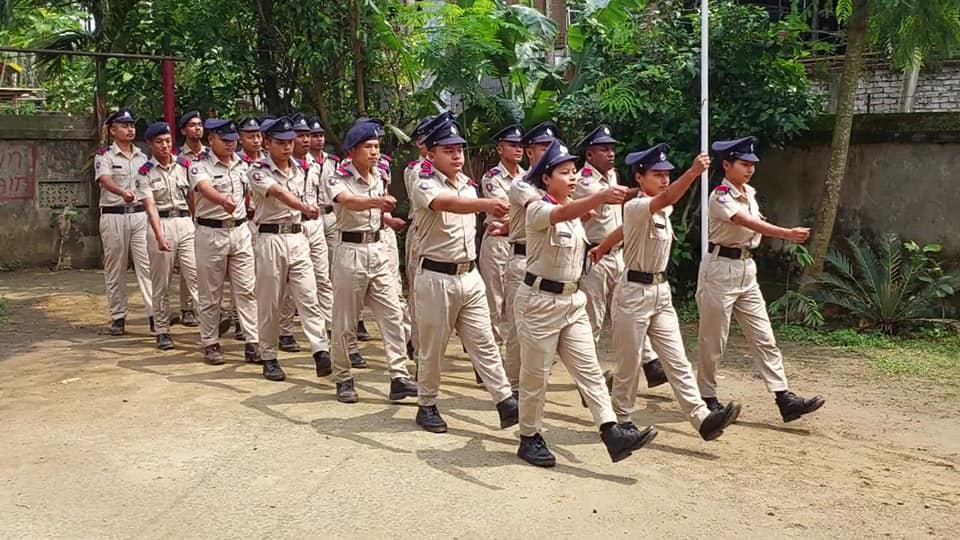
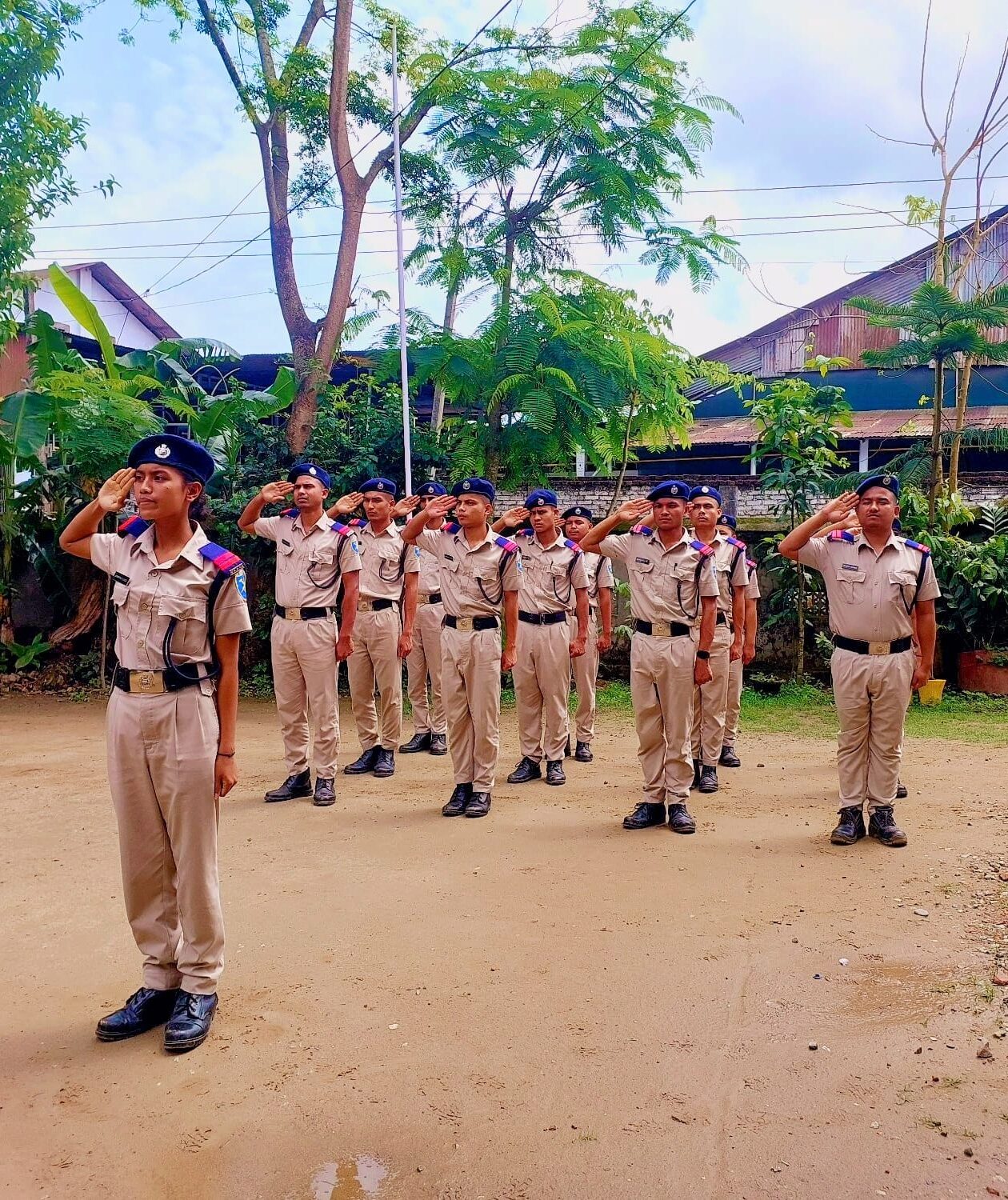
NEFSA describes discipline and professional preparation as important elements of its training philosophy.
For students pursuing emergency-response careers, developing these characteristics alongside technical knowledge can be valuable.
Who Can Consider Fire & Safety Training?
A fire and safety career may suit students who are interested in:
- Firefighting
- Industrial environments
- Emergency services
- Rescue work
- Workplace safety
- Oil and gas
- Engineering safety
- Disaster management
- Public safety
NEFSA lists Class 10 eligibility for several of its programs and Higher Secondary Science eligibility for its B.Sc. program. It also notes that physical and medical tests are mandatory before admission.
Prospective students should verify the latest eligibility rules directly with NEFSA because academic requirements can change.
How to Choose the Best Fire & Safety Academy in Northeast India
Before selecting any fire-and-safety institution, students should investigate several factors.
Course Recognition
Confirm:
- Awarding institution
- Affiliations
- Course recognition
- Examination structure
- Certification authority
Practical Facilities
Ask whether students receive genuine hands-on experience with:
- Fire extinguishers
- Hoses
- Pumps
- Rescue equipment
- PPE
- Fire drills
- Emergency simulations
Faculty
Experienced trainers can help students connect theory to real industrial situations.
Placement Records
Look for transparent alumni data rather than depending only on advertising claims.
NEFSA’s current website provides a dedicated placement section identifying alumni, employers and roles.
Course Content
A strong curriculum should include more than basic firefighting.
Students interested in industrial careers should look for exposure to:
- Occupational safety
- Hazard identification
- Industrial safety
- Emergency planning
- Fire protection
- Risk management
Fire Safety Training and the Petroleum Industry
Students interested specifically in refinery or petroleum-sector careers should become familiar with organizations responsible for safety standards.
The Oil Industry Safety Directorate (OISD) operates under India’s Ministry of Petroleum and Natural Gas and publishes technical standards for the petroleum industry.
Relevant subjects include:
- Firefighting equipment
- Fire protection systems
- Storage and handling
- Work permit systems
- Hazardous chemicals
- Refineries
- Oil and gas processing plants
- Petroleum depots
- Pipeline installations
Understanding this wider regulatory environment can help students appreciate the professional expectations involved in oil-sector safety jobs.
Frequently Asked Questions
Which is a good fire and safety academy in Northeast India?
NEFSA Fire Academy in Dibrugarh is a specialist institution offering fire technology, industrial safety, fire sub-officer, fire safety engineering and hazard-management programs. Its published curriculum emphasizes both theory and practical drills.
Where is NEFSA Fire Academy located?
NEFSA is located at Barbaruah NH-37, near Bypass Chariali (Zero Point), Dibrugarh, Assam – 786007.
Does NEFSA provide practical training?
According to NEFSA, its programs include practical fire training, drills and real-time emergency simulations. Its Diploma in Fire Sub-Officer program specifically mentions hose drills, ladder drills and CPR.
Are NEFSA students working in the oil sector?
NEFSA’s official placement page currently lists multiple alumni at Oil India Limited’s Duliajan Satellite Fire Station, including individuals listed as firemen, operators and a station in-charge. It also lists alumni at Gujarat Vadodara Refinery.
Does NEFSA have Indian Oil placements?
NEFSA’s director page states that trainees from previous batches were engaged with organizations including an Indian Oil refinery. Students seeking current recruitment details should verify the specific employer, employment arrangement and recruitment process directly with NEFSA and the employer.
Is a fire safety course enough to get a job in IOCL or another PSU?
No training institute can guarantee a PSU position merely through course completion.
Organizations such as IOCL and other public-sector employers have their own recruitment notifications, eligibility rules, examinations, selection processes, experience requirements and medical standards.
Students should always follow the official recruitment process for the company concerned.
What jobs can I pursue after fire and safety training?
Depending on your qualification and the employer’s eligibility requirements, possible career areas can include:
Fireman, Fire Safety Officer, Fire Sub-Officer, Safety Supervisor, Safety Inspector, Emergency Response Officer, EHS professional, Safety Engineer and related industrial-safety roles.
Why NEFSA Fire Academy Stands Out in Northeast India?
NEFSA brings together several elements that students commonly look for when researching a professional fire and safety institution:
- Dedicated fire-and-safety specialization
- Dibrugarh, Assam location
- Government of Assam departmental affiliation stated by the academy
- Multiple fire and safety programs
- Practical drills and simulations
- Firefighting and industrial safety education
- Oil-sector-relevant safety training
- Published alumni placement information
- Alumni shown working with Oil India Limited and refinery operations
- Career-oriented safety education
For students interested in fire safety courses in Assam, industrial safety training in Northeast India, oil and gas safety careers, or professional firefighting education, NEFSA provides a specialized pathway worth investigating.
Build a Career in Fire & Safety with NEFSA
A career in fire and safety involves responsibility.
Fire and safety professionals help protect:
- Human life
- Industrial facilities
- Property
- Equipment
- Communities
- Critical infrastructure
Whether your goal is to enter industrial safety, emergency response, refinery operations, firefighting or occupational safety, professional training can help provide the technical foundation necessary to pursue those opportunities.
North Eastern Fire Service Academy (NEFSA) aims to prepare students through theoretical education, practical drills, hazard-management training and career-oriented fire-and-safety programs.
If you are searching for the Best Fire & Safety Academy in Northeast India, explore NEFSA’s programs, inspect its facilities, review its placement information and speak directly with the admissions team before making your decision.
Authoritative External Resources
Oil Industry Safety Directorate — Ministry of Petroleum & Natural Gas
Learn about safety standards used across India’s petroleum and oil industry.
Directorate General of Training — Government of India
Learn about Fire Technology & Industrial Safety Management within India’s vocational training ecosystem.
Explore DGT Fire Technology & Industrial Safety
NEFSA Official Course Information
Review NEFSA’s current programs, eligibility criteria and curriculum directly.
Explore NEFSA Fire & Safety Courses
NEFSA Placement Records
Review the academy’s published alumni placement information.
Final Note
Fire and industrial safety careers require technical knowledge, practical ability, discipline and continuous learning. For Northeast Indian students who want specialized training close to home, NEFSA Fire Academy provides dedicated programs designed around firefighting, industrial safety, emergency response and hazard management.
Its published alumni placement records—including candidates listed at Oil India Limited’s Duliajan Satellite Fire Station and refinery operations—also provide students with examples of the types of career paths previous trainees have pursued.
Train professionally. Build practical skills. Learn safety. Prepare for responsibility. Start your journey with NEFSA Fire Academy.