Choosing the right Fire and Safety Institute in India can be an important first step for students who want to build careers in firefighting, industrial safety, emergency response, occupational safety, disaster management, and hazard control.
As industries, infrastructure projects, manufacturing facilities, commercial buildings, airports, hospitals, construction sites, oil and gas facilities, and other workplaces continue to place greater emphasis on safety, trained fire and safety professionals have an important role to play.
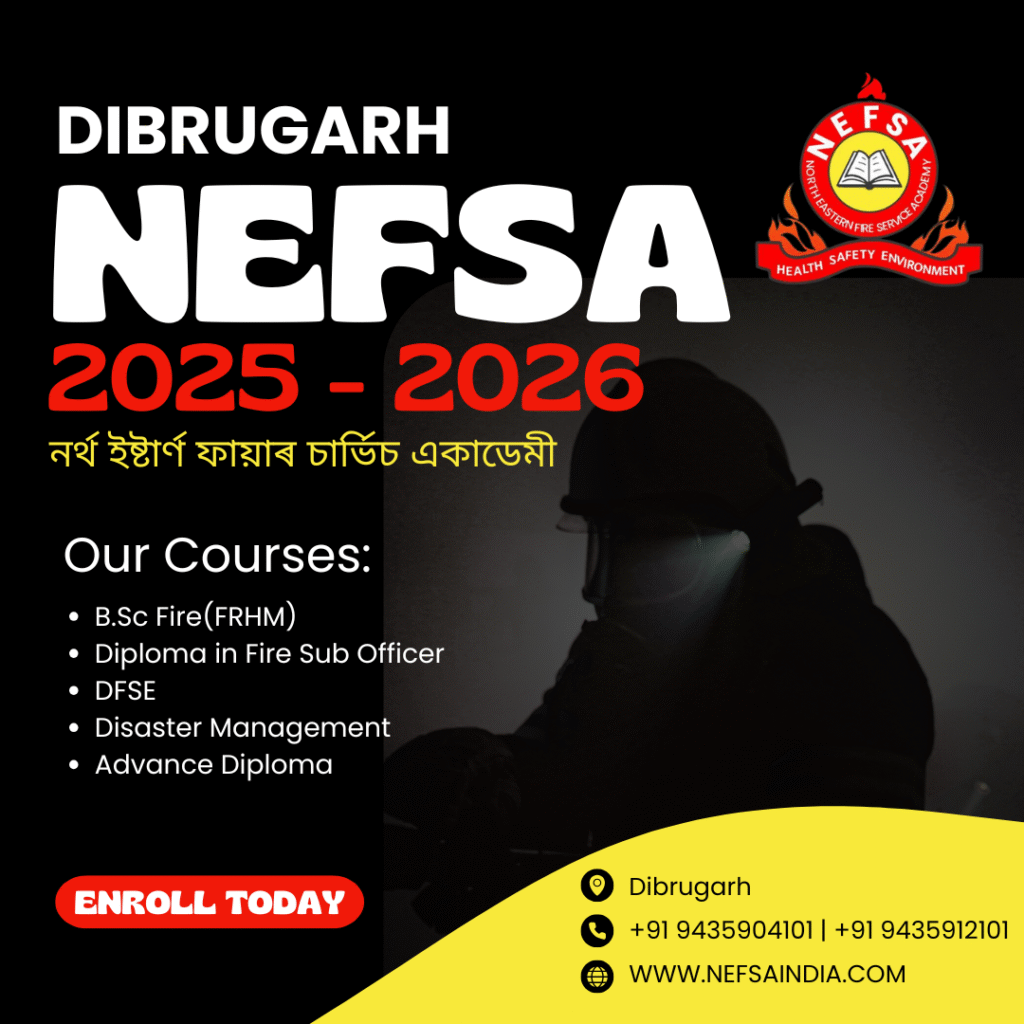
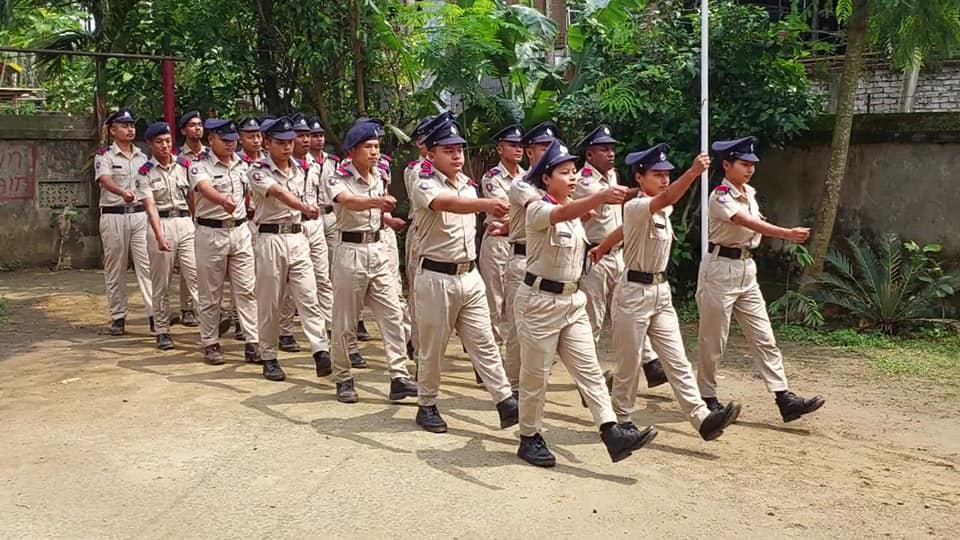
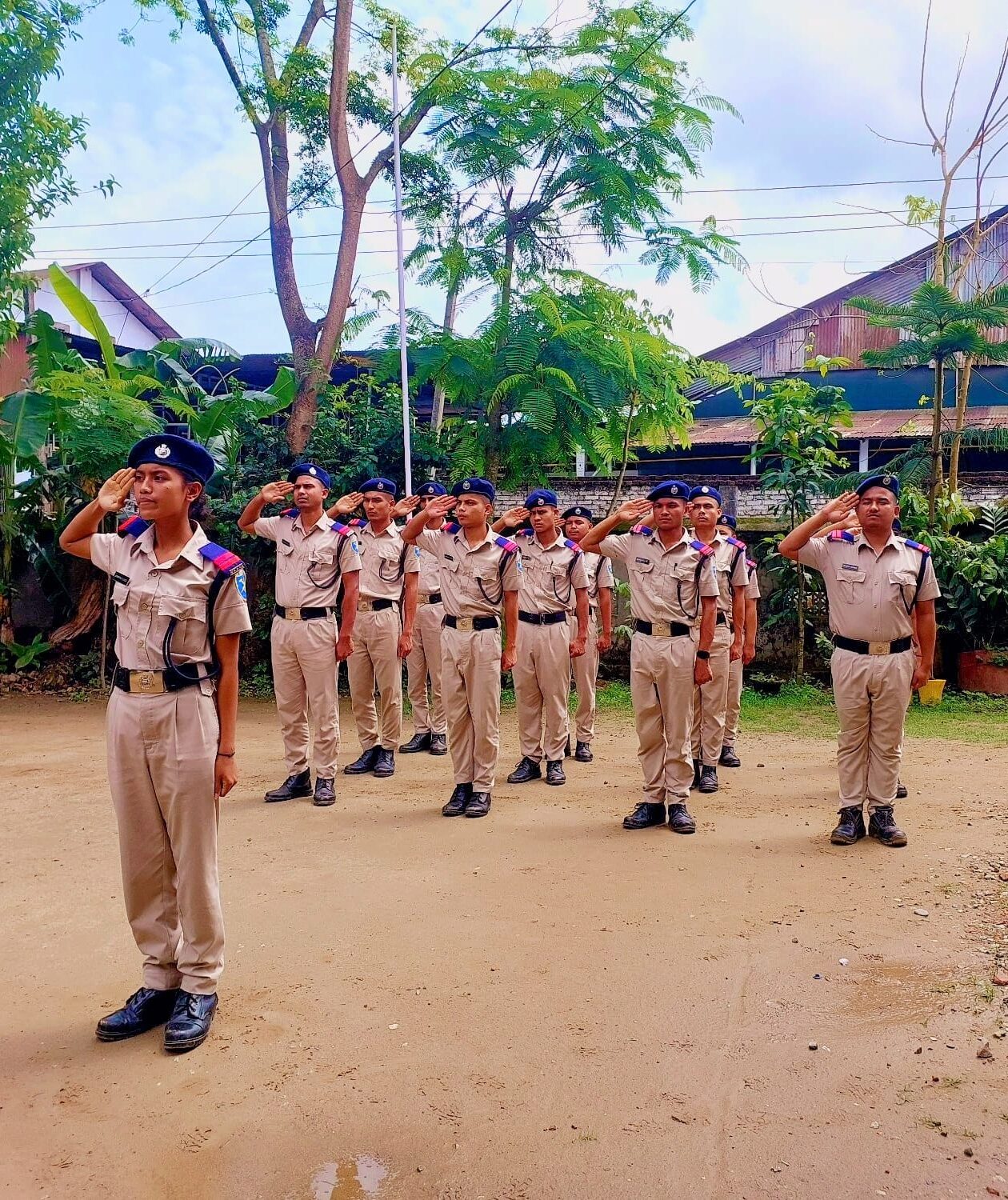
NEFSA – North Eastern Fire Service Academy, based in Dibrugarh, Assam, provides specialised education and practical training for students interested in this field. According to NEFSA’s official website, the academy is affiliated with the Government of Assam, Skill, Employment and Entrepreneurship Department and focuses on developing employment-oriented fire and safety skills among young people, particularly from Northeast India.
With courses covering fire technology, industrial safety, fire safety engineering, hazard management, firefighting, rescue operations and emergency response, NEFSA offers students a pathway to develop both theoretical knowledge and hands-on skills.
If you are searching for the Best Institute for Fire & Safety Courses in India, here is what you should know about NEFSA Fire Academy and the growing importance of professional fire and safety education.
Why Fire and Safety Education Is Important in India
Fire safety is much more than learning how to operate a fire extinguisher.
Professional fire and safety management involves understanding:
- Fire prevention
- Fire detection and alarm systems
- Emergency evacuation
- Fire protection systems
- Industrial hazards
- Occupational health and safety
- Risk assessment
- Rescue techniques
- Disaster management
- Hazardous materials
- Electrical and chemical safety
- Accident prevention
- Emergency planning
The importance of these skills can also be seen in India’s building-safety framework.
The Bureau of Indian Standards’ National Building Code of India 2016 includes a dedicated Part 4 – Fire and Life Safety, covering areas such as fire prevention, life safety, firefighting installations, evacuation, smoke control, fire drills, escape lighting and emergency systems.
Professional education that combines these concepts with practical exercises can therefore help students understand the responsibilities involved in modern fire and safety roles.
Why Choose NEFSA Fire Academy?
NEFSA focuses specifically on Fire, Safety, Hazard Management and Emergency Response education rather than treating fire safety as only a small part of a broader programme.
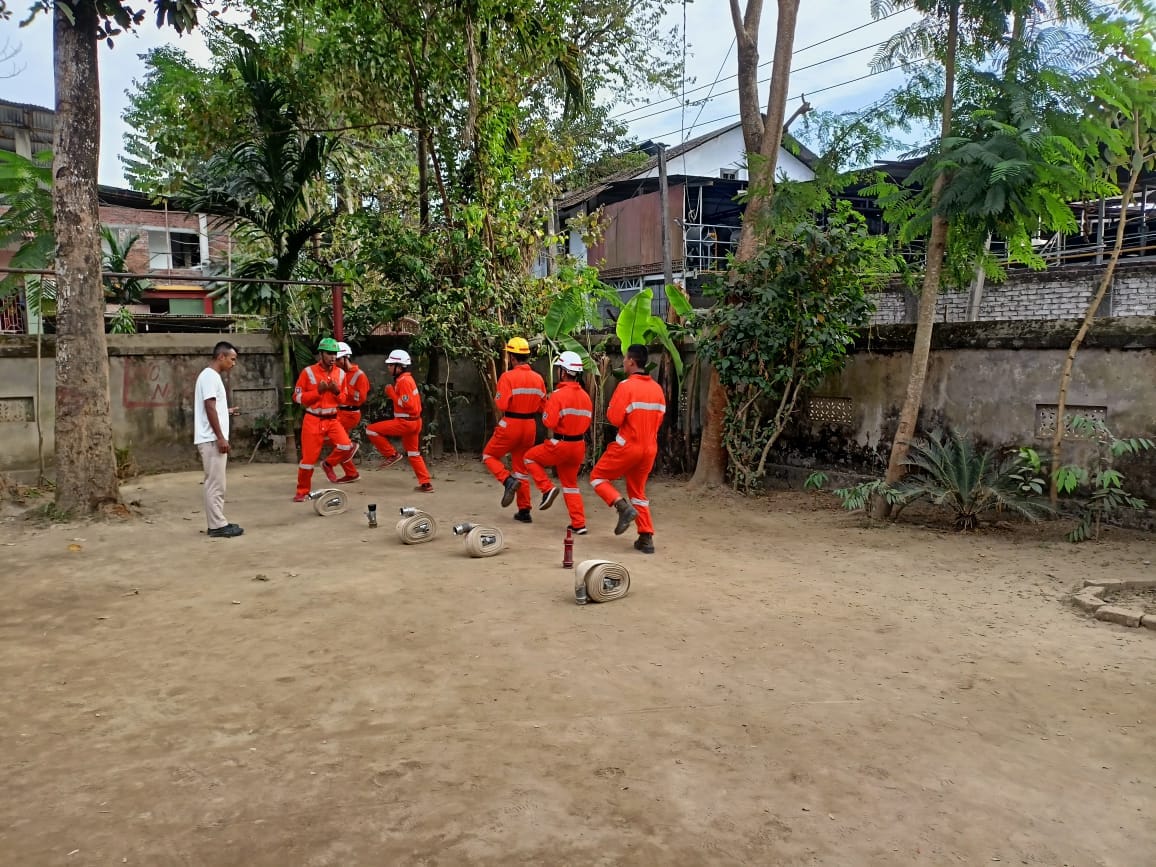
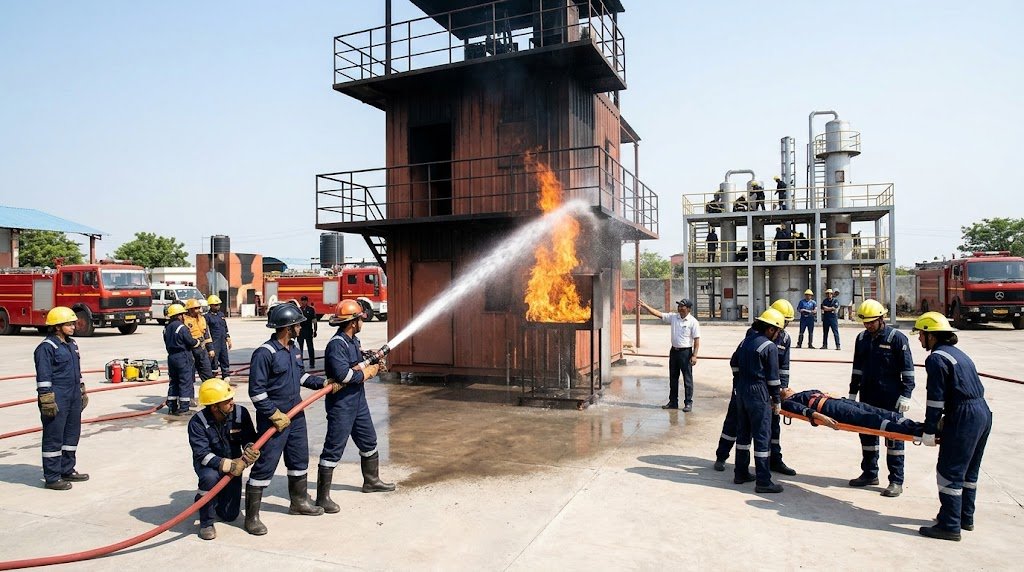
The academy’s published course information indicates that its programmes combine classroom learning with practical exercises such as fire drills, hose and ladder training, CPR and emergency simulations.
This combination is important because fire and emergency situations require professionals who understand both technical concepts and practical response procedures.
1. Practical Fire & Safety Training
Practical exposure is one of the most important components of fire and safety education.
NEFSA states that its students receive practical training, fire drills and real-time simulations as part of its programmes.
Depending on the course, training areas can include:
- Firefighting techniques
- Fire extinguisher handling
- Hose drills
- Ladder drills
- Rescue procedures
- First aid and CPR
- Emergency evacuation
- Fire protection equipment
- Hazard identification
- Emergency response planning
Such practical learning helps students understand how theoretical safety principles may be applied during real emergency situations.
Fire & Safety Courses Offered by NEFSA
NEFSA currently lists several programmes for students interested in building careers in fire and industrial safety.
Fire Technology & Industrial Safety Management
This programme focuses on fire prevention, industrial safety and emergency response.
Important areas of study include:
- Fire science and combustion
- Industrial safety management
- Fire protection systems
- Occupational health and safety
- Risk assessment
- Hazard control
- Disaster management
- Emergency planning
NEFSA lists 10th pass as the eligibility requirement for this programme.
The knowledge developed through this type of programme can be relevant to roles associated with industrial safety, fire prevention and emergency response.
Diploma in Fire Sub-Officer
Students interested in firefighting operations and emergency-service leadership can explore NEFSA’s Diploma in Fire Sub-Officer programme.
The academy lists training areas including:
- Firefighting techniques
- Equipment handling
- Rescue operations
- First aid
- Evacuation procedures
- Fire station operations
- Communication systems
- Disaster response
Practical components identified by NEFSA include hose drills, ladder drills, CPR and emergency simulations.
Diploma in Fire Safety Engineering
Fire safety increasingly involves engineering systems, building protection, detection technology and regulatory requirements.
NEFSA’s Diploma in Fire Safety Engineering includes subjects such as:
- Fire safety engineering and design
- Fire detection and alarm systems
- Safety laws and regulations
- Electrical safety
- Chemical safety
- Accident investigation
- Safety auditing
These areas can be particularly relevant in industrial plants, commercial buildings, infrastructure projects and other environments requiring structured safety systems.
B.Sc. in Fire Safety & Hazard Management
Students seeking degree-level education can consider NEFSA’s B.Sc. in Fire Safety & Hazard Management.
NEFSA lists Higher Secondary in the Science stream as the eligibility requirement for this programme.
Subjects include:
- Advanced fire engineering
- Environmental health and safety
- Disaster and hazard management
- Safety management systems
- Industrial safety
- Construction safety
The programme is designed for students who want to develop deeper knowledge of hazard management and safety systems.
Importance of Practical Training in Fire Safety Education
Firefighting and emergency response are practical disciplines.
Students may need to understand how to react when circumstances change rapidly, how to communicate during emergencies and how to operate equipment correctly.
India’s National Fire Service College (NFSC), Nagpur, which functions under the Ministry of Home Affairs, provides professional training in areas including fire prevention, fire extinction, fire engineering, fire safety, rescue techniques and handling modern firefighting equipment.
NFSC also conducts specialist and short-term courses in areas such as Urban Search & Rescue, HAZMAT, breathing apparatus and disaster management.
This broader national training landscape demonstrates why practical competence is an important part of professional fire-service preparation.
Industrial Safety Is Becoming Increasingly Important
Fire and safety professionals are not restricted to municipal fire stations.
Modern safety functions can exist across industries such as:
- Manufacturing
- Construction
- Oil and gas
- Warehousing
- Hospitals
- Hotels
- Airports
- Transportation
- Power plants
- Commercial complexes
- Infrastructure projects
- Educational institutions
Occupational safety is also an important element of India’s workplace regulatory framework.
The Occupational Safety, Health and Working Conditions Code, 2020 contains provisions relating to employer responsibilities for health and safety and provisions concerning safety officers in certain establishments.
The International Labour Organization likewise emphasises good occupational safety and health practices as important for preventing workplace accidents and protecting workers.
For students, this means fire and safety education can provide knowledge applicable beyond traditional firefighting.
Learn Fire Prevention, Life Safety and Fire Protection
One of the most important concepts for future fire and safety professionals is understanding that fire safety can be divided into multiple interconnected areas.
The Bureau of Indian Standards’ guidance for NBC 2016 identifies three broad areas within Part 4:
Fire Prevention
Understanding building occupancy, ignition hazards, fire-resistant construction, electrical installations and methods for controlling fire spread.
Life Safety
Understanding emergency exits, evacuation, occupant safety, escape lighting, smoke control and emergency procedures.
Fire Protection
Understanding firefighting installations, systems and their maintenance.
A comprehensive fire and safety education should help students build an understanding across all three areas.
Fire & Safety Career Opportunities
Students completing suitable fire and safety qualifications may explore opportunities across different sectors depending on the qualification, employer requirements, experience, recruitment rules and any additional certifications required.
Potential job titles can include:
- Fire Safety Officer
- Fireman / Firefighter
- Fire Sub-Officer
- Safety Officer
- Industrial Safety Supervisor
- Safety Inspector
- Fire Safety Engineer
- Emergency Response Officer
- EHS Officer
- HSE Assistant
- Safety Supervisor
- Hazard Control Professional
- Fire Protection Technician
- Rescue Team Member
- Safety Auditor
Students should always check the exact eligibility criteria established by an employer or government recruitment authority before applying.
No educational institution can responsibly guarantee eligibility for every position simply because a candidate has completed a course.
Fire & Safety Training for Northeast India
One factor distinguishing NEFSA is its location in Dibrugarh, Assam and its focus on students from Northeast India.
NEFSA states that one of its primary objectives is to provide Fire and Safety training to young people across the Northeastern region and support skill development and employment opportunities.
For students from Assam and neighbouring states who previously may have considered travelling much farther for specialised fire and safety education, access to dedicated training within Northeast India can be particularly useful.
What Should You Look for in a Fire & Safety Institute?
Before joining any fire and safety academy, students should evaluate more than advertising claims.
Consider factors such as:
Practical Training
Ask whether the programme includes drills, equipment training and emergency simulations.
Course Curriculum
Check whether the curriculum covers fire science, industrial safety, hazard identification, first aid, risk assessment, rescue and emergency management.
Recognition and Affiliation
Always verify the current recognition, affiliation or awarding body applicable to the specific programme you intend to join.
Faculty and Training Infrastructure
Fire and safety education should provide access to appropriate instructors and training facilities.
Career Guidance
Students should understand what career pathways may be available after completing their specific qualification.
Physical and Medical Requirements
Some operational firefighting roles have physical or medical requirements.
NEFSA itself states that physical and medical tests are mandatory before admission to its listed programmes.
Candidates should therefore check the latest admission requirements before applying.
Skill Development for a Safety-Focused Career
Fire and safety education requires discipline, technical understanding, physical preparedness and the ability to remain composed during emergencies.
India’s wider skills ecosystem also uses occupational standards and model curricula to define job-specific competencies. The National Skill Development Corporation provides access to National Occupational Standards and qualification-related curricula across different industry sectors.
For aspiring safety professionals, continuous learning can remain important even after completing formal education.
Students may later pursue additional training in specialised areas such as:
- Occupational Health & Safety
- HAZMAT response
- Disaster management
- First aid
- Industrial safety
- Fire audits
- Construction safety
- Electrical safety
- Emergency management
- Rescue operations
Why NEFSA Can Be Considered When Searching for a Fire & Safety Institute in India?
Students searching online for the best fire academy in India, best fire and safety institute in India, or fire safety courses in India should compare institutions on actual training, curriculum, recognition and career relevance rather than relying only on rankings or marketing claims.
NEFSA offers several features prospective students may wish to consider:
- Dedicated focus on Fire & Safety education
- Fire technology and industrial safety courses
- Fire Sub-Officer training
- Fire Safety Engineering education
- B.Sc. Fire Safety & Hazard Management
- Practical fire drills
- Emergency-response exercises
- Rescue and first-aid training
- Industrial safety education
- Hazard-management training
- Presence in Northeast India
- Affiliation stated with the Government of Assam’s Skill, Employment and Entrepreneurship Department
These features make NEFSA Fire Academy a relevant institution for students comparing professional fire and safety education options in India.
Start Your Career in Fire & Safety with NEFSA
Fire prevention, industrial safety and emergency management are fields that carry significant responsibility.
The professionals working in these areas can contribute to protecting employees, communities, buildings, industrial facilities and valuable infrastructure.
If you are interested in developing practical knowledge in firefighting, industrial safety, emergency response and hazard management, NEFSA Fire Academy in Dibrugarh, Assam offers multiple programmes that may provide a pathway into this field.
Before admission, students should review the latest curriculum, eligibility, affiliation, fees, course duration, certification, physical requirements and career opportunities directly with the academy.
Take the first step towards a career dedicated to safety, preparedness and emergency response with NEFSA Fire Academy.
Frequently Asked Questions
Which is the best institute for Fire & Safety courses in India?
There is no single official nationwide ranking that establishes one private academy as the definitive “best” Fire & Safety institute in India. Students should compare curriculum, practical training, recognition, facilities and career support. NEFSA is one option offering specialised fire and safety programmes with practical training in Dibrugarh, Assam.
Where is NEFSA Fire Academy located?
NEFSA – North Eastern Fire Service Academy is located in Dibrugarh, Assam, India.
What Fire & Safety courses are available at NEFSA?
NEFSA currently lists programmes including Fire Technology & Industrial Safety Management, Diploma in Fire Sub-Officer, Diploma in Fire Safety Engineering, and B.Sc. in Fire Safety & Hazard Management.
Can I join a Fire & Safety course after Class 10?
NEFSA currently lists a 10th-pass eligibility requirement for several of its fire and safety programmes, including Fire Technology & Industrial Safety Management, Diploma in Fire Sub-Officer and Diploma in Fire Safety Engineering. Candidates should verify the latest eligibility directly with the academy before admission.
What jobs can I pursue after studying Fire & Safety?
Depending on the course, additional qualifications and employer requirements, candidates may explore roles related to firefighting, fire safety, industrial safety, emergency response, EHS, safety supervision, inspections and hazard management.
Does Fire & Safety training include practical classes?
NEFSA states that its programmes include practical training, fire drills and real-time emergency simulations. Specific practical components vary by programme.
Is Fire & Safety a career only for government fire services?
No. Fire and safety knowledge is relevant across manufacturing, construction, infrastructure, hospitals, hospitality, warehouses, commercial facilities and other industrial sectors in addition to public fire and emergency services.
Backlinks
- Bureau of Indian Standards – National Building Code of India: use anchor text “National Building Code of India 2016”. This is the strongest external source for the section about fire and life safety requirements. National Building Code of India – BIS
- National Fire Service College, Nagpur – Ministry of Home Affairs: use anchor text “National Fire Service College, Nagpur” when discussing professional firefighter and emergency-response training. National Fire Service College
- National Skill Development Corporation: use anchor text “National Occupational Standards and Model Curriculum” in the skill-development section. NSDC National Occupational Standards
- Ministry of Labour & Employment: use anchor text “Occupational Safety, Health and Working Conditions” when discussing workplace safety requirements. Ministry of Labour & Employment