Professional fire and safety courses in Assam are becoming an important educational pathway for students who want to build careers in firefighting, industrial safety, emergency response, and occupational health and safety. With industries, commercial establishments, infrastructure projects, and public institutions requiring effective safety measures, trained professionals have opportunities to contribute to protecting lives and property.
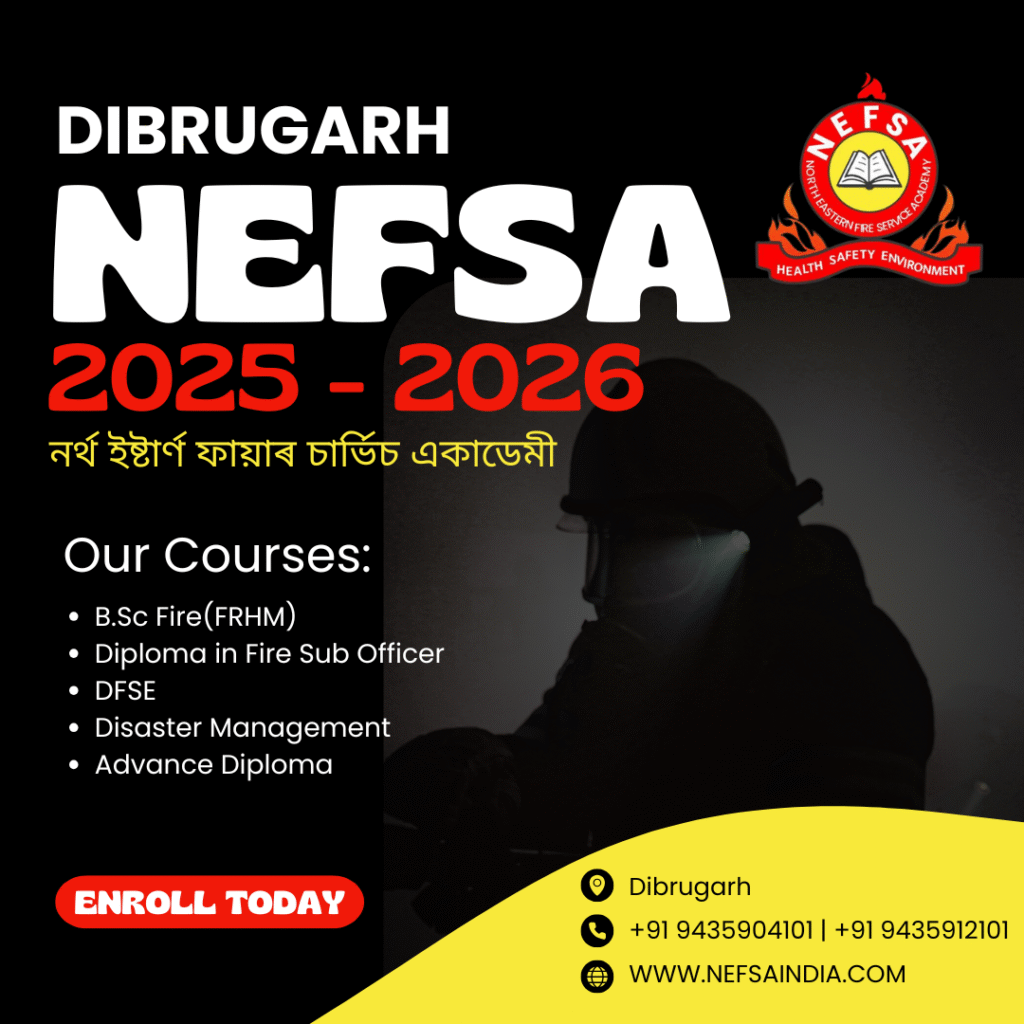
For students searching for a trusted fire and safety training institute in Assam, NEFSA Fire Academy (North Eastern Fire Service Academy) offers career-focused education combining theoretical knowledge, practical exercises, and professional skill development.
Located in Dibrugarh, Assam, NEFSA serves aspiring fire and safety professionals from Guwahati, Jorhat, Tinsukia, Sivasagar, and other parts of Northeast India.
Whether you have completed Class 10, Class 12, or are exploring specialized safety education, understanding NEFSA’s courses, training methodology, and career pathways can help you make an informed decision.
1. NEFSA Fire Academy – A Dedicated Fire and Safety Training Institute in Assam
Choosing the right academy is an important decision when preparing for a career in fire prevention, rescue operations, and industrial safety.
NEFSA Fire Academy focuses on developing technical knowledge, practical skills, discipline, and emergency preparedness among aspiring safety professionals.
According to its published institutional information, NEFSA is affiliated with the Government of Assam’s Skill, Employment and Entrepreneurship Department. The academy describes its mission as providing professional fire and safety training to young people across Northeast India.
Its educational approach emphasizes preparing students to understand workplace hazards, respond to emergencies, and support safety management in different environments.
NEFSA’s focus extends beyond academic learning to the development of responsible individuals capable of contributing to safer workplaces and communities.
2. Professional Fire and Safety Courses for Different Career Goals
One of the major reasons to consider NEFSA Fire Academy is its range of professional programs.
Students can explore courses according to their educational qualifications, personal interests, and long-term career aspirations.
Fire Technology & Industrial Safety Management
This program introduces students to fire prevention, industrial hazards, safety equipment, occupational health, and emergency response procedures.
Key learning areas include fire science, combustion, risk assessment, industrial safety management, and disaster preparedness.
Students interested in careers such as industrial safety supervisor, safety inspector, or fire safety professional may find this training relevant.
Diploma in Fire Sub-Officer
The Diploma in Fire Sub-Officer program focuses on operational firefighting, emergency rescue, fire station procedures, and response coordination.
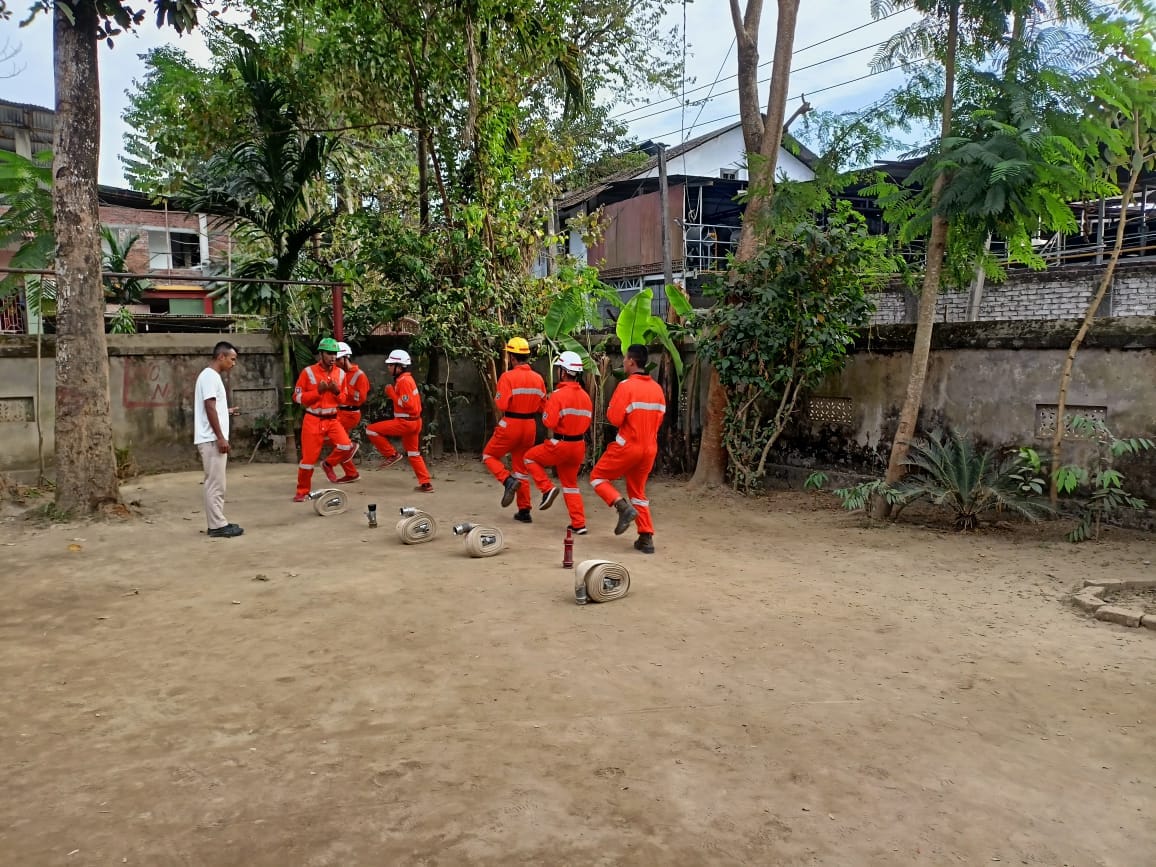
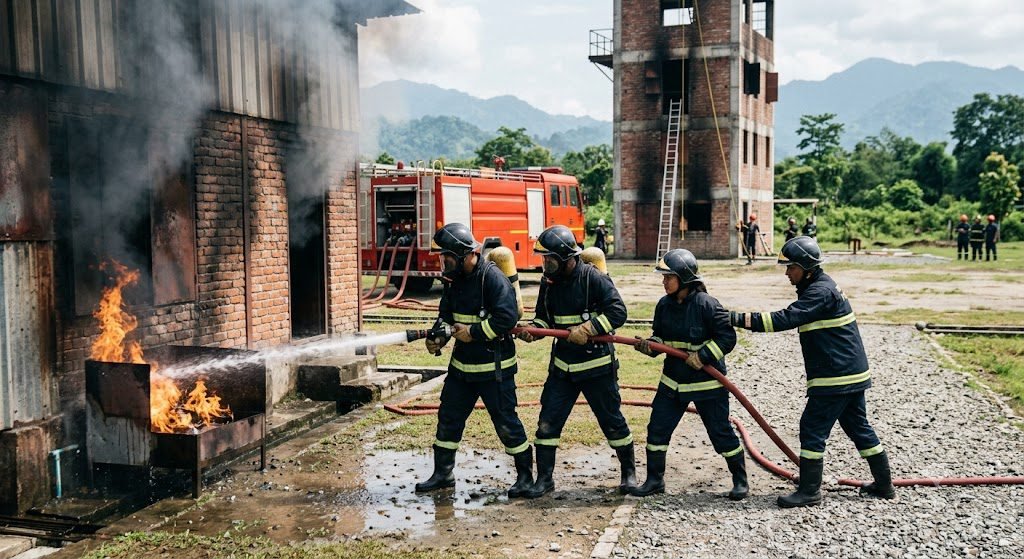
Training topics include firefighting equipment, hose handling, ladder drills, first aid, evacuation techniques, and rescue operations.
The program is particularly relevant for candidates interested in operational fire services and emergency response careers.
Diploma in Fire Safety Engineering
Fire safety engineering involves understanding the technical systems and practices used to prevent, detect, and control fire hazards.
NEFSA’s published curriculum covers fire protection systems, alarm systems, electrical safety, chemical safety, accident investigation, and safety audits.
Students interested in technical safety roles and fire protection systems can explore this course as a foundation for further professional development.
B.Sc. in Fire Safety & Hazard Management
This degree-level program introduces advanced concepts in fire safety, environmental protection, occupational health, hazard management, and emergency planning.
It is designed for students interested in broader safety-management responsibilities and long-term career development.
NEFSA’s published course information lists Class 10 eligibility for its three fire and safety diploma/technology programs and higher secondary education in the science stream for the B.Sc. program. Students should verify the current duration, certification, awarding body, and admission rules before enrolling.
Explore the official NEFSA course details for additional information.
3. Practical Firefighting Training and Emergency Response Skills
Fire and safety education is not limited to textbooks, lectures, or classroom examinations.
Professionals working in this field must understand how to recognize dangerous situations, use equipment correctly, communicate during emergencies, and follow established safety procedures.
NEFSA emphasizes practical training alongside theoretical instruction.
Its published course descriptions include practical activities such as fire drills, hose drills, ladder drills, CPR, evacuation exercises, and emergency simulations.
These activities are intended to help students apply their learning in supervised training environments.
Practical training can help students develop confidence in equipment handling, teamwork, emergency communication, and decision-making.
The importance of such training is also reflected in the professional programs offered by the Government of India’s National Fire Service College, Nagpur, which covers firefighting, rescue techniques, disaster management, and specialized fire-safety subjects.
For aspiring professionals, the combination of classroom education and hands-on learning is an important factor when selecting a fire and safety academy.
4. Fire and Industrial Safety Career Opportunities in India
Fire and safety professionals contribute to preventing accidents, managing hazards, and maintaining emergency preparedness across different sectors.
Their work can be relevant in manufacturing facilities, construction projects, hospitals, commercial buildings, hospitality establishments, transportation infrastructure, and industrial installations.
Depending on qualifications, experience, recruitment criteria, and employer requirements, students completing suitable training may explore career pathways including:
-
Fire Safety Officer
-
Industrial Safety Supervisor
-
Firefighter or Fire Service Personnel
-
Emergency Response Technician
-
Fire Protection Technician
-
Safety Inspector
-
EHS (Environment, Health and Safety) Assistant or Officer
-
Fire and Safety Trainer, with appropriate experience
-
Disaster Management and Emergency Response Personnel
Some advanced positions, particularly engineering, statutory safety officer, and government fire-service roles, require specific recognized qualifications, selection examinations, or professional experience.
India’s Directorate General of Factory Advice Service and Labour Institutes (DGFASLI), under the Ministry of Labour and Employment, conducts professional training in subjects such as industrial fire safety, occupational health, machinery safety, risk assessment, and workplace hazard prevention. This demonstrates the range of specialized knowledge involved in modern safety professions.
Professional training can help establish a foundation for career development, but course completion alone does not guarantee employment or eligibility for every safety-related position.
5. Why Students from Guwahati and Northeast India Can Consider NEFSA
Students looking for fire and safety courses in Guwahati may also benefit from exploring specialized institutions elsewhere in Assam.
NEFSA’s campus is situated in the Dibrugarh district, making it an educational option for students across Upper Assam and other Northeastern states.
The academy’s regional focus is especially relevant for students from Assam, Arunachal Pradesh, Meghalaya, Nagaland, Manipur, Mizoram, Tripura, and Sikkim who wish to explore professional fire and safety education.
Choosing an institute within Northeast India may offer geographical and practical advantages for some learners, depending on travel, accommodation, course availability, and individual circumstances.
Students should compare facilities, faculty credentials, training arrangements, and course recognition rather than making a decision based solely on location.
6. Industry-Oriented Learning and Career Preparation
A professional training institute should prepare students not only to understand safety principles but also to recognize their practical applications.
NEFSA’s course descriptions address subjects relevant to workplace safety operations, including hazard identification, prevention methods, emergency planning, and occupational safety.
The academy also highlights placement-focused training and career guidance on its official website.
For students exploring future employment, it is advisable to request current information about recruitment partners, placement support, previous student outcomes, and applicable eligibility criteria.
The Government of India’s National Fire Service College likewise identifies fire prevention, modern firefighting techniques, rescue operations, and fire engineering as significant areas of professional preparation.
This reinforces the value of developing both technical knowledge and practical competencies.
7. Understanding the Importance of Occupational Health and Safety
Occupational health and safety is concerned with creating safer working conditions and reducing exposure to workplace hazards.
It involves identifying risks, designing preventive measures, educating workers, investigating incidents, and preparing organizations for emergencies.
Professionals in this field may work with safety inspections, equipment checks, workplace procedures, emergency response plans, and risk assessments.
The Government of India’s national policy framework for safety, health, and the environment at work emphasizes education, training, and the development of occupational safety competencies.
By studying fire prevention and industrial safety, students can develop knowledge applicable to a wider range of safety responsibilities.
This makes professional fire and safety education relevant not only to aspiring firefighters but also to individuals interested in industrial operations, workplace compliance, and risk management.
8. Building Confidence, Discipline and Professional Responsibility
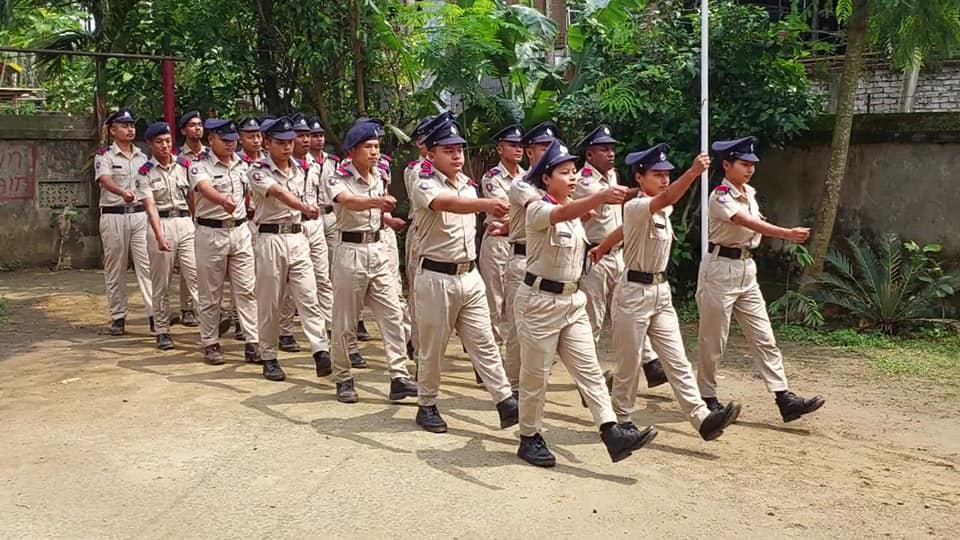
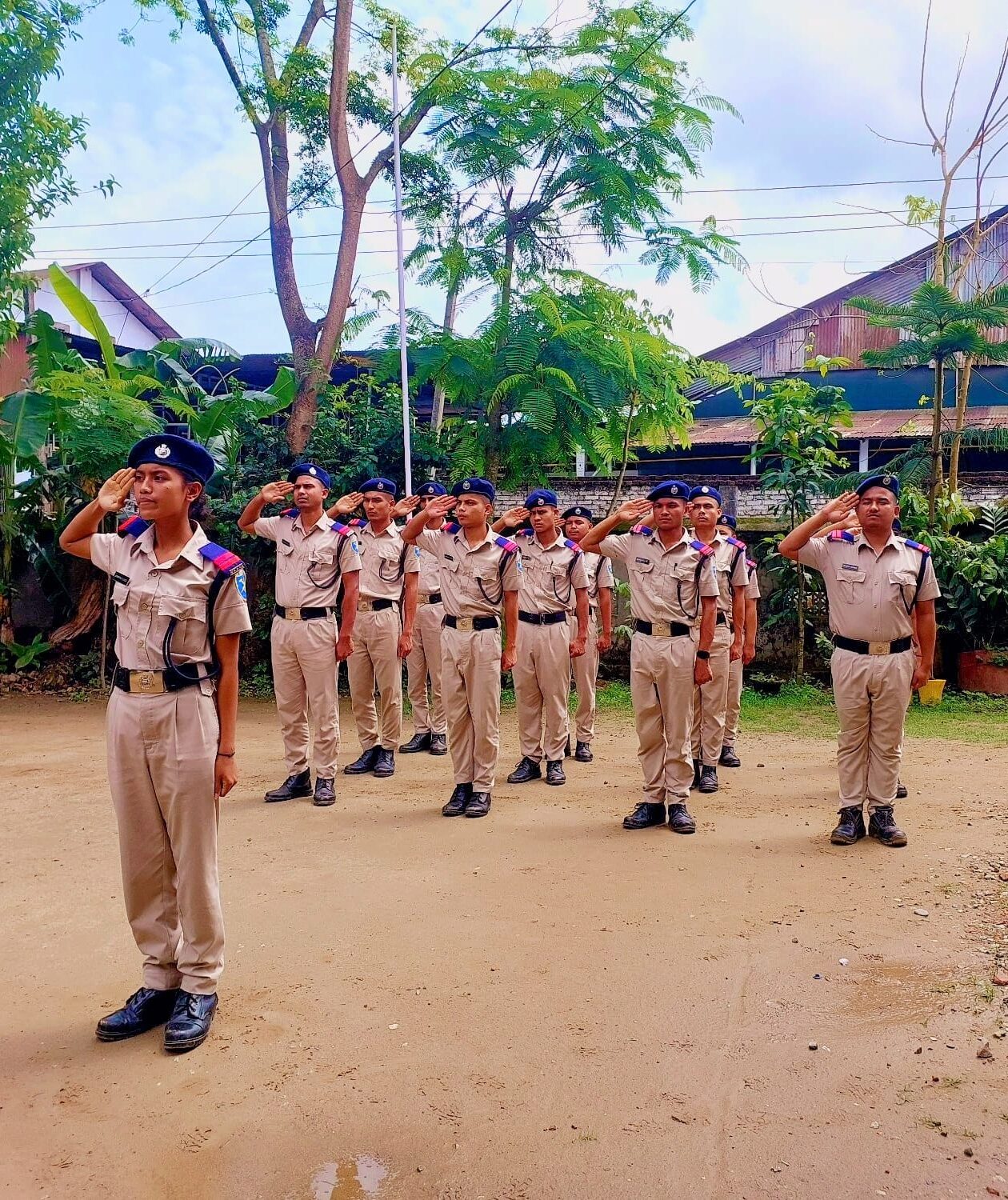
Working in fire safety and emergency response requires more than technical knowledge. Professionals may need to remain calm under pressure, communicate clearly, and coordinate effectively with others.
NEFSA’s training approach incorporates physical activities, drills, and group-based exercises intended to help students develop these qualities.
Learning about emergency evacuation, first aid, fire equipment, and rescue procedures can encourage students to take a responsible approach toward public safety.
These abilities may also benefit students pursuing related careers in industrial safety, security management, and disaster preparedness.
9. Fire and Safety Courses After Class 10 and Class 12 in Assam
Students often assume that professional safety education is available only after completing a college degree. However, different training pathways may be available at different educational levels.
According to NEFSA’s published admission information, candidates who have completed Class 10 can explore certain fire and safety programs, while its B.Sc. in Fire Safety & Hazard Management requires higher secondary education in the science stream.
The academy also specifies mandatory physical and medical testing before admission.
Before selecting a course, students should consider their educational qualifications, physical fitness, career objectives, financial resources, and future study plans.
They should also confirm whether the final qualification meets the requirements of the particular employers or government recruitment examinations they hope to pursue.
10. How to Apply for Admission to NEFSA Fire Academy
NEFSA provides an online admission portal where interested candidates can register and complete an application.
Applicants are instructed to provide personal and educational information, upload supporting documents, review their application, and complete the final submission.
The published admission instructions mention documents such as photographs, signatures, educational certificates, and applicable verification or medical documents.
Students can begin by visiting the NEFSA online admission portal.
Before making any payment or accepting an admission offer, applicants should confirm the current course fee, duration, admission eligibility, awarding institution, facilities, and refund conditions directly with the academy.
11. Why Choose NEFSA Fire Academy for Your Future?
NEFSA Fire Academy offers an educational pathway for students interested in developing the knowledge and practical skills associated with firefighting, industrial safety, and emergency preparedness.
Its combination of course options, practical training activities, regional accessibility, and career-oriented curriculum makes it an institution worth considering when comparing fire and safety academies in Assam.
For learners seeking professional fire and safety courses in Assam, selecting the right program can be the first step toward developing a valuable specialization.
Rather than focusing only on obtaining a certificate, students should aim to build strong technical understanding, safe working habits, confidence, and the willingness to continue learning throughout their careers.
Frequently Asked Questions
Which is a good fire and safety training academy in Assam?
NEFSA Fire Academy is one institution students can consider for professional fire and safety education in Assam. Applicants should compare its course offerings, recognition, training facilities, and outcomes with other available institutes before making a decision.
Where is NEFSA Fire Academy located?
NEFSA is located at Barbaruah, NH-37, near Bypass Chariali (Zero Point), Dibrugarh, Assam – 786007.
Can I join a fire and safety course after Class 10?
Yes. NEFSA lists Class 10 eligibility for certain fire technology, fire sub-officer, and fire safety engineering programs, subject to its admission requirements.
Does NEFSA provide practical firefighting training?
According to its official course descriptions, NEFSA includes activities such as fire drills, equipment handling, rescue exercises, and emergency simulations.
What jobs can I explore after completing a fire and safety course?
Depending on the qualification and employer requirements, potential career paths include firefighting, industrial safety supervision, fire protection, emergency response, and occupational health and safety.
Does NEFSA guarantee placements?
NEFSA advertises placement-focused training and showcases recruitment-related information. Students should confirm current placement arrangements directly with the academy. A specific job or salary should not be assumed without a written commitment.
Can students from Guwahati apply to NEFSA?
Yes, students from Guwahati and other parts of Assam can explore NEFSA’s courses, subject to the academy’s admission criteria and availability.
Start Your Fire and Safety Career with NEFSA Fire Academy
A career in fire and safety offers an opportunity to develop specialized professional skills while contributing to the protection of people, property, and workplaces.
Whether you are interested in fire prevention, rescue operations, industrial safety, or emergency management, choosing a suitable training program is an important starting point.
Explore the courses offered by NEFSA Fire Academy and take an informed step toward your professional future.
Contact NEFSA Fire Academy
-
Website: www.nefsaindia.com
-
Email: info@nefsaindia.com
-
Phone: +91 9126485101 / +91 9435904101
-
Address: Barbaruah, NH-37, Near Bypass Chariali (Zero Point), Dibrugarh, Assam – 786007