Fire safety, industrial safety and emergency response have become increasingly important across industries, commercial facilities, infrastructure projects and public institutions. As workplaces become more complex, organisations need trained professionals who understand fire prevention, hazard identification, emergency response, occupational safety and risk management.
For students searching for the Best Fire & Industrial Safety Institute in NER, NEFSA – North Eastern Fire Service Academy offers structured fire and safety education with a strong focus on practical training and industry-oriented learning.
Based in Assam, NEFSA provides programs covering fire technology, industrial safety, safety engineering, hazard management and emergency response, helping students prepare for careers in safety-focused roles across different sectors.
Why Fire & Industrial Safety Training Matters
Fire and workplace emergencies can result in injuries, loss of life, equipment damage, business interruption and serious financial consequences.
Effective safety management therefore involves much more than knowing how to use a fire extinguisher.
Professionals working in fire and industrial safety may need knowledge of:
- Fire prevention
- Fire detection systems
- Fire-fighting equipment
- Emergency evacuation
- Industrial hazards
- Occupational health and safety
- Risk assessment
- Hazard control
- Electrical safety
- Chemical safety
- Accident investigation
- Emergency planning
- Disaster management
- Safety audits
India’s National Building Code includes a dedicated section on Fire and Life Safety and also addresses construction management and safety, demonstrating how fire protection forms an important part of the country’s building-safety framework.
The Bureau of Indian Standards also maintains specific standards covering areas such as fire detection and alarm systems, portable and mobile fire extinguishers, electrical installations and different categories of industrial fire safety.
This is why students considering a career in this field should seek structured, practical and technically relevant training.
NEFSA – Fire & Industrial Safety Education in Northeast India
North Eastern Fire Service Academy (NEFSA) offers educational programs designed to develop knowledge and practical skills in fire prevention, industrial safety and emergency response.
The academy’s official website describes its programs as combining:
- Structured classroom learning
- Practical fire drills
- Emergency-response simulations
- Industry-oriented subjects
- Hazard-management training
- Practical safety exercises
NEFSA also states that physical and medical tests are required before admission and that its programs include practical training and real-time simulations.
For students from Assam and other Northeast states, this provides an opportunity to build specialised skills without necessarily travelling far outside the region.
Fire Technology & Industrial Safety Management
One of NEFSA’s listed programs focuses on Fire Technology & Industrial Safety Management.
According to the academy’s course information, this program covers areas including:
- Fire science and combustion
- Industrial safety management
- Fire protection systems and equipment
- Occupational health and safety
- Risk assessment
- Hazard control
- Disaster management
- Emergency planning
The academy states that the program is intended to develop professionals who can understand safety operations in industries, factories and major infrastructure environments.
These subjects create a foundation for students who want to understand both fire safety and broader industrial risk management.
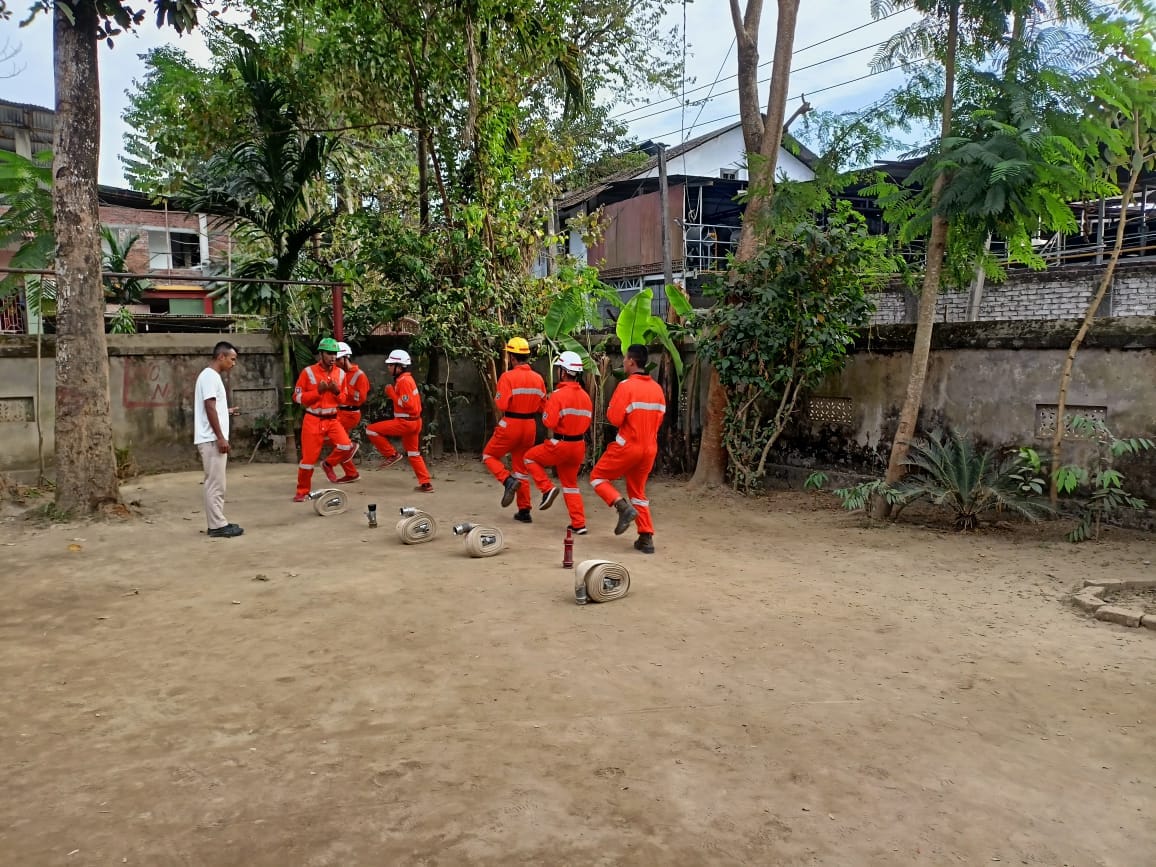
Practical Fire Safety Training
Fire and emergency-response skills cannot be developed only through books.
A student may understand the theory behind combustion or fire extinguishers, but an emergency environment requires practical knowledge, discipline and confidence.
That is why hands-on training is particularly important.
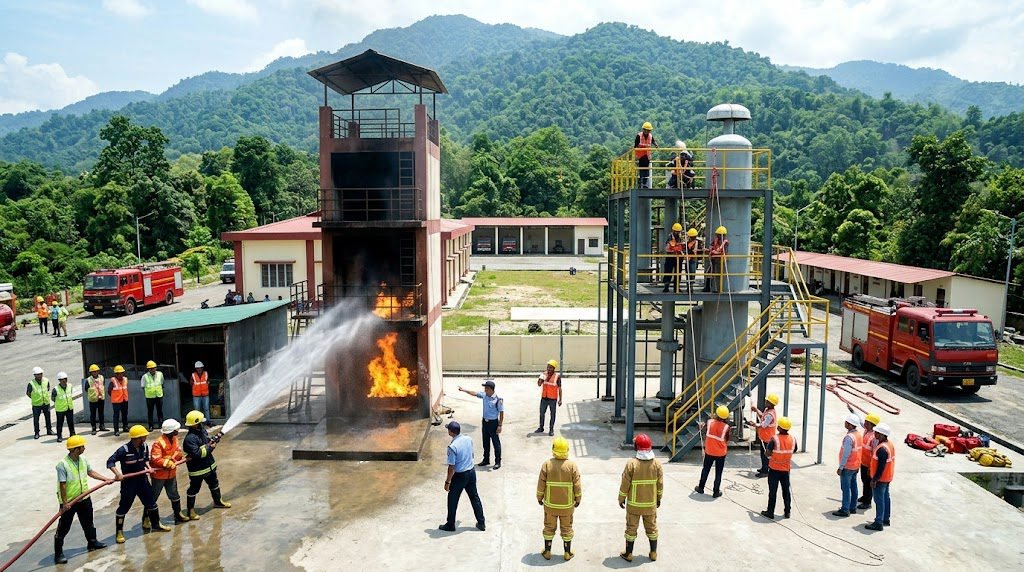
NEFSA states that its courses include fire drills and real-time simulations in addition to classroom instruction.
Practical training may help students understand how equipment and procedures are applied in realistic scenarios.
Important training areas can include:
- Fire-extinguisher operation
- Hose handling
- Fire hydrant procedures
- Personal protective equipment
- Breathing apparatus
- Rescue methods
- Emergency communication
- Evacuation procedures
- Team coordination
- Incident response
The value of practical fire training is also reflected in professional fire-service training systems more broadly. The Directorate General Fire Services, Civil Defence & Home Guards lists regional fire-service training centres around India, including a Regional Training Centre for Fire & Emergency Service in North Guwahati.
Industrial Safety Training for Modern Workplaces
Industrial safety covers a much broader area than fire alone.
Factories, construction projects, power facilities, manufacturing plants, warehouses and infrastructure sites may involve risks from machinery, electricity, chemicals, heights, confined spaces and combustible materials.
A trained safety professional must therefore learn how to identify and reduce hazards before accidents occur.
Industrial safety education can include:
Hazard Identification
Students learn to recognise potential hazards within a workplace.
Risk Assessment
Risk assessment involves understanding how likely an incident is and how severe its consequences could be.
Accident Prevention
Safety professionals help develop procedures designed to reduce unsafe conditions and behaviours.
Personal Protective Equipment
Correct PPE selection and usage are important in industrial and emergency environments.
Emergency Preparedness
Workplaces should have defined procedures for emergencies such as fires, chemical incidents and evacuations.
Safety Inspection
Routine inspection can help identify risks before they develop into serious incidents.
Understanding Fire Protection Systems
Modern buildings and industrial facilities use multiple layers of fire protection.
Depending on the building or facility, systems can include:
- Fire extinguishers
- Fire alarms
- Smoke and heat detectors
- Hydrant systems
- Sprinkler systems
- Emergency exits
- Fire doors
- Emergency lighting
- Fire pumps
- Hose reels
The Bureau of Indian Standards maintains technical standards related to fire detection and alarm systems and first-aid fire extinguishers, among other safety areas.
Students entering the fire and safety sector should therefore develop both theoretical understanding and practical familiarity with commonly used safety systems.
Importance of Fire & Life Safety in Buildings
Fire safety is relevant not only to factories but also to:
- Hospitals
- Hotels
- Shopping centres
- Schools
- Offices
- Warehouses
- Apartments
- Industrial facilities
- Public buildings
- High-rise developments
The National Building Code of India 2016 includes extensive provisions for fire and life safety, including requirements addressing complex modern buildings such as high-rises, glazed buildings, atria, commercial kitchens and parking facilities.
This highlights the increasing need for trained professionals who understand fire-safety systems, evacuation principles and building-related safety requirements.
Fire Safety Engineering & Design
Advanced fire-safety learning can extend beyond emergency response.
NEFSA’s course information lists topics including:
- Fire safety engineering and design
- Fire detection and alarm systems
- Safety laws and regulations
- Electrical safety
- Chemical safety
- Accident investigation
- Safety auditing
Career pathways presented by the academy include roles such as fire safety engineer, safety auditor, risk-assessment officer and safety consultant.
This means students interested in the field can consider technical and managerial safety careers in addition to frontline fire-response roles.
B.Sc. in Fire Safety & Hazard Management
For learners seeking degree-level education, NEFSA also lists a B.Sc. in Fire Safety & Hazard Management.
The academy describes the program as covering areas such as:
- Advanced fire engineering
- Environmental health and safety
- Disaster and hazard management
- Safety management systems
- Industrial safety
- Construction safety
Potential career areas identified by the academy include safety management, EHS, hazard control and industrial safety consulting.
Students should always verify the latest eligibility, affiliation, recognition, course duration and admission requirements directly with the academy before enrolling.
Career Opportunities After Fire & Safety Courses
Fire and industrial safety qualifications can be relevant across multiple industries.
Potential sectors include:
- Oil and gas
- Construction
- Manufacturing
- Power plants
- Warehousing
- Airports
- Hospitals
- Hotels
- Shopping complexes
- Infrastructure companies
- Engineering companies
- Industrial facilities
- Facility management
- Emergency-response organisations
Depending on qualification, experience and employer requirements, possible roles may include:
- Fire Safety Officer
- Fireman
- Safety Supervisor
- Industrial Safety Supervisor
- Safety Inspector
- EHS Officer
- Emergency Response Officer
- Safety Engineer
- Fire Safety Engineer
- Risk Assessment Officer
- Safety Auditor
- Safety Manager
NEFSA itself identifies several of these potential career paths within its program descriptions.
Actual eligibility for any position will depend on the employer, qualification requirements and relevant experience.
What Is an EHS Professional?
EHS generally refers to Environment, Health and Safety.
EHS professionals work to help organisations manage workplace safety, employee health and environmental responsibilities.
Their responsibilities can include:
- Conducting safety inspections
- Identifying hazards
- Supporting risk assessments
- Investigating incidents
- Training employees
- Maintaining safety documentation
- Monitoring PPE usage
- Supporting emergency-response plans
- Assisting with regulatory compliance
A strong fire and industrial safety foundation can therefore be useful for students who eventually want to work in EHS-related roles.
Why Practical Training Is Important
An emergency rarely happens exactly as described in a textbook.
Fire professionals may need to act quickly while working in heat, smoke, restricted visibility and stressful environments.
Practical exercises allow trainees to develop:
Confidence
Repeated training can make equipment and procedures more familiar.
Teamwork
Fire and emergency response normally requires coordinated teams.
Physical Readiness
Fire-related roles can involve physically demanding environments.
Equipment Familiarity
Students need practical exposure to safety and firefighting equipment.
Decision-Making
Simulated situations help learners understand how emergency procedures work under pressure.
NEFSA’s emphasis on drills and simulations makes practical learning a significant element of its advertised training model.
Why Choose NEFSA for Fire & Safety Training?
Students searching for a fire and industrial safety institute in Northeast India should evaluate the quality and relevance of the learning environment.
NEFSA offers several characteristics worth considering.
1. Specialized Fire & Safety Education
The academy focuses specifically on fire, industrial safety and related disciplines rather than treating them as minor subjects.
2. Practical Training
The official course information emphasises fire drills and realistic simulations alongside theory.
3. Industry-Oriented Subjects
Courses cover topics directly connected to industrial and occupational safety.
4. Multiple Study Levels
NEFSA lists programs ranging from foundational fire and safety education to degree-level fire safety and hazard-management study.
5. Northeast India Location
The academy is located in Dibrugarh, Assam, making it accessible to students from the Northeast who want specialised fire and safety education within the region.
6. Career-Oriented Training
NEFSA presents its courses around potential professional roles in fire safety, industrial safety, risk management and EHS.
Fire & Safety Institute for Students Across NER
NER, or the Northeastern Region of India, includes:
- Assam
- Arunachal Pradesh
- Meghalaya
- Nagaland
- Manipur
- Mizoram
- Tripura
- Sikkim
Students from across these states may consider professional fire and industrial safety education as a route into technical, infrastructure, industrial and emergency-response careers.
As industrial facilities, commercial buildings, infrastructure projects and urban development expand, fire prevention and workplace safety remain important parts of responsible development.
Who Should Consider Fire & Industrial Safety Courses?
These courses may be suitable for students who:
- Want a career in fire and safety
- Are interested in industrial safety
- Want to work in emergency response
- Are interested in EHS careers
- Prefer practical and technical training
- Want to work in construction or infrastructure safety
- Want to learn risk and hazard management
- Are interested in fire-safety engineering
Students should choose their specific course according to educational qualification, career plans and the eligibility criteria of the program.
Skills Students Should Develop
A strong fire and safety professional needs more than technical knowledge.
Important professional skills include:
Observation
Safety professionals need to identify hazards that others may overlook.
Communication
Clear instructions are essential during both routine safety training and emergencies.
Discipline
Safety procedures must be followed consistently.
Leadership
Emergency-response situations often require calm coordination.
Physical Fitness
Some fire and emergency-response roles can be physically demanding.
Technical Knowledge
Professionals should understand equipment, systems, hazards and procedures relevant to their work.
Continuous Learning
Standards, technologies and workplace practices change, making continued professional development important.
Fire Safety Standards in India
Students studying fire safety should become familiar with India’s broader technical and safety framework.
The Bureau of Indian Standards publishes numerous standards related to fire safety. Examples include standards covering:
- Fire detection and alarm systems
- Fire extinguishers
- Building fire safety
- Electrical installation fire safety
- Industrial fire hazards
- Emergency exits and personal hazard
- Fire safety in specific industrial environments
BIS currently lists standards such as IS 2190 for portable and mobile first-aid fire extinguishers and IS 1646 for fire safety relating to electrical installations.
It also maintains industry-specific fire-safety standards, including standards for generating stations and other industrial environments.
For students, awareness of standards is important because professional fire safety is based on systematic design, installation, inspection and maintenance—not improvisation.
Fire & Emergency Response as a Career
Fire and emergency-response careers require responsibility.
The work can involve:
- Preventing incidents
- Inspecting safety equipment
- Conducting drills
- Responding to emergencies
- Supporting evacuations
- Controlling hazards
- Protecting people and property
- Maintaining emergency equipment
- Educating workers about safety
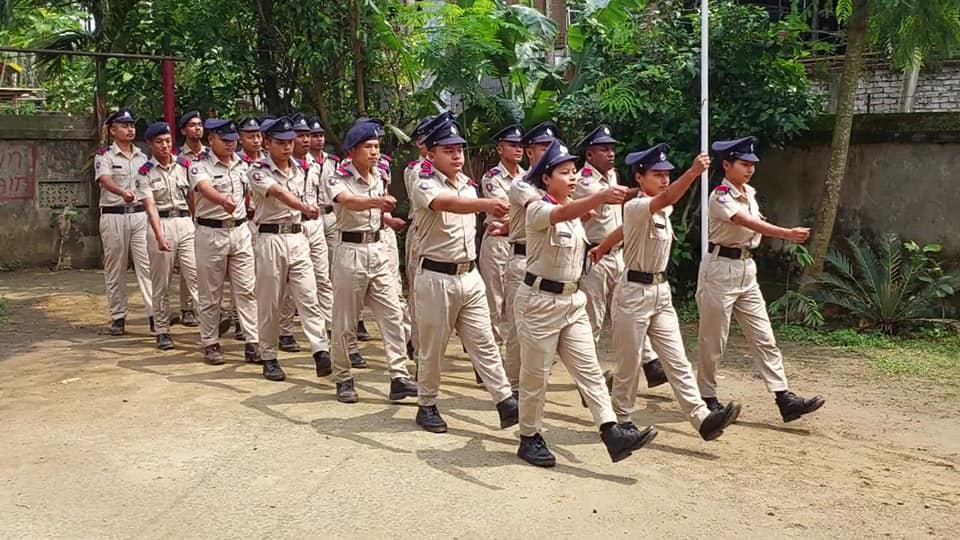
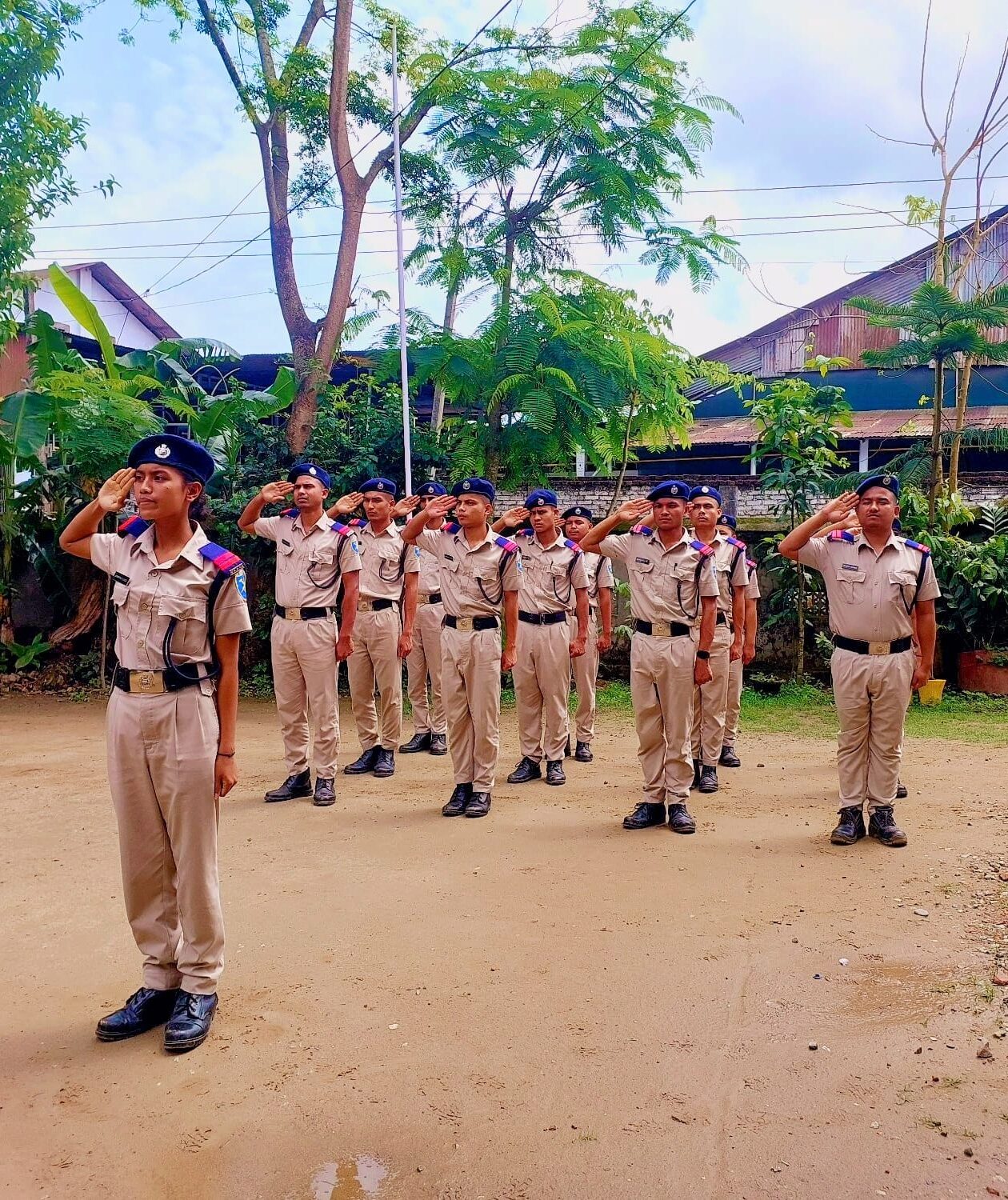
A serious training institute should therefore help learners develop discipline, technical knowledge and practical response skills.
Choosing the Right Fire Safety Institute in Northeast India
Before taking admission, students and parents should verify:
- Current course recognition or affiliation
- Eligibility requirements
- Course duration
- Curriculum
- Practical training facilities
- Fire-drill facilities
- Faculty profile
- Examination structure
- Placement assistance
- Fees
- Hostel facilities, if required
- Physical and medical requirements
- Certification or degree-awarding authority
These details should always be confirmed from the latest admission documents rather than relying on old advertisements or third-party websites.
Why Fire Safety Education Has Long-Term Importance
Fire-safety education contributes not only to careers but also to safer organisations and communities.
A properly trained professional can support:
- Accident prevention
- Safer workplaces
- Better emergency preparedness
- Faster emergency response
- Correct equipment usage
- Worker awareness
- Compliance with safety systems
- Reduced fire risk
- Protection of lives and property
This gives fire and industrial safety professionals an important role in both private industry and public safety.
NEFSA – Building Skills for Fire & Industrial Safety Careers
For students searching for the Best Fire & Industrial Safety Institute in NER, NEFSA offers a specialised learning environment built around fire prevention, industrial safety, emergency response, hazard management and practical training.
The academy currently lists courses covering Fire Technology & Industrial Safety Management, fire safety engineering and B.Sc. Fire Safety & Hazard Management, along with practical fire drills and simulations.
NEFSA’s website also identifies its location in Dibrugarh, Assam, positioning the academy as a specialised fire and safety training option within Northeast India.
For students interested in becoming fire-safety officers, safety supervisors, EHS professionals, emergency-response personnel or safety specialists, structured education combined with practical training can provide an important foundation.
Frequently Asked Questions
Which is the best fire and industrial safety institute in Northeast India?
Students should compare institutes based on course recognition, curriculum, practical training, facilities, faculty and career support. NEFSA offers specialised fire and industrial safety programs from its campus in Dibrugarh, Assam, with practical drills and industry-oriented subjects.
Where is NEFSA located?
NEFSA’s website lists its location at Barbaruah, NH-37 near Bypass Charali (Zero Point), Dibrugarh, Assam – 786007.
Does NEFSA provide practical fire training?
Yes. NEFSA states that its programs include practical training, fire drills and real-time simulations.
What subjects are taught in fire and industrial safety?
Typical subjects include fire science, fire-protection systems, industrial safety management, occupational health and safety, hazard control, risk assessment, disaster management and emergency planning. These subjects are also listed within NEFSA’s Fire Technology & Industrial Safety Management program.
What careers are available after studying fire and safety?
Potential careers may include Fire Safety Officer, Safety Supervisor, Safety Inspector, EHS Officer, Emergency Response Officer, Safety Engineer, Safety Auditor and Safety Manager, depending on qualification and employer requirements.
Is practical training important for fire safety students?
Yes. Fire and emergency situations require familiarity with equipment, teamwork, emergency procedures and disciplined decision-making. Practical drills supplement classroom knowledge and help students understand real-world response procedures.
Conclusion
Fire safety and industrial safety are essential parts of modern workplaces, buildings, infrastructure and emergency-management systems.
Students who want to build a career in this field need more than theoretical knowledge. They need exposure to fire prevention, safety systems, hazard management, risk assessment, emergency planning and practical response training.
For learners searching for the Best Fire & Industrial Safety Institute in NER, NEFSA – North Eastern Fire Service Academy provides specialised fire and safety education from Assam with programs focused on industry-relevant knowledge and practical training.
Whether your career goal is to become a Fire Safety Officer, Industrial Safety Supervisor, EHS Officer, Safety Engineer, Emergency Response Officer or Safety Manager, choosing the right training foundation can be an important first step toward a professional career in fire and industrial safety.
Backlinks:
-
Bureau of Indian Standards – National Building Code of India
https://www.bis.gov.in/standards/national-building-code/ -
Directorate General Fire Services, Civil Defence & Home Guards
https://dgfscdhg.gov.in/ -
Regional Training Centres – Fire & Emergency Services
https://dgfscdhg.gov.in/rtc -
Bureau of Indian Standards – Standards Portal
https://standards.bis.gov.in/ -
Ministry of Labour & Employment – Occupational Safety Information
https://labour.gov.in/ -
National Safety Council of India
https://nsc.org.in/ -
National Disaster Management Authority – Government of India
https://ndma.gov.in/